

c. 1937
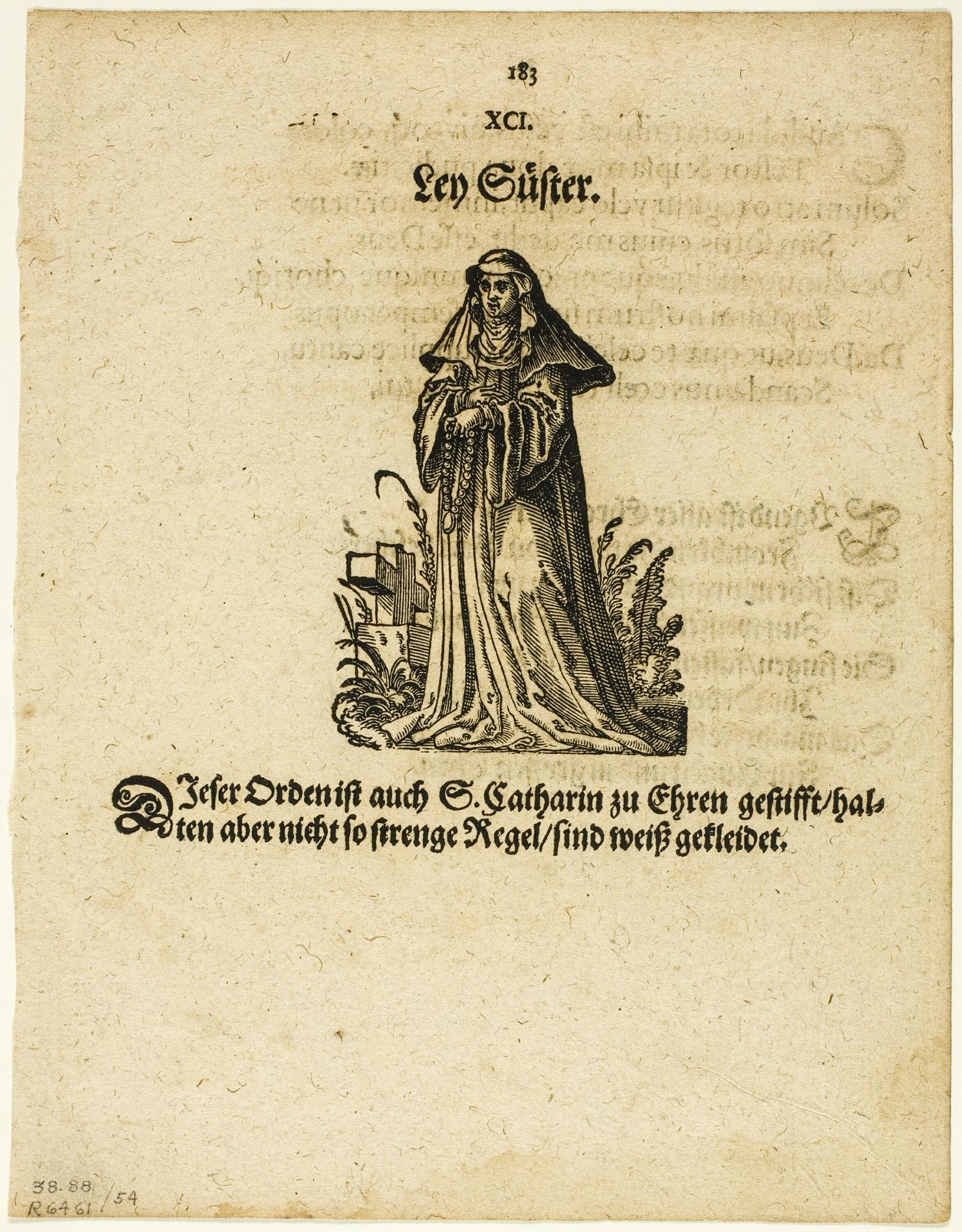
Ley Süster (Lay Sister) from Ständ und Orden, plate 54 from Woodcuts from Books of the XVI Century


Listen to curator's interpretation
Curatorial notes
This woodcut print called "Ley Süster" (or Lay Sister), was made by Jost Amman sometime in the 16th century. Look at how Amman uses the stark contrast of black ink on paper to describe her figure and surroundings! It’s a world made of decisive lines and cross-hatching. What really grabs me is the way Amman creates texture. Notice the dense, parallel lines that define the folds of her robe. They give a sense of weight and volume, almost as if you could reach out and feel the fabric. Then, glance at the wild, almost chaotic lines used for the plants at her feet. It creates a sense of unruly nature barely contained by her presence. This contrast speaks volumes about the tension between the spiritual life and the untamed world. Thinking about other printmakers of this era, like Dürer, you see a similar fascination with detail, and also an understanding that every mark carries meaning. Art is an ongoing conversation!