c. 1833 - 1834
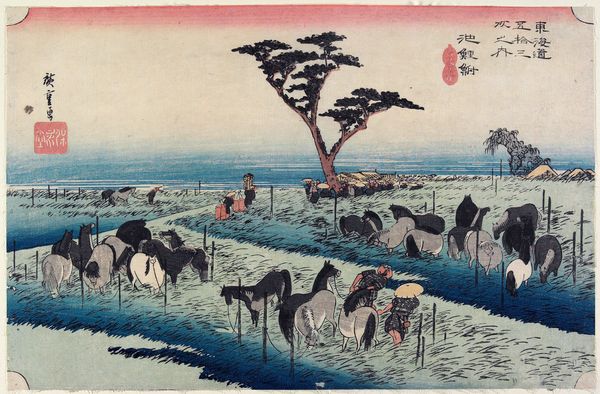
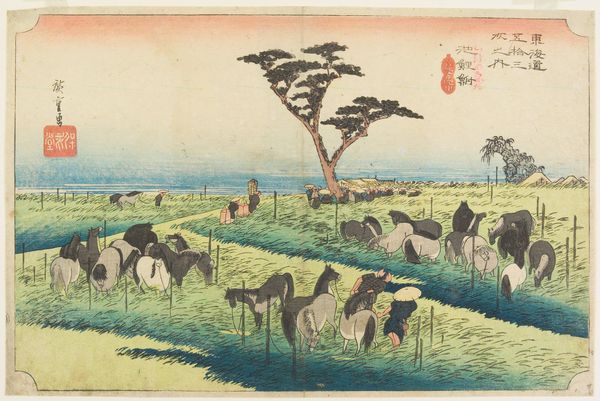
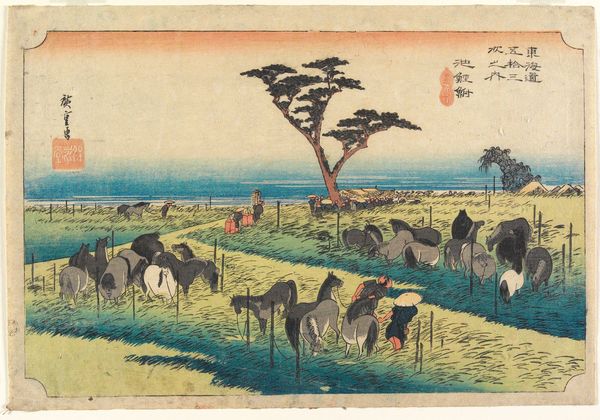
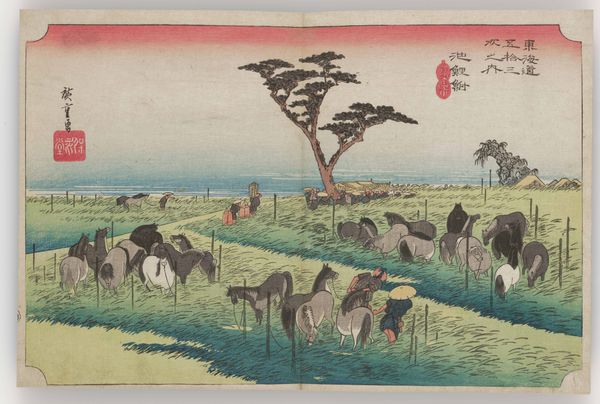
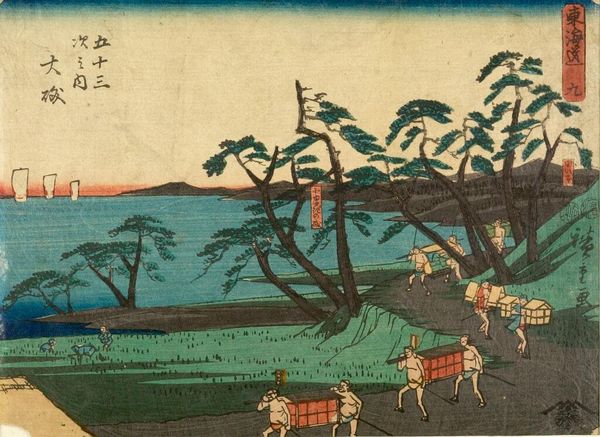
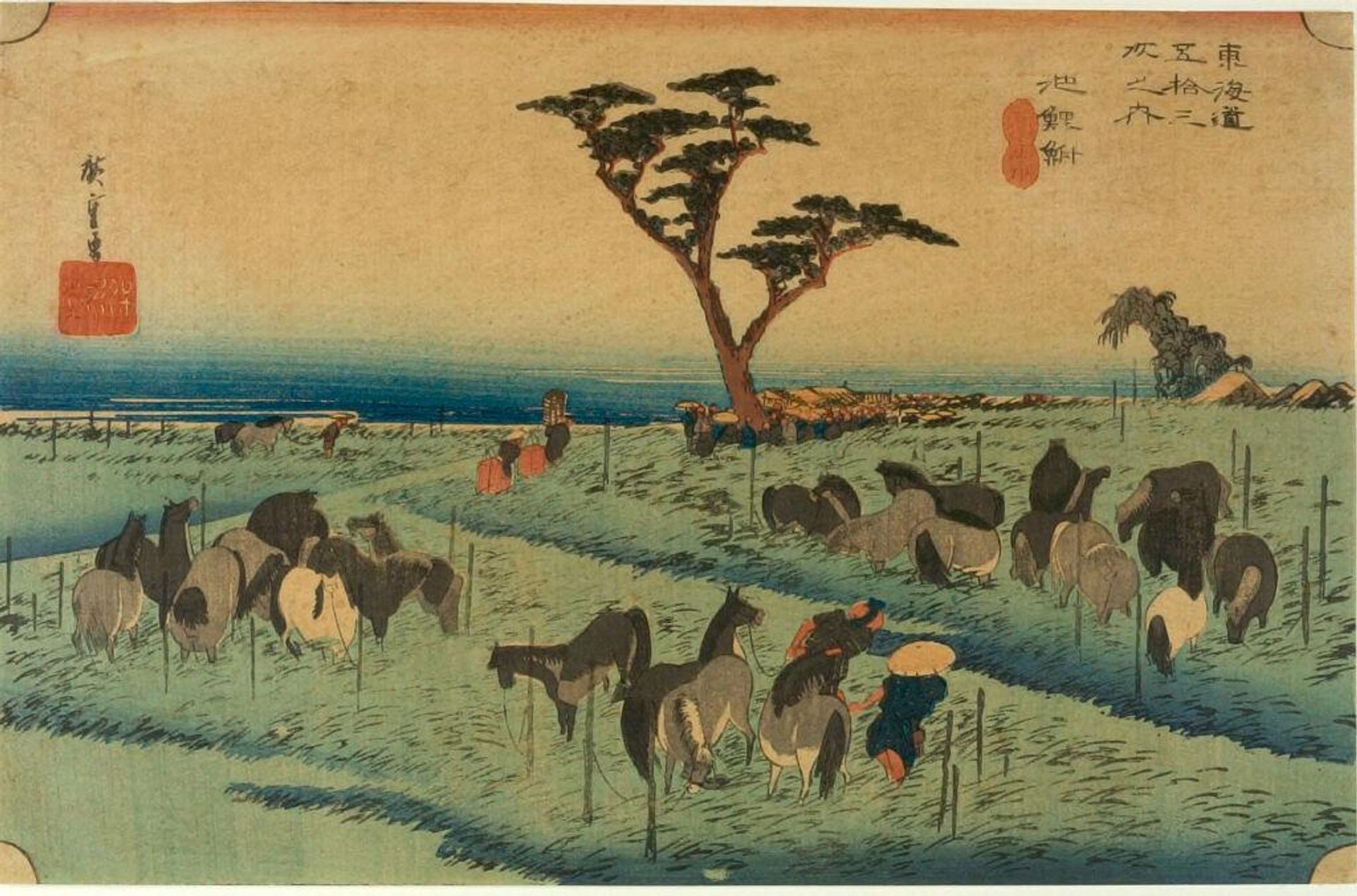
ChiryÅ«: Early Summer Horse Fair (ChiryÅ«, shuka uma ichi), from the series Fifty-three Stations of the TÅkaidÅ (TÅkaidÅ gojÅ«san tsugi no uchi), also known as the First TÅkaidÅ or Great TÅkaidÅ


Listen to curator's interpretation
Curatorial notes
Editor: This is Hiroshige's "ChiryÅ«: Early Summer Horse Fair" from the "Fifty-three Stations of the TÅkaidÅ" series. It depicts a bustling horse market. The repetitive fence posts and horse groupings make me wonder, what's the story behind this scene? Curator: From a materialist perspective, consider the woodblock printing process. Each color requires a separate block, meticulously carved. The repetition you noted speaks to the efficiency of production for mass consumption. How does that mass production affect the value of the work? Editor: So, the material conditions and production methods are key to understanding its cultural value? Curator: Precisely. The availability of these prints shaped how people experienced and visualized the TÅkaidÅ road and, by extension, the world around them. It democratized art viewing. Editor: That’s fascinating. I never considered the impact of its accessibility. Thanks! Curator: My pleasure! Thinking about art through its production opens up so many avenues.