About this artwork
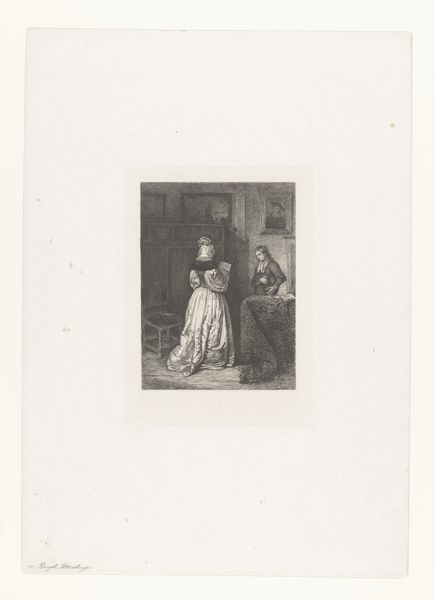
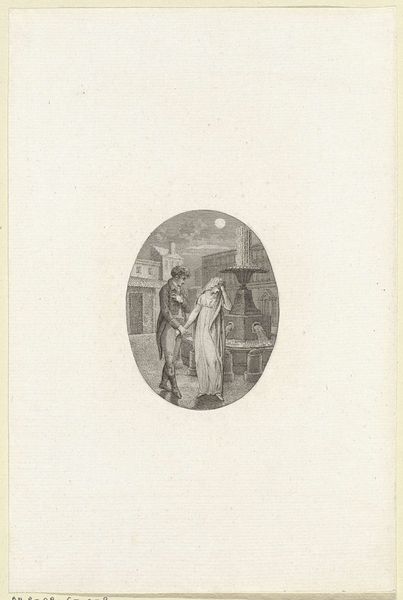
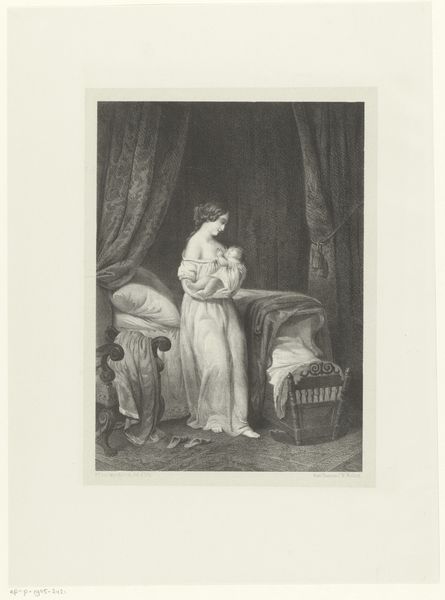
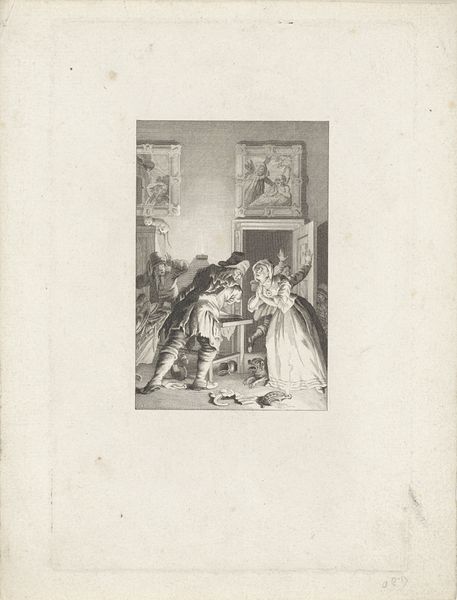
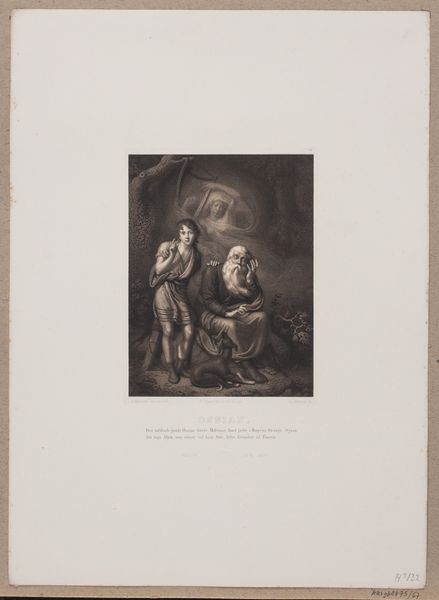
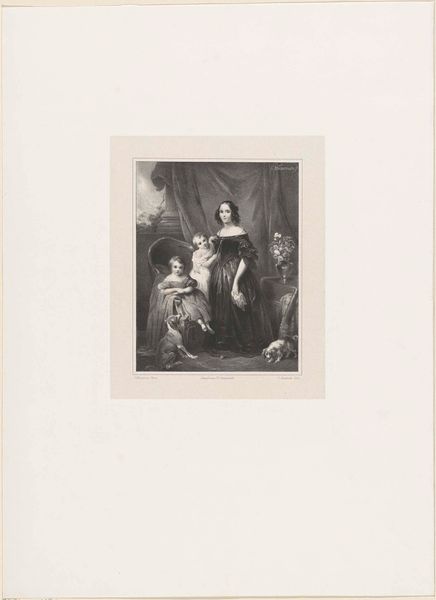
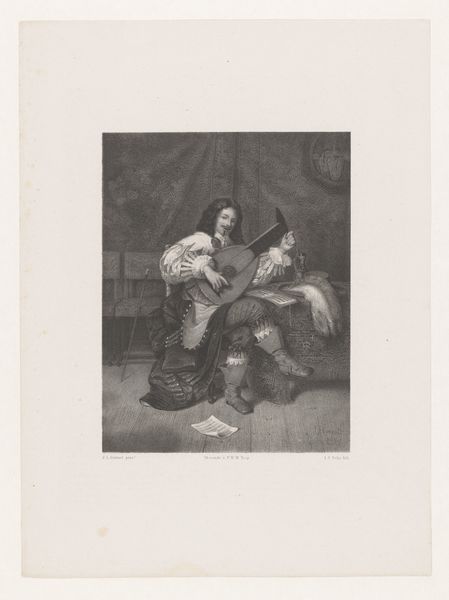
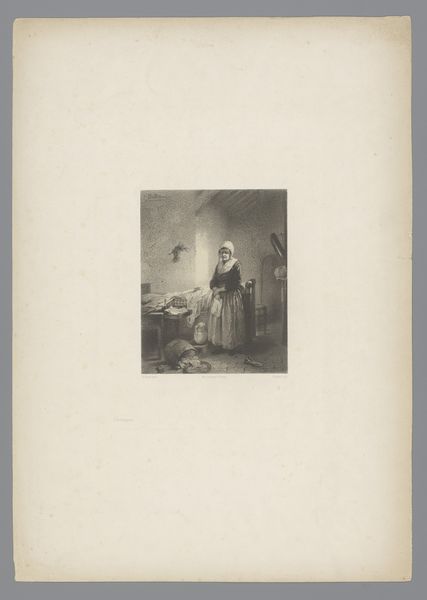
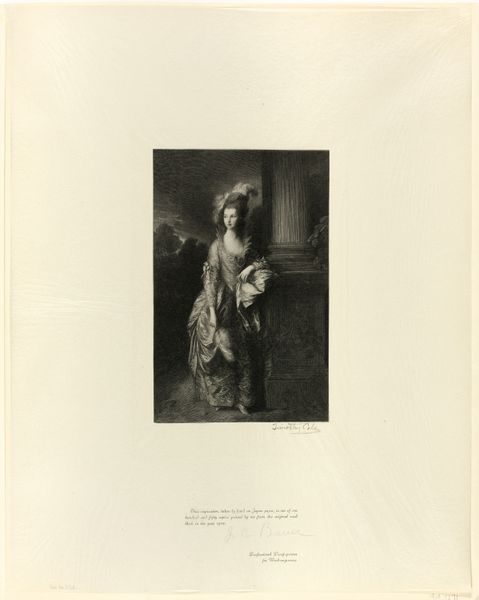
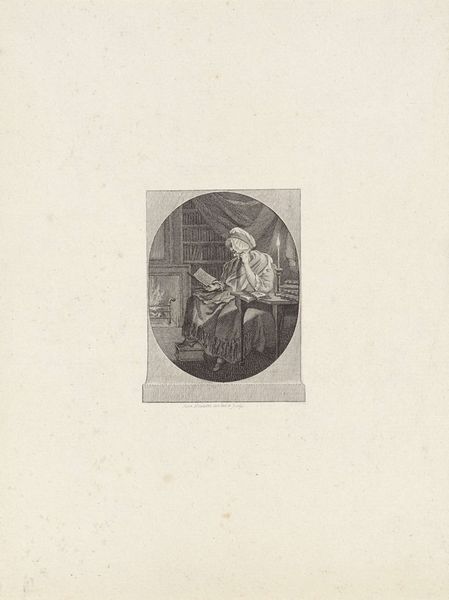
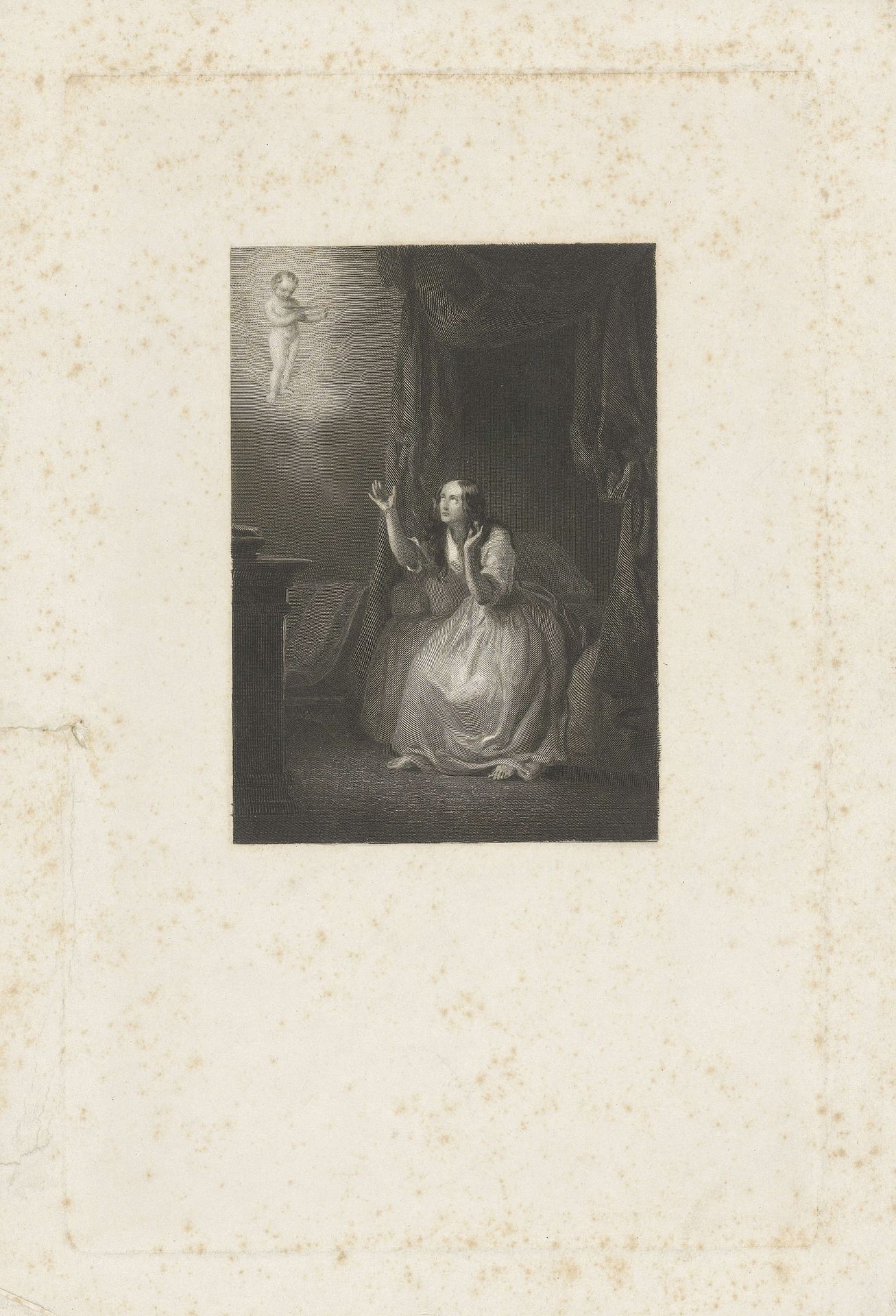
Johann Wilhelm Kaiser made this print of a young woman having a vision, and as a print, it is inherently an object of reproduction. Consider the processes involved in its creation: the artist would have used a sharp tool to incise lines into a metal plate. Ink would then be applied, carefully wiped, and the image transferred to paper under great pressure. The fine lines and subtle gradations of tone are a testament to Kaiser’s skill, and the way he has manipulated the material. But printmaking also implies a wider system of production and consumption. It is a medium that democratizes images, making them accessible to a broader audience than unique paintings. The act of replication is crucial to its meaning, blurring the lines between artistic creation and industrial process, craft and fine art. The print becomes an agent in the distribution of ideas and aesthetics, tied to wider social issues of labor, politics, and consumption.
Een jonge vrouw heeft een visioen
1849

Johann Wilhelm (I) Kaiser
1813 - 1900Location
RijksmuseumArtwork details
- Medium
- drawing, paper, ink, engraving
- Dimensions
- height 229 mm, width 146 mm
- Location
- Rijksmuseum
- Copyright
- Rijks Museum: Open Domain
Tags
Comments
Share your thoughts
About this artwork
Johann Wilhelm Kaiser made this print of a young woman having a vision, and as a print, it is inherently an object of reproduction. Consider the processes involved in its creation: the artist would have used a sharp tool to incise lines into a metal plate. Ink would then be applied, carefully wiped, and the image transferred to paper under great pressure. The fine lines and subtle gradations of tone are a testament to Kaiser’s skill, and the way he has manipulated the material. But printmaking also implies a wider system of production and consumption. It is a medium that democratizes images, making them accessible to a broader audience than unique paintings. The act of replication is crucial to its meaning, blurring the lines between artistic creation and industrial process, craft and fine art. The print becomes an agent in the distribution of ideas and aesthetics, tied to wider social issues of labor, politics, and consumption.
Comments
Share your thoughts