painting, oil-paint
#
portrait
#
portrait
#
painting
#
oil-paint
#
romanticism
#
realism
Dimensions: 30 1/4 x 26 in. (76.8 x 66 cm)
Copyright: Public Domain
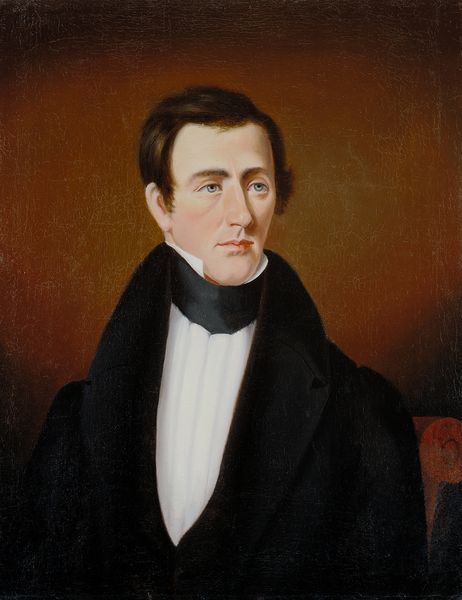
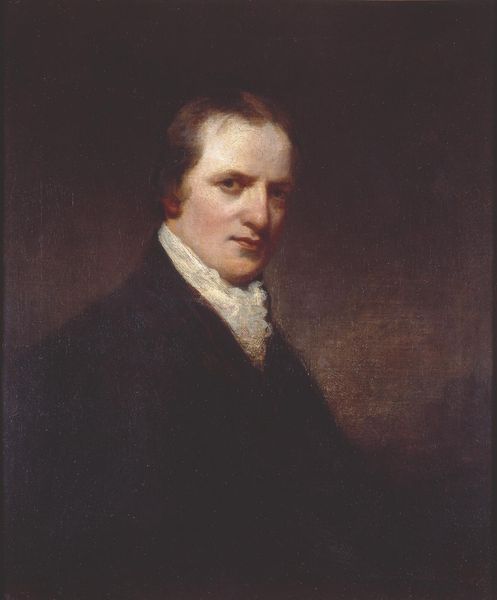
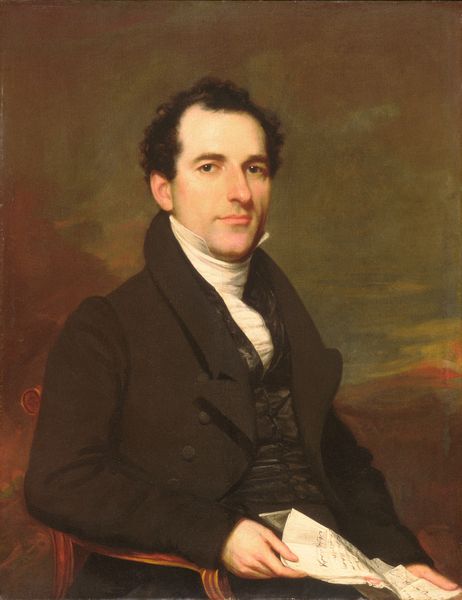
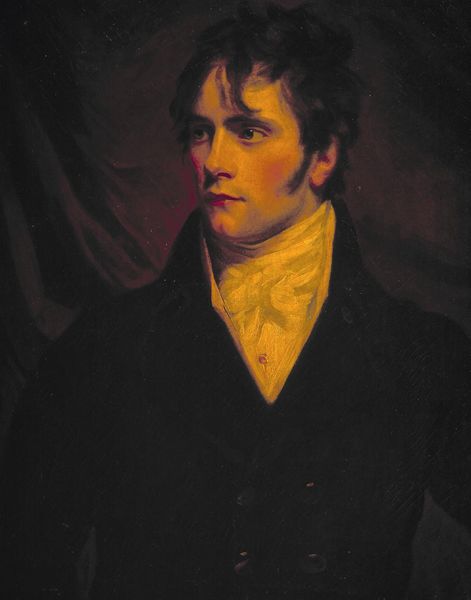
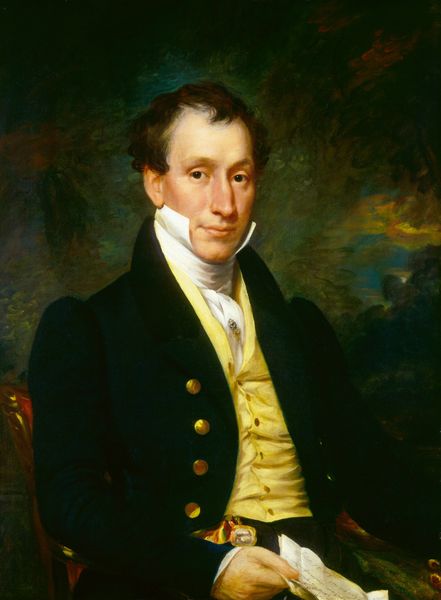
Curator: Standing before us is Rembrandt Peale's portrait of John Johnston, created between 1826 and 1829. It's an oil painting, a rather classic rendering in many ways. Editor: It feels stark. There's this kind of severity to it. All sharp angles and shadows. I immediately feel a sense of the constraints of the time – what was considered proper, the performance of masculinity. Curator: It does radiate that austere early American ideal, doesn't it? There's an incredible stillness in his gaze. Johnston was a U.S. Indian agent. I find myself pondering the complexities there. He served as an intermediary between the government and Native American tribes. What did that look like, truly? Editor: Exactly. That role, mediating colonial power. It invites a crucial question: whose interests were ultimately served? It makes me consider the representation of power, who gets remembered, who gets to paint these pictures, and who is missing from them. Curator: Good point, it is indeed a powerful exercise in the establishment of representation, one brush stroke at a time! Peale manages to capture a sense of individual dignity alongside...well, officialdom. The composition is undeniably simple: A dark coat contrasting against the pale skin of the sitter, lit perfectly, conveying importance and respect. Editor: Right. He’s framed almost like a businessman, an entrepreneur in early America. But when you think of his role within a system that oppressed Indigenous communities... it's unsettling. The portrait serves as a historical document of those complexities and systemic problems of power and status. The portrait becomes almost...complicit. Curator: Complicit. I'll ponder on that for a bit. It certainly adds a new lens. Thinking of portraits less as passive representation, but as active agents. Editor: I appreciate art like this because it pushes me beyond face value. We have to understand what's hidden, the stories left untold. It's an act of remembering, but also reckoning.
Comments
No comments
Be the first to comment and join the conversation on the ultimate creative platform.
 Collect
 React
React Comment
More like this