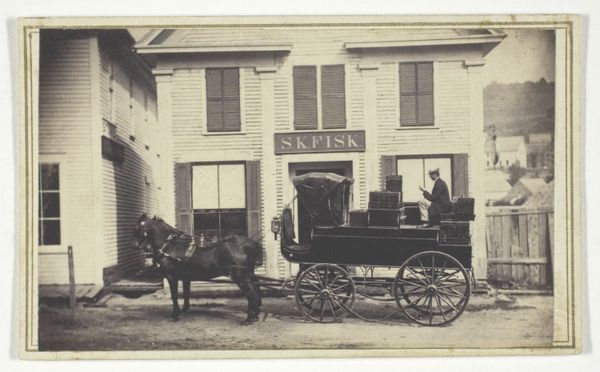
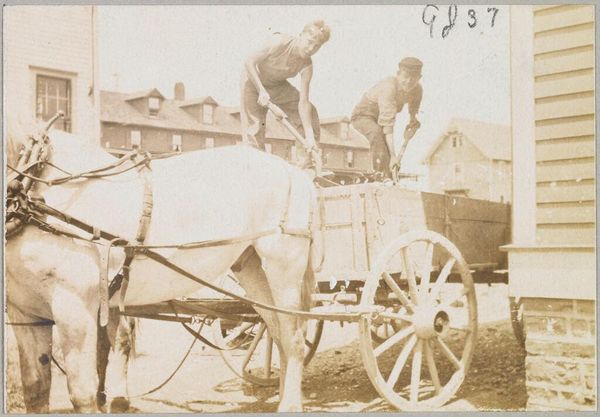
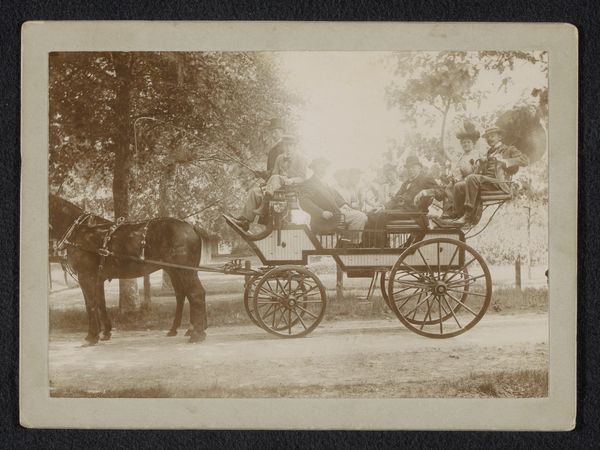
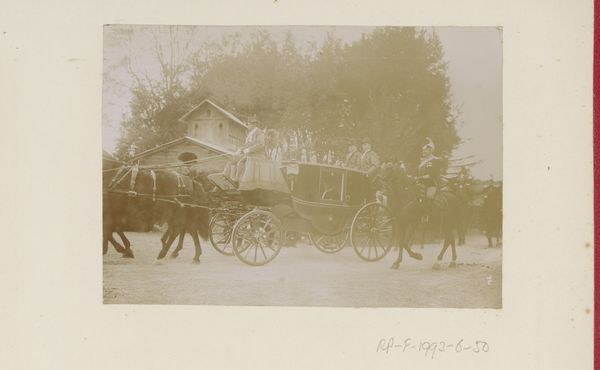
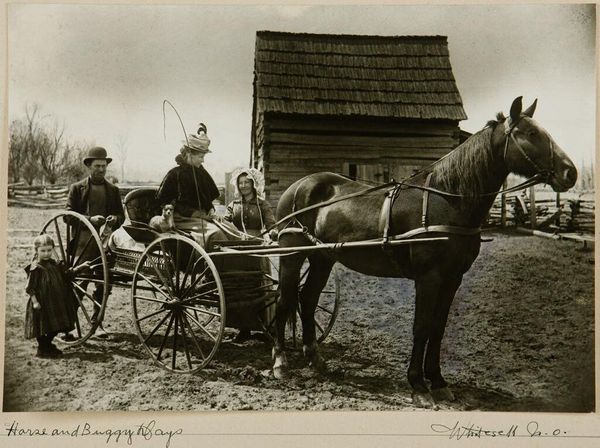
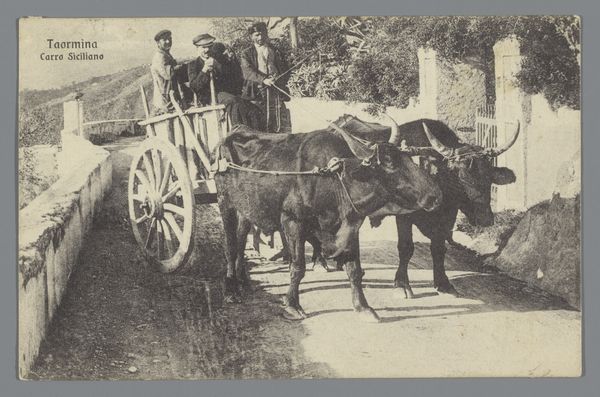
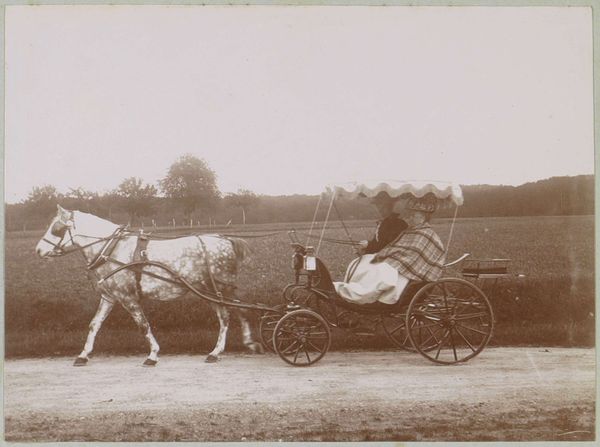
Paard en wagen bij een huis aan een sloot aan de Bergweg te Rotterdam c. 1905 - 1907
0:00
0:00

photography, gelatin-silver-print
#
dutch-golden-age
#
landscape
#
photography
#
gelatin-silver-print
#
cityscape
#
realism
Dimensions: height 81 mm, width 110 mm
Copyright: Rijks Museum: Open Domain
Editor: This gelatin silver print, titled "Paard en wagen bij een huis aan een sloot aan de Bergweg te Rotterdam," or "Horse and Cart by a House on a Ditch on the Bergweg in Rotterdam", was created by Folkert Idzes de Jong around 1905 to 1907. I'm really drawn to its sort of nostalgic, quiet feel. What do you see in this piece? Curator: The very muted tones give this work a beautiful patina of age and memory, don’t you think? Look at the horse and cart themselves - they're more than just objects; they represent a connection to a simpler, perhaps harder, way of life. The barrel evokes labor, transport, and maybe even sustenance, it tells us something about this place at this time. What might that be? Editor: Perhaps Rotterdam was more rural then? And I see that these ordinary objects seem elevated, holding some greater cultural meaning of a society and period transitioning between eras. Curator: Precisely. This photograph also resonates with the visual language of the Dutch Golden Age, particularly landscape painting. We are seeing echoes of earlier aesthetics in a modern medium. How does the house function within this visual equation? Editor: Good question! It provides context – a specific place. Yet its almost ethereal presence contributes to that feeling of fading memory, like a scene from a dream. Curator: The gelatin silver print's texture enhances the work's symbolic depth. The way the light interacts with the silver creates a palpable sense of atmosphere that draws us in, connecting our own memories to this image. It really exemplifies how photography, at its finest, can translate so much from the tangible world into the language of signs. Editor: This has totally changed my view. I initially saw a simple landscape photo, but now recognize a web of symbols, reflecting time, labor, and cultural transition. Curator: Indeed. Art unveils itself when we start interpreting the visual signs and emotional connections woven into its creation.
Comments
No comments
Be the first to comment and join the conversation on the ultimate creative platform.
 Collect
 React
React Comment
More like this