About this artwork
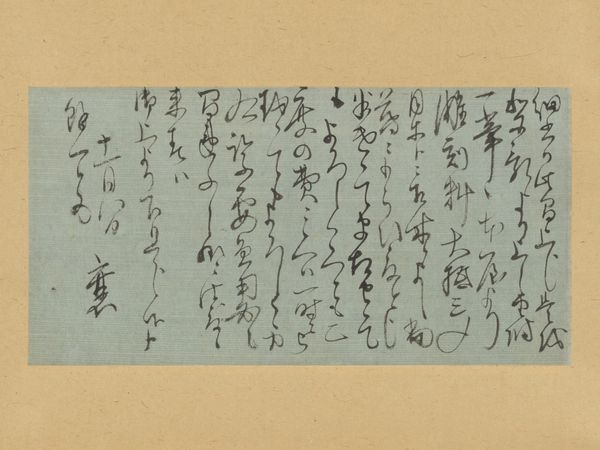
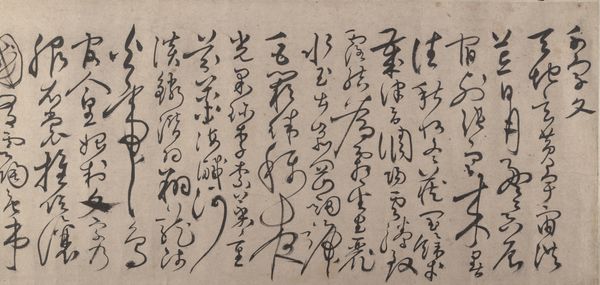
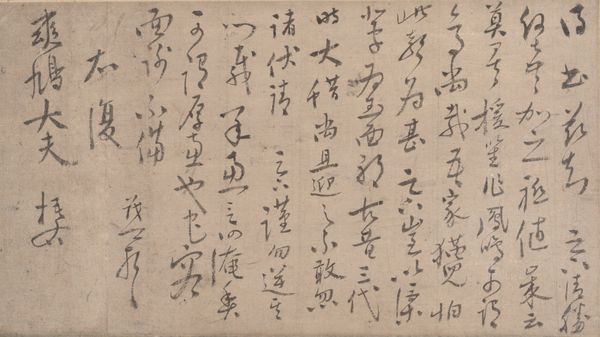
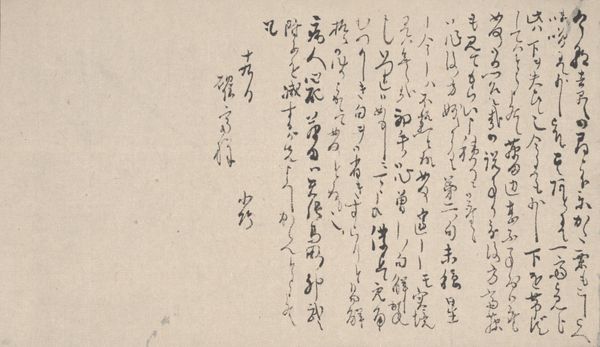
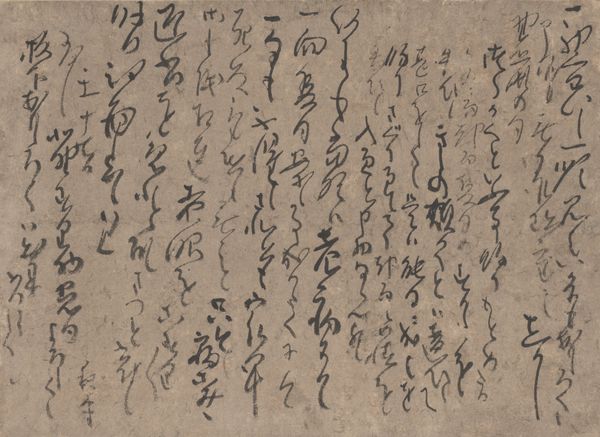
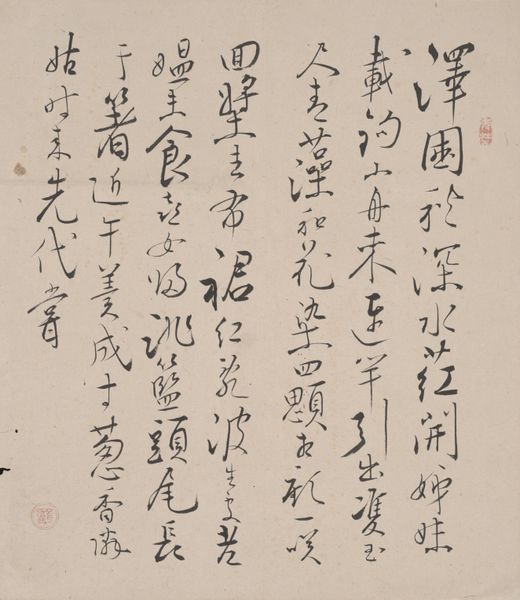
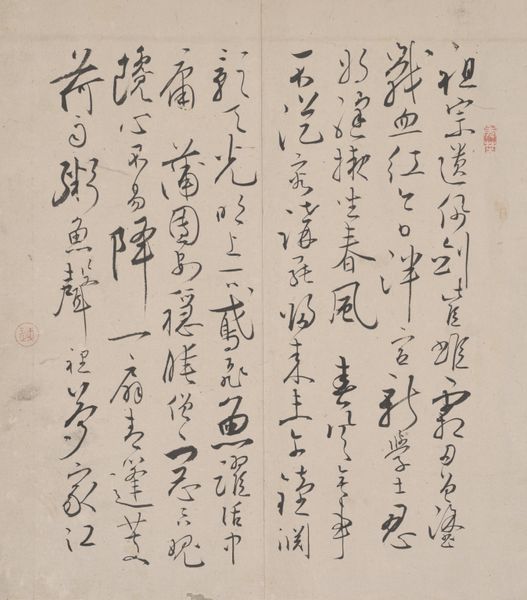
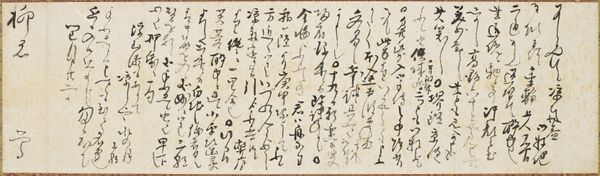
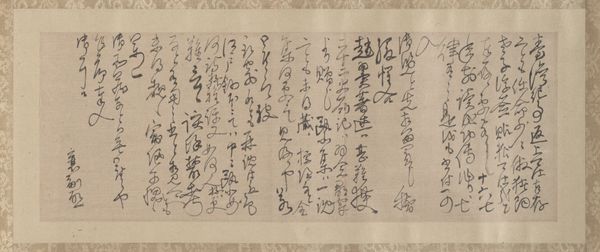
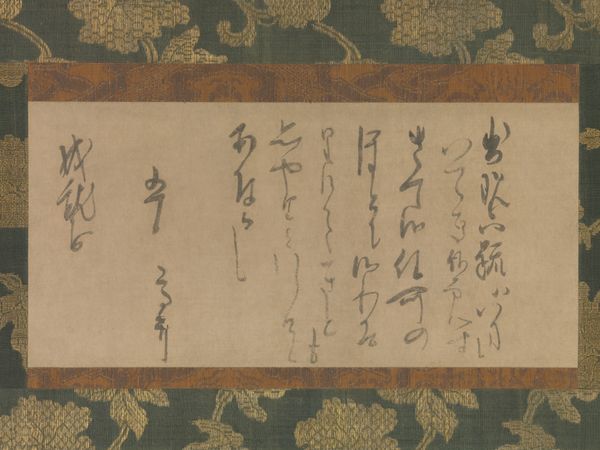
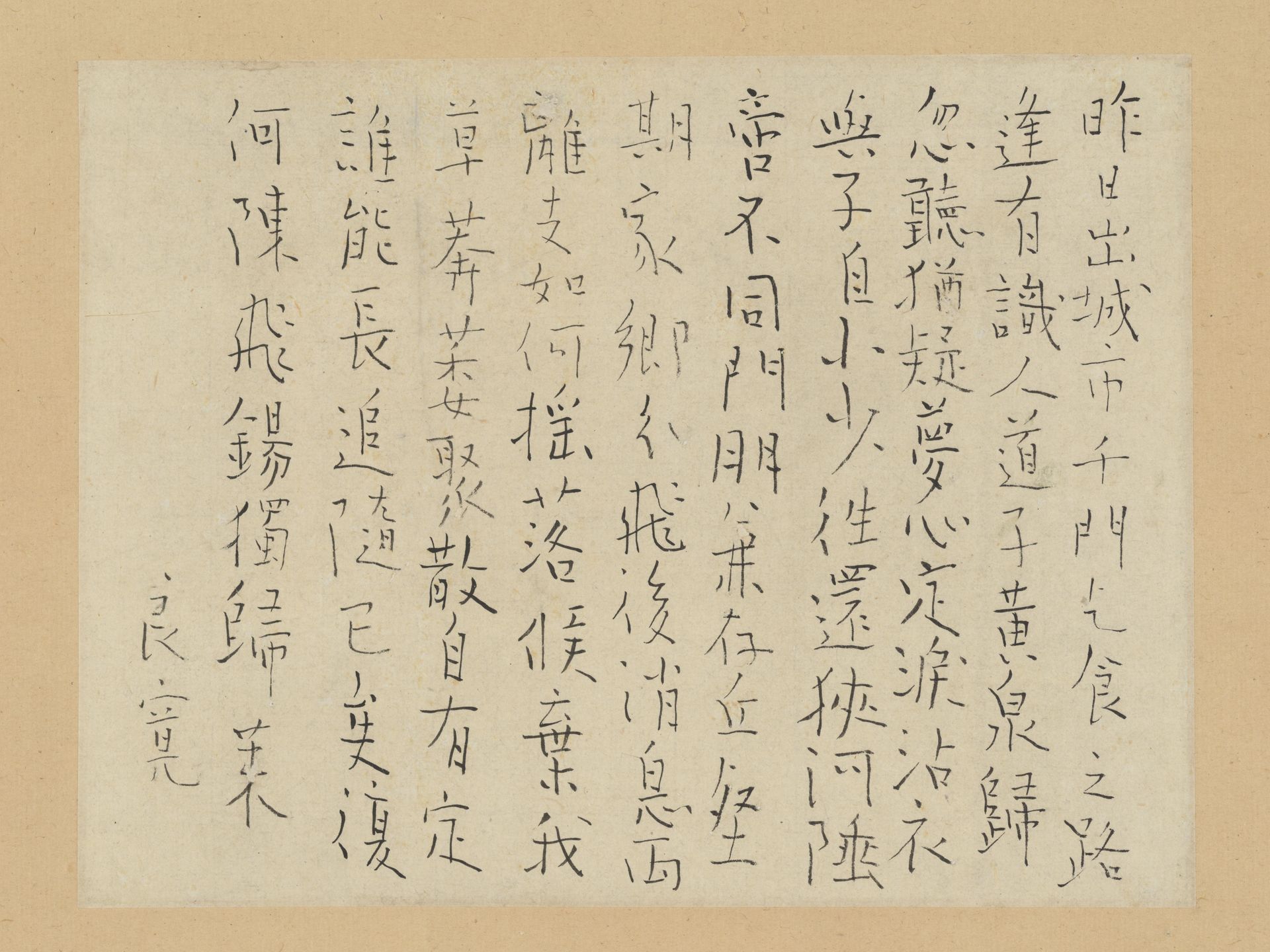
Ryōkan Taigu created this calligraphic scroll, "Chinese Poem Lamenting the Death of a Friend," with ink on paper. The visual experience of the artwork is dominated by vertical lines of text, each character a unique shape in a balanced composition. Notice the varying thickness and fluidity of the brushstrokes which create a dynamic rhythm across the surface. This formal structure of text layered on paper evokes a feeling of contemplative mourning. Here, the materiality of ink and paper intersects with the semiotic system of written language. The poem uses classical Chinese to express Ryōkan's sorrow, but the visual presentation through calligraphy adds another layer of meaning. The arrangement of characters, the texture of the ink, and the use of space all contribute to the emotional weight of the piece, acting as signs within a broader cultural code of mourning and remembrance. The structural tension between the poem's content and its visual form amplifies its expressive power. Consider how the visual elements of the calligraphic scroll and their arrangement underscore the themes of loss. These intersect with broader artistic and philosophical concerns about impermanence and the transient nature of human existence.
Chinese Poem Lamenting the Death of a Friend
1758 - 1831


Artwork details
- Medium
- drawing, ink
- Dimensions
- Image: 8 1/2 × 11 1/8 in. (21.6 × 28.3 cm) Overall with mounting: 43 1/2 × 15 13/16 in. (110.5 × 40.2 cm) Overall with knobs: 43 1/2 × 17 7/8 in. (110.5 × 45.4 cm)
- Location
- Metropolitan Museum of Art, New York, NY
- Copyright
- Public Domain
Tags
Comments
Share your thoughts
About this artwork
Ryōkan Taigu created this calligraphic scroll, "Chinese Poem Lamenting the Death of a Friend," with ink on paper. The visual experience of the artwork is dominated by vertical lines of text, each character a unique shape in a balanced composition. Notice the varying thickness and fluidity of the brushstrokes which create a dynamic rhythm across the surface. This formal structure of text layered on paper evokes a feeling of contemplative mourning. Here, the materiality of ink and paper intersects with the semiotic system of written language. The poem uses classical Chinese to express Ryōkan's sorrow, but the visual presentation through calligraphy adds another layer of meaning. The arrangement of characters, the texture of the ink, and the use of space all contribute to the emotional weight of the piece, acting as signs within a broader cultural code of mourning and remembrance. The structural tension between the poem's content and its visual form amplifies its expressive power. Consider how the visual elements of the calligraphic scroll and their arrangement underscore the themes of loss. These intersect with broader artistic and philosophical concerns about impermanence and the transient nature of human existence.
Comments
Share your thoughts