drawing, graphic-art, print, typography
drawing
graphic-art
typography
Dimensions: height 345 mm, width 270 mm
Copyright: Rijks Museum: Open Domain
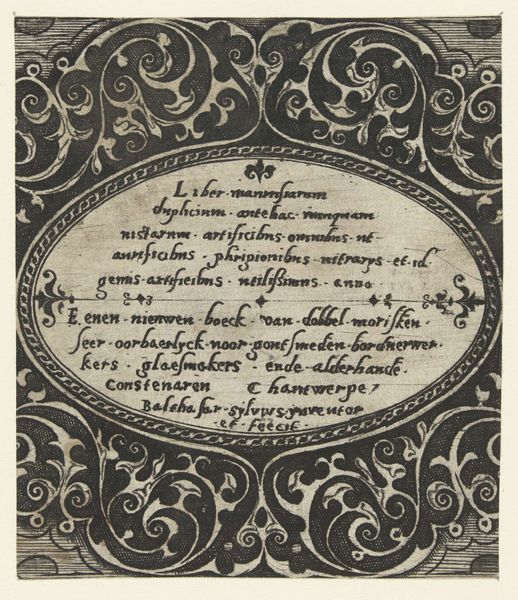
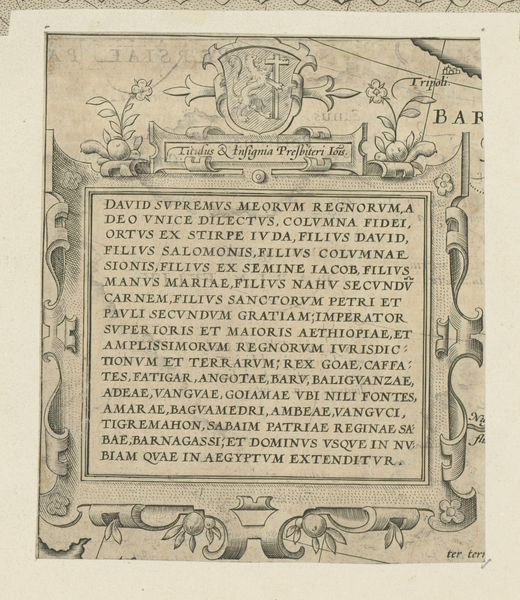
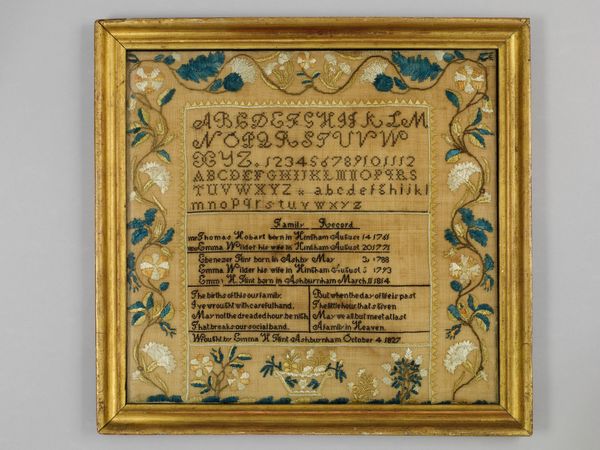
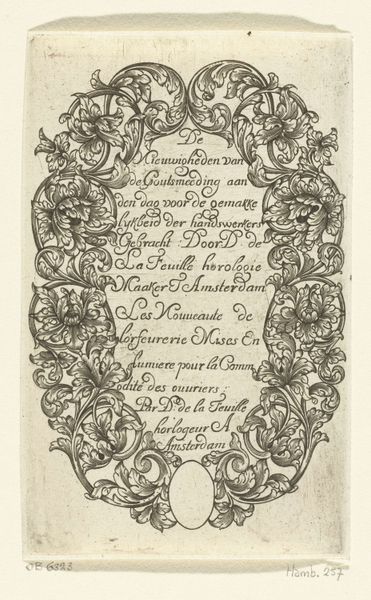
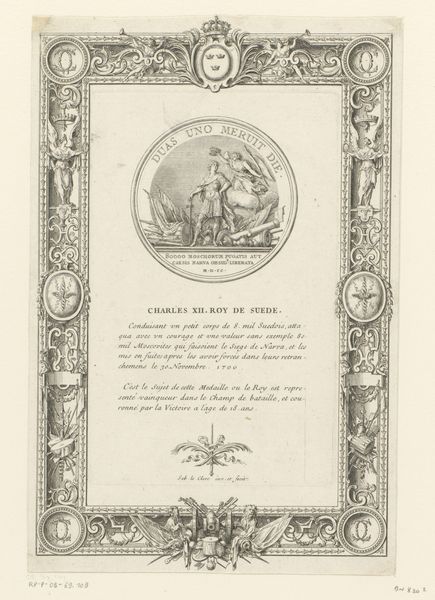
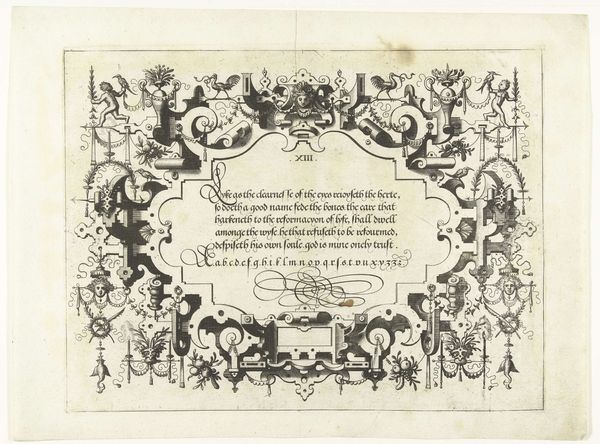
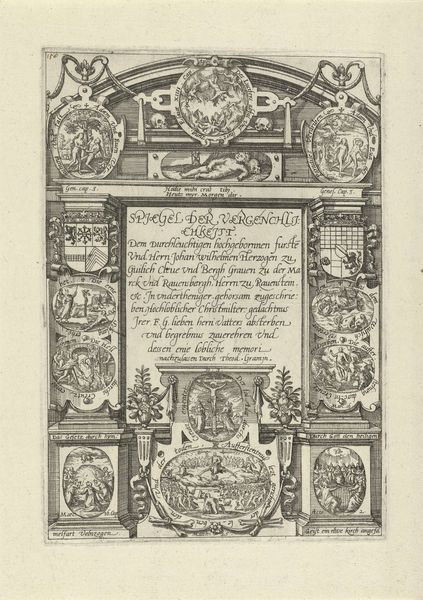
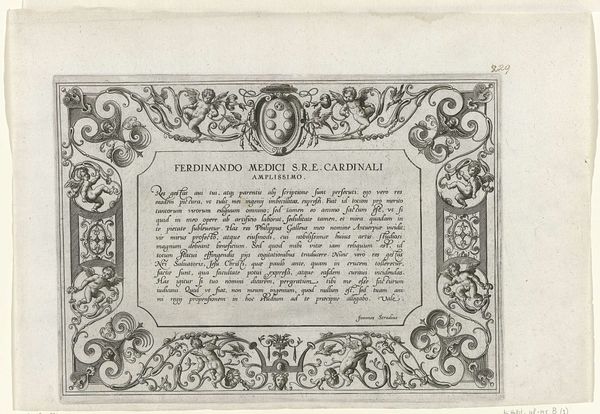
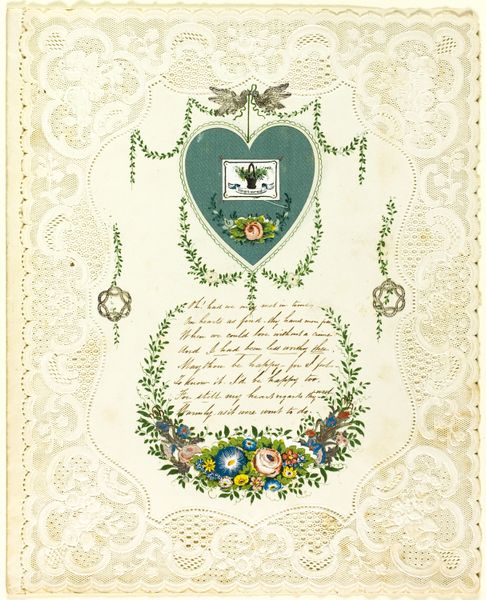
Curator: Let's turn our attention to this graphic print titled "Onze Vader," created sometime between 1825 and 1847 by Herman Koster. It's a piece composed of drawing and typography. What's your immediate reaction? Editor: My first thought is, what an ornate way to present a prayer. There’s a real tension between the preciousness of the embellished border and the simple text in the middle. What material process did it involve to arrive to the finished result? Curator: Indeed. The symbolic layering is intricate. "Onze Vader," or "Our Father" the Lord's Prayer, occupies the center within an oval frame adorned with vegetal motifs. It certainly aims to elevate the prayer beyond the mundane, almost enshrining it within a constructed visual world. And consider the selection of dark greens, reds and blues of the framing against a light, white field – it invites closer looking. Editor: Yes, but let's consider those embellishments as labor. Each swirl, each meticulously placed floral design—it speaks of artisanal production. This wasn’t mass-produced using modern techniques, of course. What can that tell us about the cultural importance of such religious texts and images? Did they become family heirlooms, for example? Curator: Very insightful! Beyond its devotional aspect, the work resonates with a longing for stability in times of change and offers, visually, a timeless, almost iconic rendering of spiritual continuity. One can imagine how it felt hanging within someone's personal space, constantly reaffirming the viewers' faith. Editor: I agree; the emphasis seems to lie on presenting it for the viewer’s private reflection, while, given the multiple layering of materials from typography to graphic art, one can almost appreciate this religious symbol in its form of labor. Curator: The intersection between labor and divinity: an interesting concept that reveals how materials, symbols and labor interact and are imbued with meaning. Thank you. Editor: Absolutely! Seeing it from a materialist viewpoint unveils a reverence toward devotion manifested not only by the text, but by the manual processes involved in the printing, making, and framing, truly inviting a different type of viewing experience.
Comments
No comments
Be the first to comment and join the conversation on the ultimate creative platform.
 React
React Comment