About this artwork
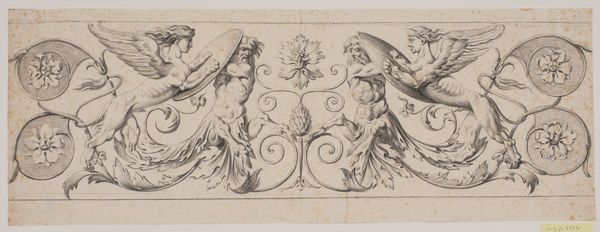
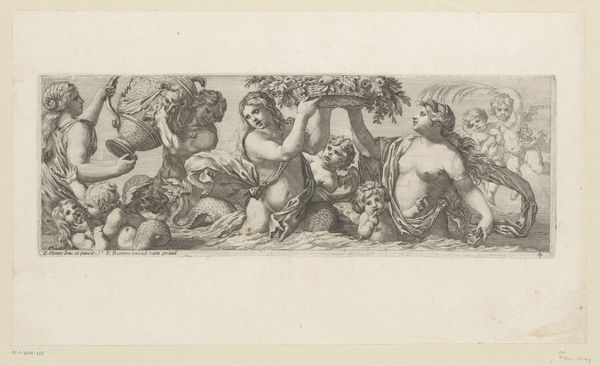
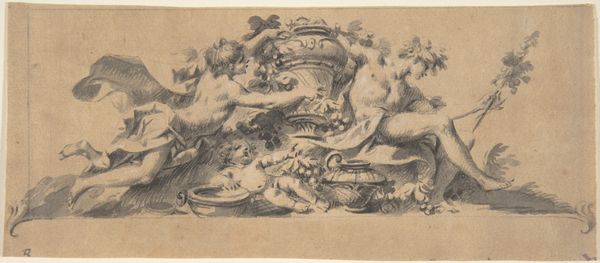
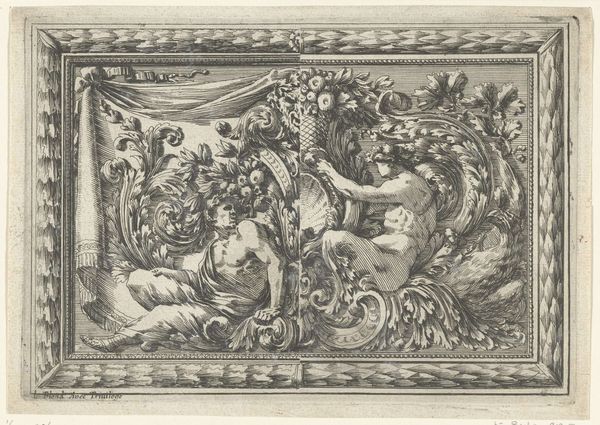
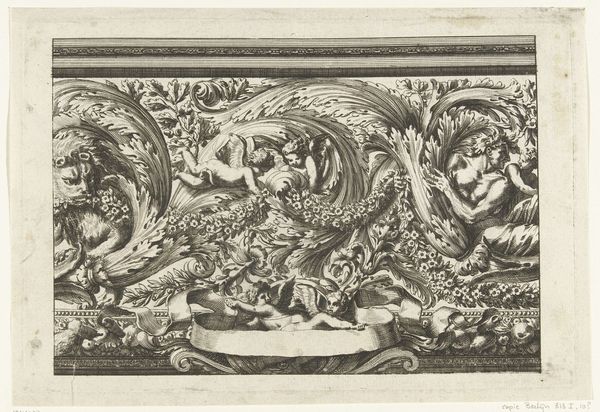
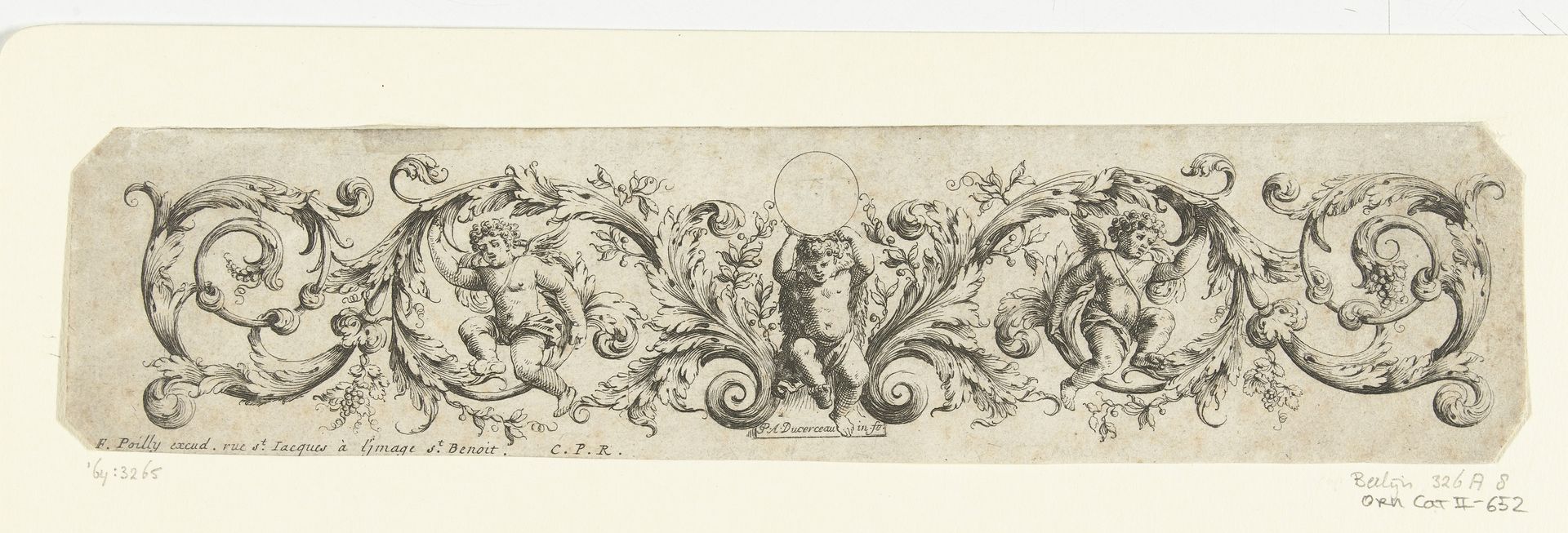
Paul Androuet Ducerceau created this ornamental design with two leaf tendrils and cupids sometime between 1643 and 1710, using etching. During Ducerceau’s lifetime, France was under the rule of Louis XIV, a period characterized by the flourishing of the Baroque style, and rigid social hierarchies. Ornament prints such as this one reflected the era's emphasis on decoration and the importance of classical motifs. The cherubic figures known as amoretti, or cupids, became symbols of idealized love, and were popularized during the Renaissance. The cupids here strike different poses and expressions, inviting an emotional engagement, and perhaps offering a playful narrative. The image embodies the era’s focus on symmetry and ornate detail, as well as its tendency to celebrate idealized forms of youth and beauty. Through his prints, Ducerceau catered to an aristocratic clientele with an appreciation for elaborate design. The print offers us a glimpse into the aesthetics and cultural values of 17th-century France.
Twee bladranken met amoretten
1670 - 1693

Paul Androuet Ducerceau
1623 - 1710Location
RijksmuseumArtwork details
- Medium
- drawing, engraving
- Dimensions
- height 62 mm, width 265 mm
- Location
- Rijksmuseum
- Copyright
- Rijks Museum: Open Domain
Tags
Comments
Share your thoughts
About this artwork
Paul Androuet Ducerceau created this ornamental design with two leaf tendrils and cupids sometime between 1643 and 1710, using etching. During Ducerceau’s lifetime, France was under the rule of Louis XIV, a period characterized by the flourishing of the Baroque style, and rigid social hierarchies. Ornament prints such as this one reflected the era's emphasis on decoration and the importance of classical motifs. The cherubic figures known as amoretti, or cupids, became symbols of idealized love, and were popularized during the Renaissance. The cupids here strike different poses and expressions, inviting an emotional engagement, and perhaps offering a playful narrative. The image embodies the era’s focus on symmetry and ornate detail, as well as its tendency to celebrate idealized forms of youth and beauty. Through his prints, Ducerceau catered to an aristocratic clientele with an appreciation for elaborate design. The print offers us a glimpse into the aesthetics and cultural values of 17th-century France.
Comments
Share your thoughts