Copyright: Rijks Museum: Open Domain
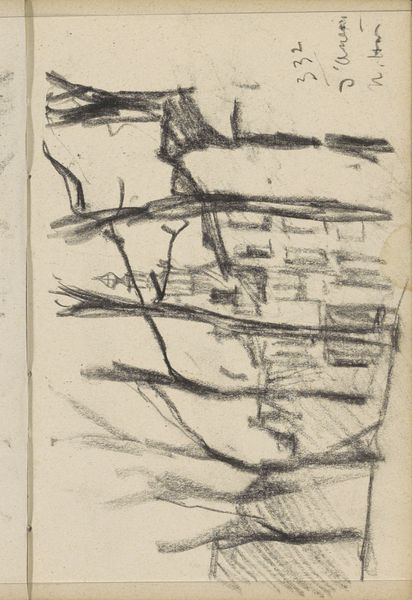
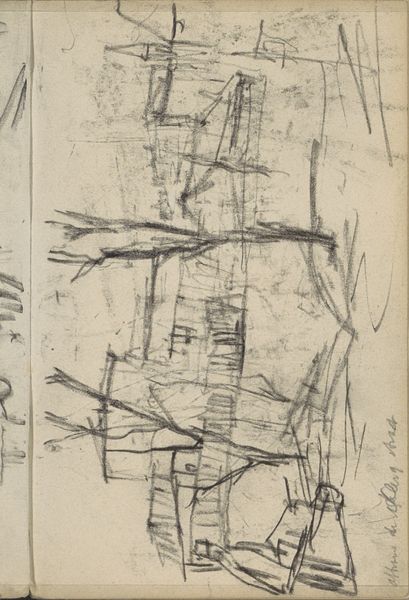
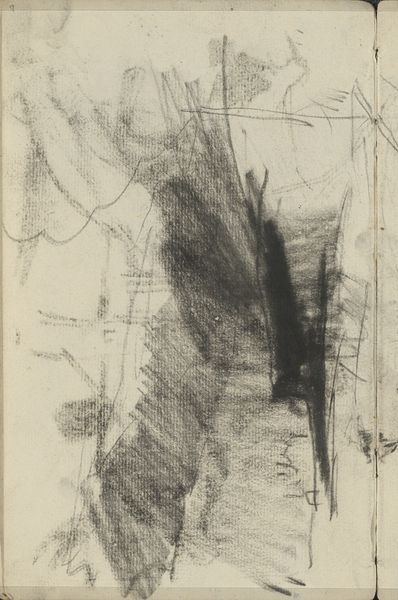
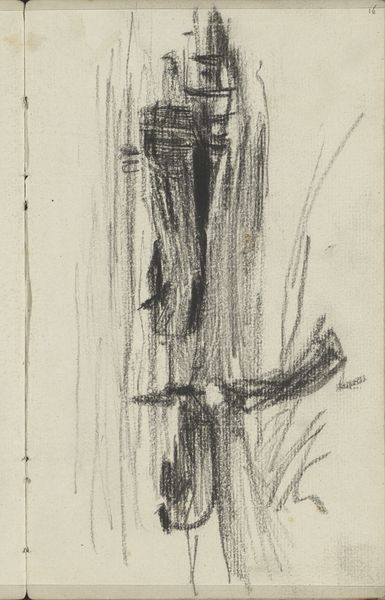
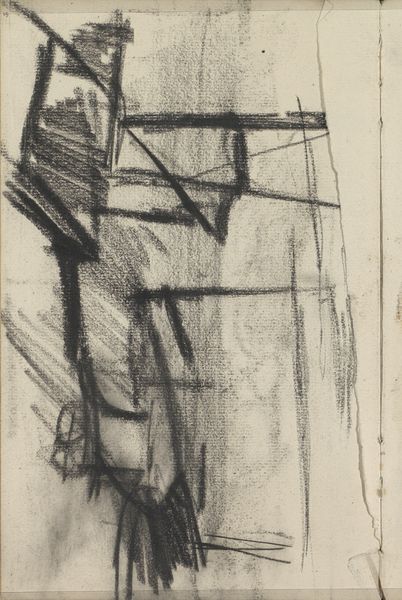
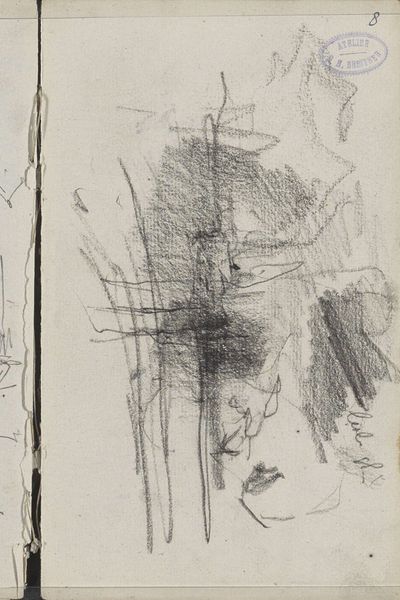
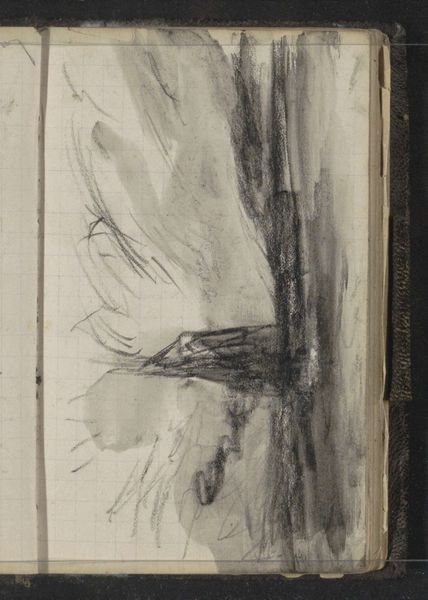
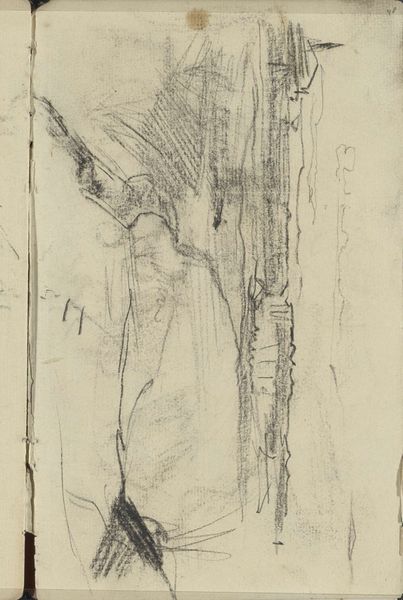
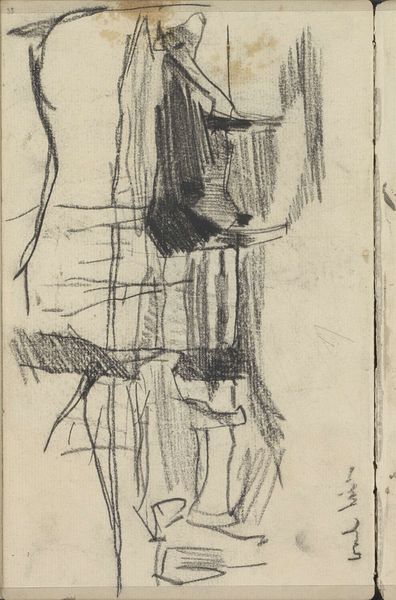
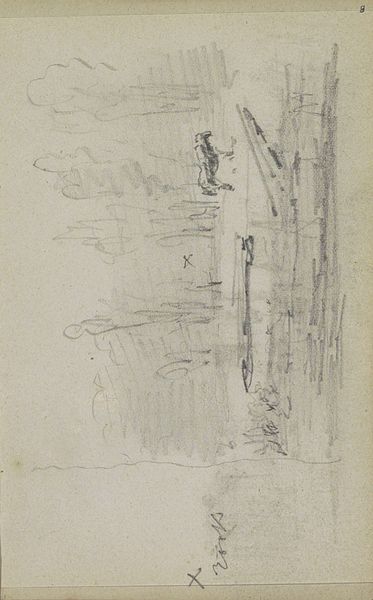
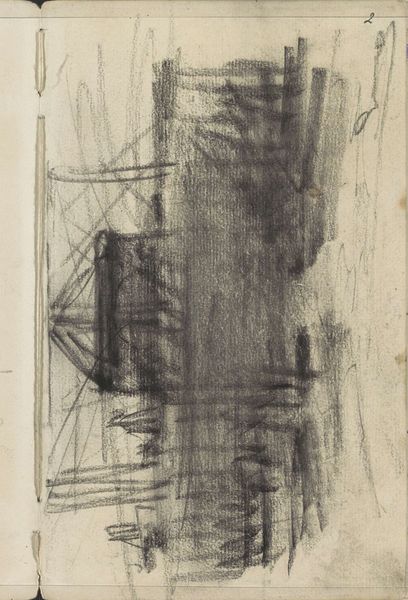
Editor: So, here we have "Stellage in een landschap" – that’s "Framework in a Landscape"– by George Hendrik Breitner. It's a graphite drawing on paper, likely done between 1886 and 1923. My first impression is one of...abstraction, almost, or a very loose impression of a scene. It feels more like a feeling of a place rather than a depiction of it. What catches your eye about this piece? Curator: What grabs me? The audacity of it! Breitner, known for his cityscapes, giving us this fleeting sketch... it’s like catching him mid-thought. Imagine him, squinting in the Dutch light, rapidly translating the skeletal structure of... well, something – maybe scaffolding, maybe a fragment of a building under construction – into these frenzied graphite lines. It’s raw, isn’t it? You almost feel the artist's hand moving across the paper. Editor: It's definitely immediate. I get the sense he was trying to capture a fleeting moment, rather than creating something highly polished. The strokes seem almost unfinished, as if he lost interest halfway. Curator: Or, perhaps he *found* the art *in* the unfinished? Think of it – those stark, almost brutal lines, the negative space dancing between them... It's as much about what's *not* there as what is. You know, sometimes I think that the most potent art resides in these liminal spaces, the half-formed ideas where our own imaginations rush in to complete the picture. What do you reckon is back there, behind this... skeletal form? What does it suggest to you? Editor: Maybe some half-built industrial complex near a canal? It does encourage me to see more than is literally represented. It has a slightly melancholy feel for me. Curator: Melancholy, yes, I see that. A kind of wistful nod to progress, maybe? Anyway, seeing through *your* eyes and mind definitely opened the work up for me even more. Editor: I really like thinking of the drawing not only as what is drawn but about the missing information or spaces.
Comments
No comments
Be the first to comment and join the conversation on the ultimate creative platform.
 Collect
 React
React Comment
More like this