About this artwork
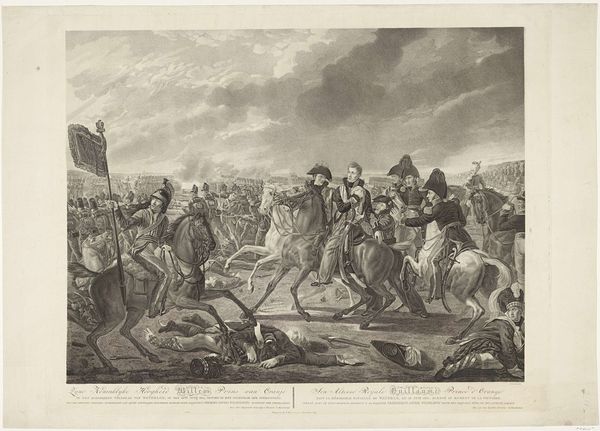
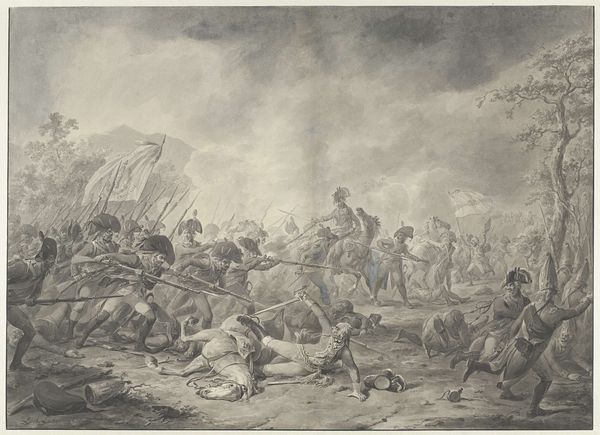
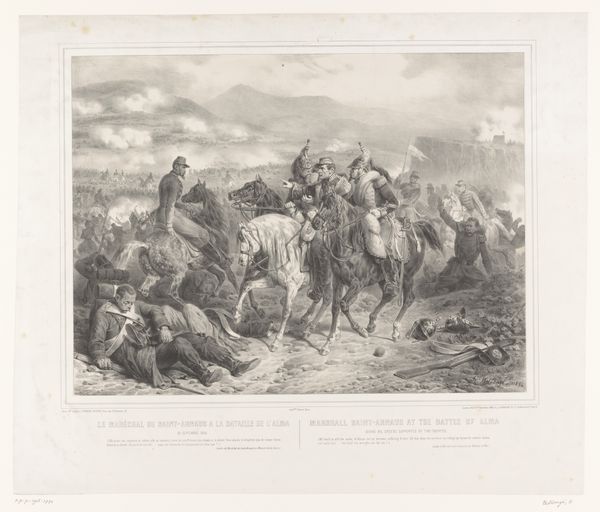
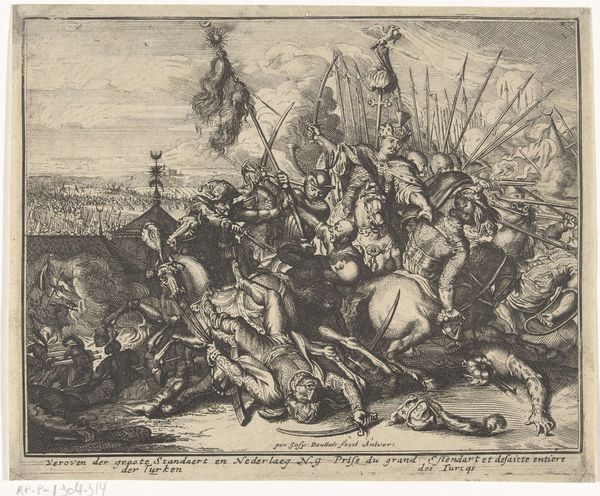
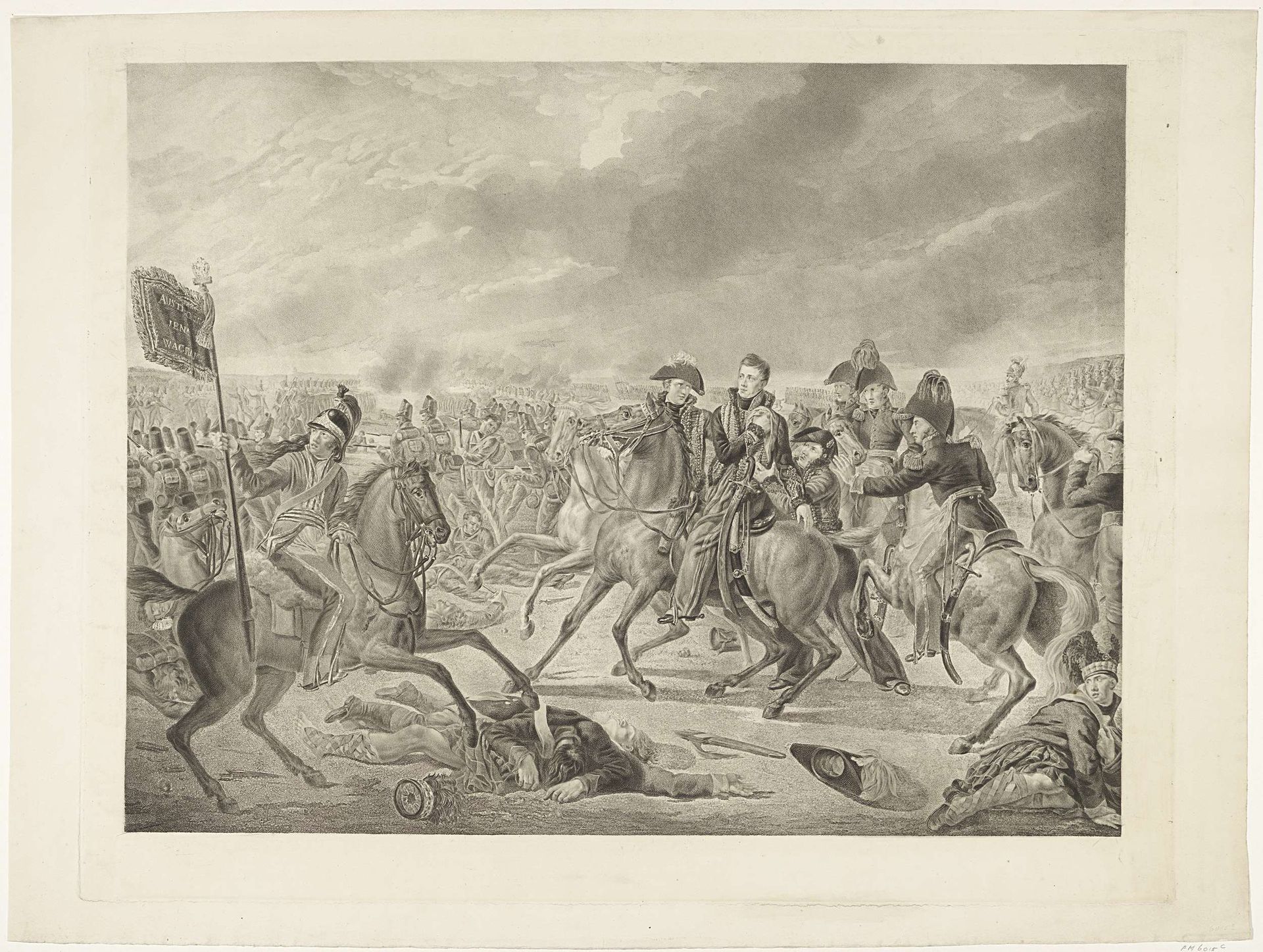
Willem van Senus created this print titled *Prins van Oranje in de slag bij Waterloo* in 1815. This work reflects the socio-political landscape of the Netherlands after the Napoleonic era, capturing a pivotal moment in European history. It portrays the Prince of Orange amidst the chaos of the Battle of Waterloo. Senus highlights the Prince's courage and leadership in a composition full of movement, where fallen soldiers and rearing horses fill the scene. The Prince is centralized, with many of the surrounding figures looking to him for direction. We can feel the tension and violence of battle through the swirling smoke. The print served as propaganda, emphasizing Dutch contributions to Napoleon's defeat and bolstering national pride. It presents a heroic narrative that shaped collective memory and identity in a nation seeking to re-establish itself on the European stage, but at the expense of the lives and experiences of the soldiers.
Prins van Oranje in de slag bij Waterloo, 1815
1817

Willem van Senus
1773 - 1851Location
RijksmuseumArtwork details
- Medium
- print, engraving
- Dimensions
- height 624 mm, width 785 mm
- Location
- Rijksmuseum
- Copyright
- Rijks Museum: Open Domain
Tags
Comments
Share your thoughts
About this artwork
Willem van Senus created this print titled *Prins van Oranje in de slag bij Waterloo* in 1815. This work reflects the socio-political landscape of the Netherlands after the Napoleonic era, capturing a pivotal moment in European history. It portrays the Prince of Orange amidst the chaos of the Battle of Waterloo. Senus highlights the Prince's courage and leadership in a composition full of movement, where fallen soldiers and rearing horses fill the scene. The Prince is centralized, with many of the surrounding figures looking to him for direction. We can feel the tension and violence of battle through the swirling smoke. The print served as propaganda, emphasizing Dutch contributions to Napoleon's defeat and bolstering national pride. It presents a heroic narrative that shaped collective memory and identity in a nation seeking to re-establish itself on the European stage, but at the expense of the lives and experiences of the soldiers.
Comments
Share your thoughts