

1647 - 1678
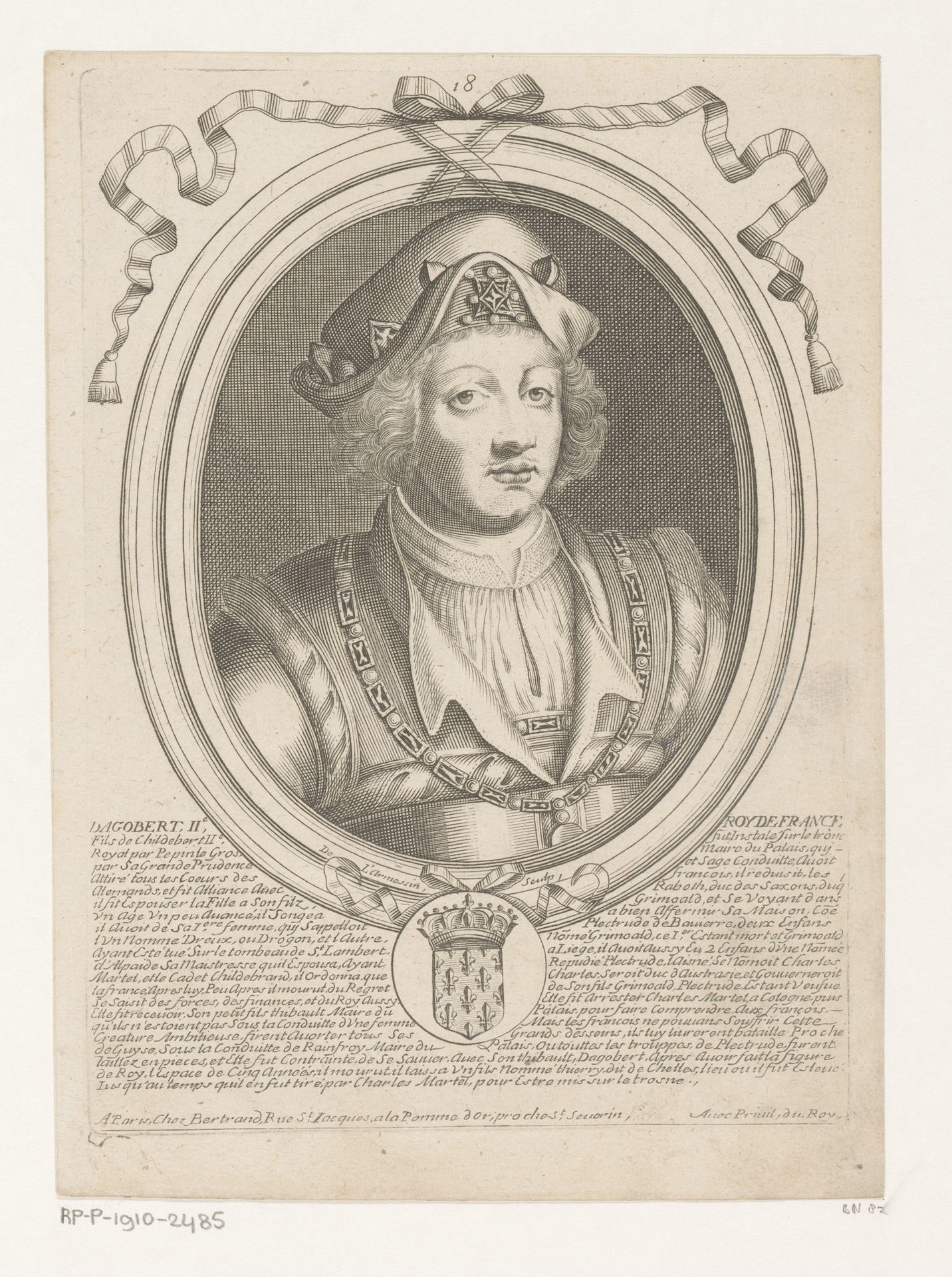
Portret van Dagobert II

Nicolas de (I) Larmessin
1632 - 1694Location
RijksmuseumListen to curator's interpretation
Curatorial notes
This is Nicolas de Larmessin’s print of Dagobert II, made in the 17th century. Note the prominent fleur-de-lis, a stylized lily, emblazoned on his shield. Originally associated with French royalty, particularly the House of Bourbon, the fleur-de-lis signified purity, perfection, and faith. But let us trace its origins further back, beyond heraldry. The lily was tied to the Virgin Mary, a symbol of her purity. And before that, in ancient Egypt, the lotus flower, similar in form, represented rebirth and the sun. Observe how symbols, like migratory birds, traverse cultures and epochs. Each time they land, they gather new meanings. The fleur-de-lis echoes across time, from the scepters of kings to the banners of saints, a testament to our collective memory. In each iteration, it stirs something deep within us, an echo of our ancestors. The power of symbols is not just in their design, but in their ability to resonate with the human soul.