1905
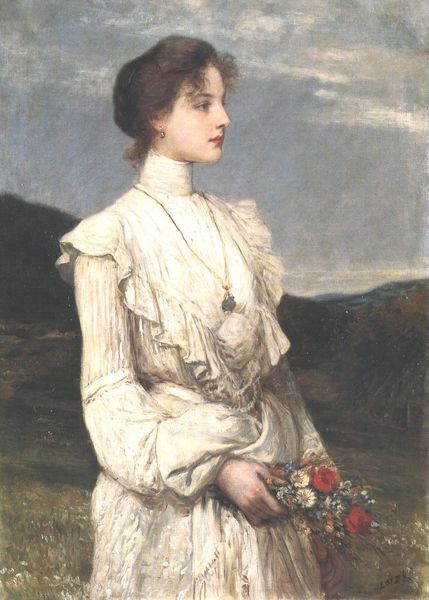
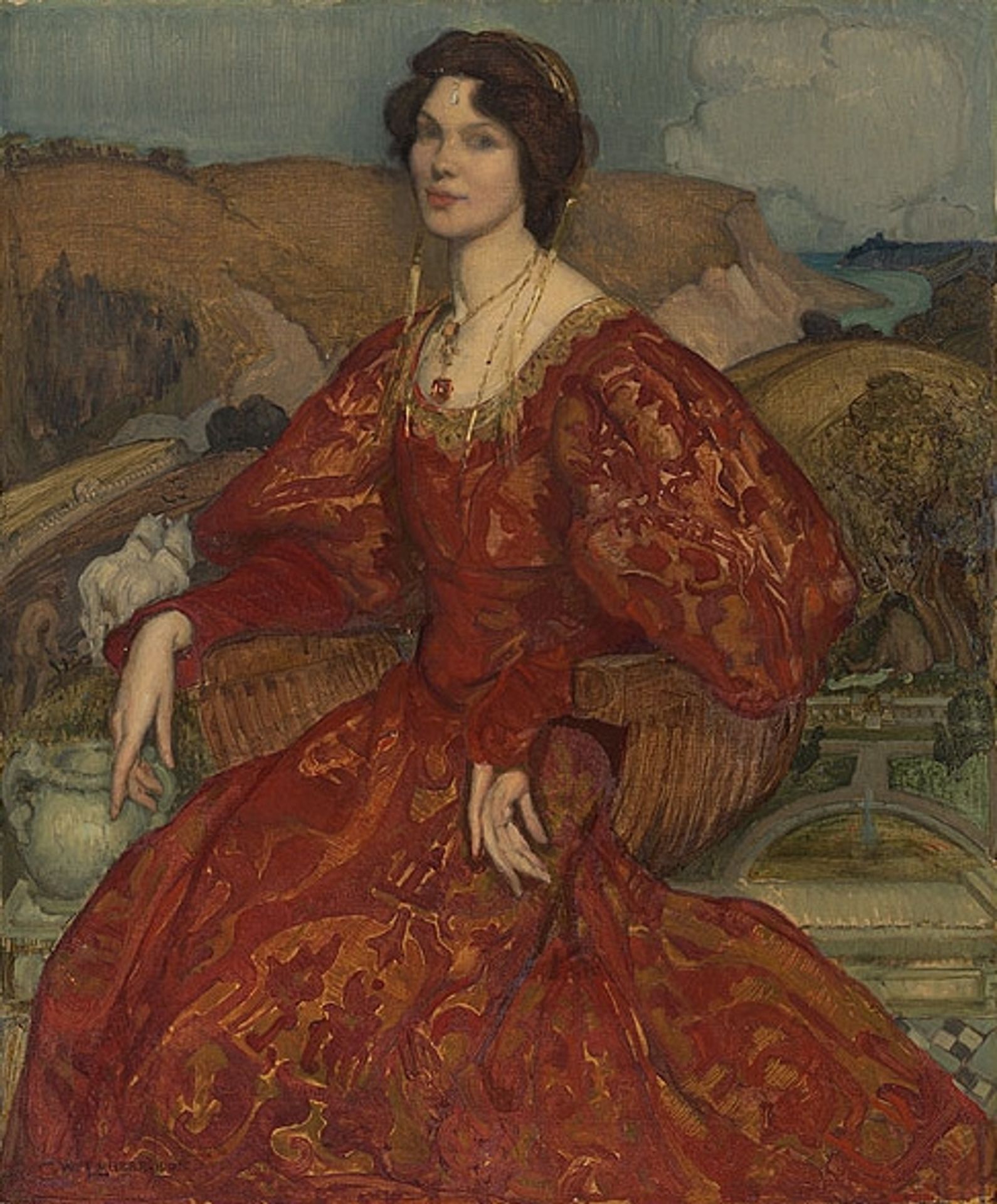
Sybil Waller in a Red and Gold Dress

Listen to curator's interpretation
Curatorial notes
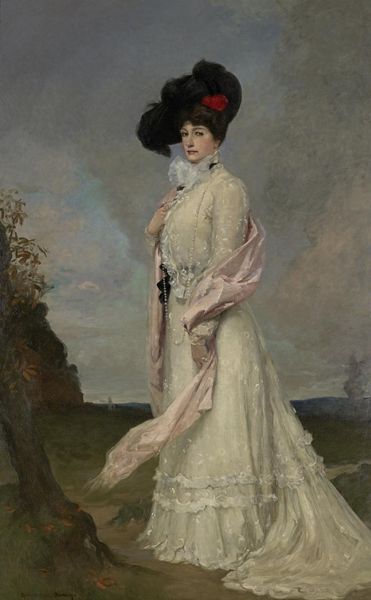
Editor: Here we have George Washington Lambert’s “Sybil Waller in a Red and Gold Dress,” painted in 1905. The way Lambert has captured the textures and light gives the painting such a rich, almost theatrical feel. What strikes you most about this piece? Curator: The immediate thing I notice is how Lambert uses portraiture to engage with notions of status and performance during the Edwardian era. Consider the context – who commissions portraits, who is being portrayed, and what message are they trying to convey to their audience. How does the composition serve a particular narrative, say of social mobility or perhaps a conscious echo of old-world aristocracy? Editor: It makes me wonder if there was a very particular idea that they wanted to show about her. I didn’t really catch how political portraits were at that time. Is there something specific about the dress that you see? Curator: Absolutely! The red and gold dress is key. Its rich brocade and dramatic sleeves place her within a certain social stratum, broadcasting wealth and taste. It’s a deliberate visual statement, isn't it? A painter uses such details to reflect the sitter’s values, or perhaps the values she wishes to project. Does the backdrop—that vague landscape—seem conventional or does it offer us a way of grounding Sybil Waller within a more specific geographical or imaginative space? Editor: I see what you mean. It's more than just a pretty picture; it’s like a carefully constructed advertisement. It also shifts the way I was thinking about the theatrical nature of the artwork; maybe the background offers its own sort of… stage? Curator: Precisely! By understanding the social context and artistic conventions, we can really unpack how Lambert and Sybil Waller used this painting to construct her public persona. Editor: Wow, looking at it now, it feels like there is more to unpack than I first thought. Thanks for helping me see past just the aesthetics and consider the social stage this painting creates.