1850
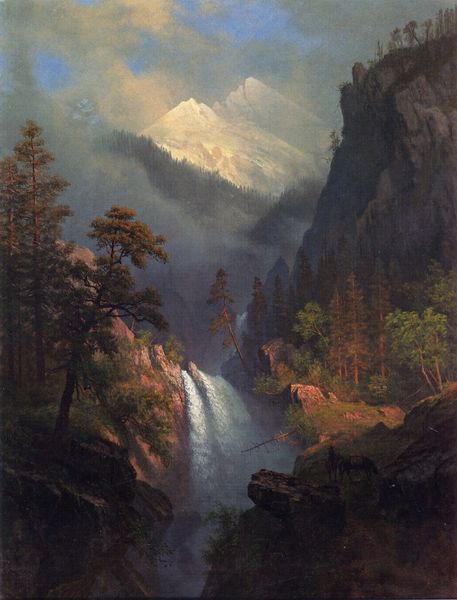
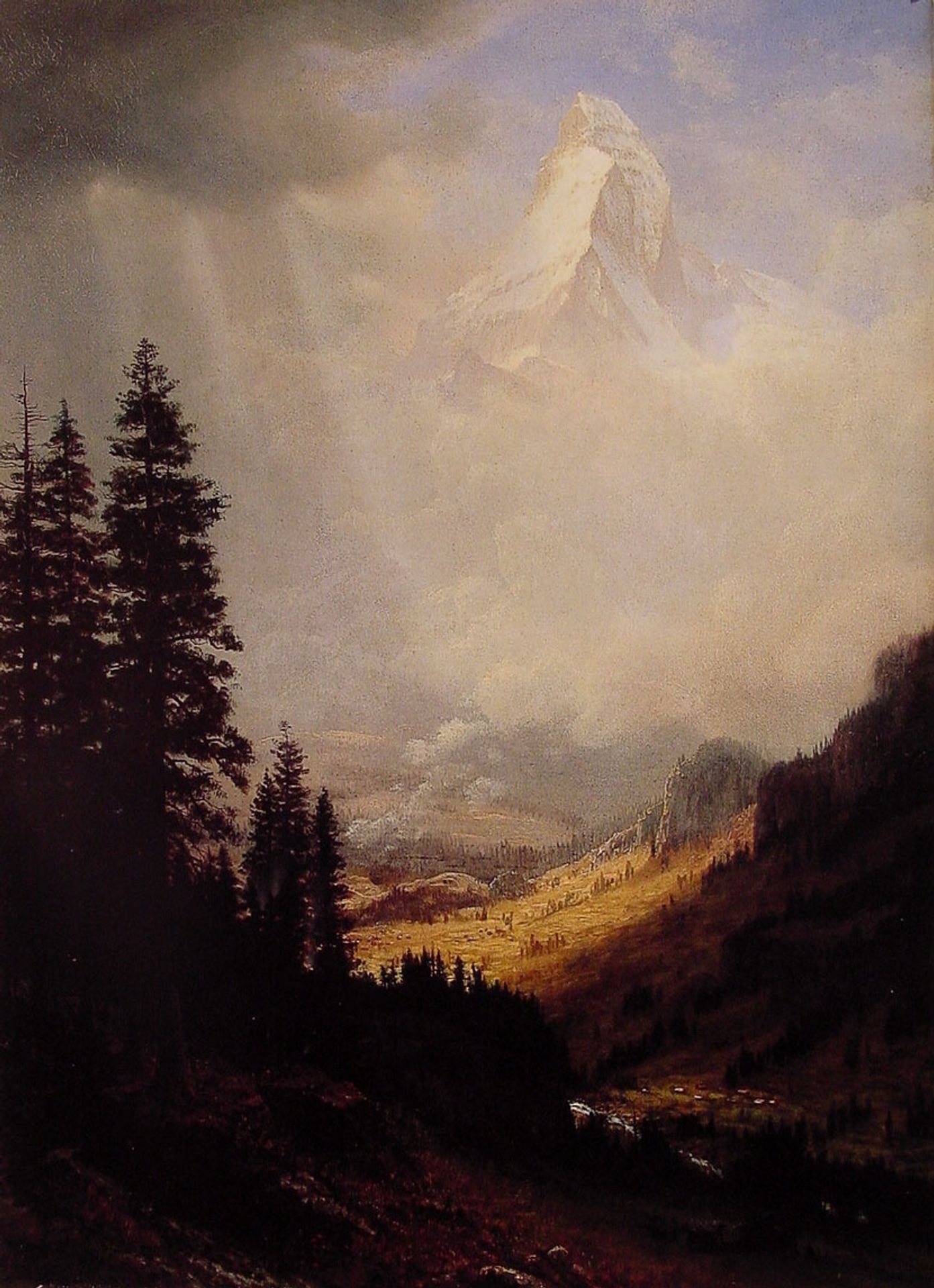
The Matterhorn

Albert Bierstadt
1830 - 1902Location
Private CollectionListen to curator's interpretation
Curatorial notes
Albert Bierstadt painted this oil on canvas, "The Matterhorn," as a sublime vision, playing with atmospheric perspective to evoke an emotional response. The painting is structured around a stark contrast: the dark, textured foreground of trees and shadowed valley, against the ethereal, light-infused mountain peak. The composition uses a semiotic system of light and dark to create depth. The obscured valley and shadowed trees signify the earthly realm. In contrast, the mountain, rendered in soft, luminous tones, ascends into a divine, untouchable space, framed by billowing clouds. Bierstadt used a limited color palette, focusing on muted browns and grays that create a sense of awe, and reflect broader artistic concerns, as the sublime was a popular trend. The mountain, while massive, is rendered with such delicate brushwork that it almost dematerializes, suggesting a transcendence beyond the physical world. This play between the real and the ideal, achieved through formal means, engages us with a discourse on nature, spirituality, and the sublime's power to destabilize our understanding of scale and perception.