1860
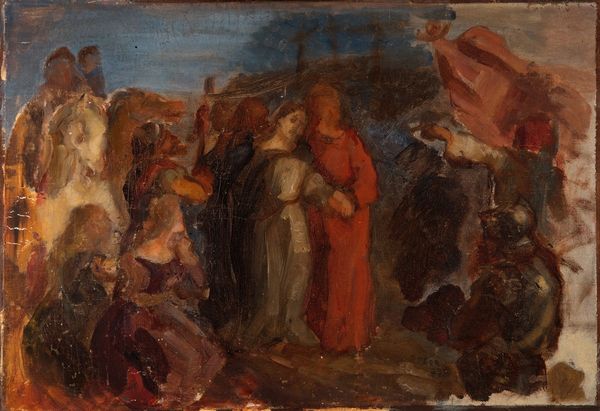
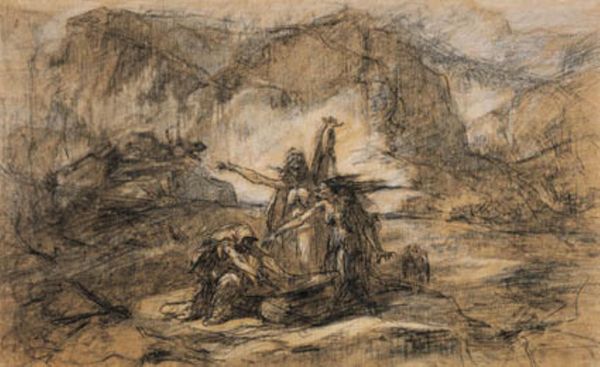
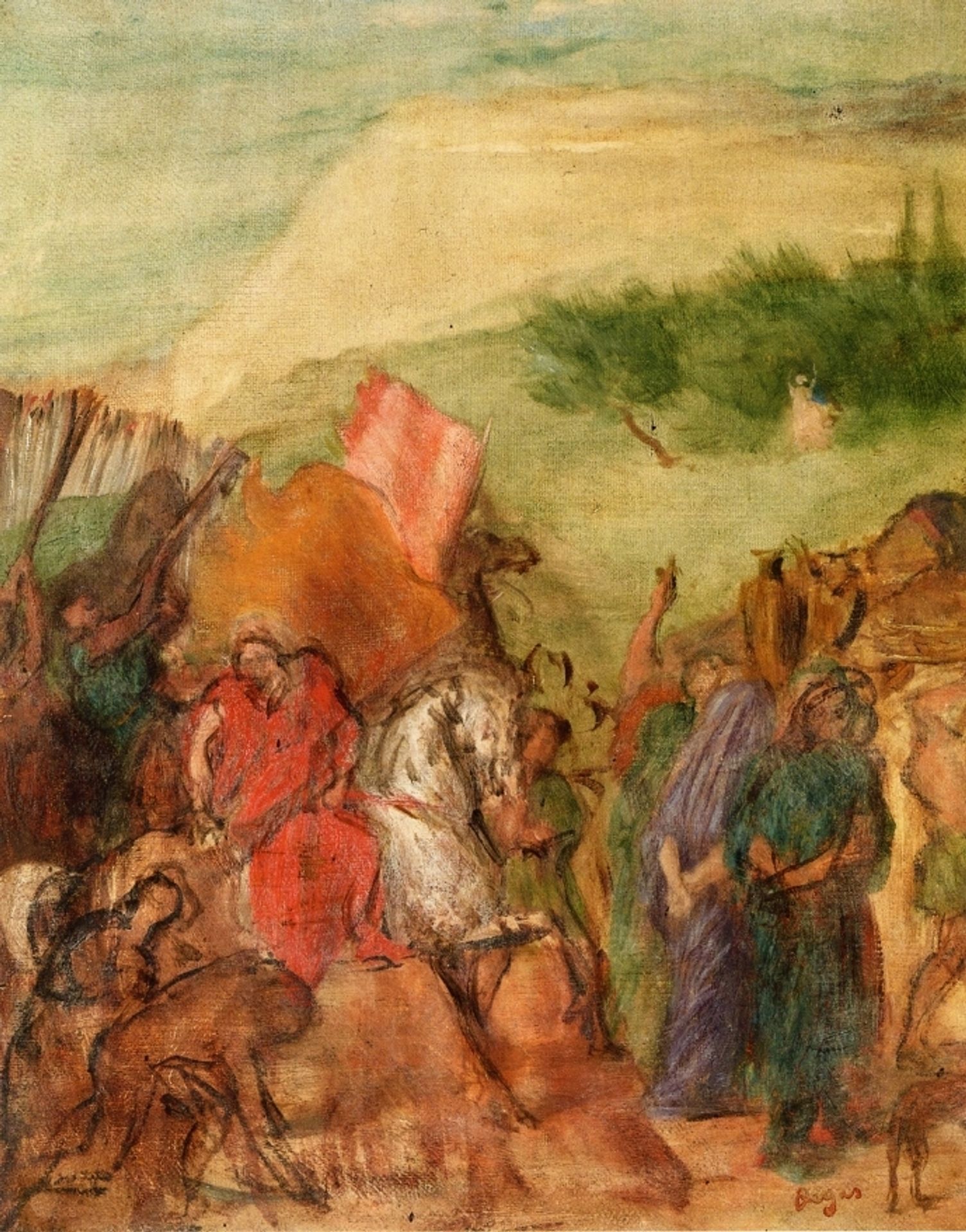
The Daughter of Jephtha (study)

Edgar Degas
1834 - 1917Location
Private CollectionListen to curator's interpretation
Curatorial notes
Editor: Here we have Edgar Degas's "The Daughter of Jephtha (study)," an oil painting from 1860. The figures seem to blend into the landscape; it's almost dreamlike, maybe a bit unsettling. How do you interpret the composition of this study? Curator: The loose brushwork and muted palette indeed create a sense of unease, characteristic of the shift away from Neoclassical precision towards Romantic expressiveness. Notice how Degas uses color to structure the scene – the patches of red drawing the eye amidst the otherwise earthy tones. It's almost as though the artist is highlighting disruption or sacrifice. Editor: Sacrifice… right. I'm also struck by how little detail there is. It feels unresolved. Was this typical for Degas at this stage? Curator: Precisely! Think of this less as an unfinished piece and more as an exploration of form and color. The indistinct forms contribute to the emotional ambiguity. By de-emphasizing precise contours, the artist draws our attention to the relationship between color, shape and tonality. Do you see any repeated forms in the study? Editor: Now that you mention it, the repetition of diagonal lines seems to give movement to the composition. And it contrasts nicely with the vague rendering of the background. Curator: A good eye! Indeed, that rhythm gives a dynamic, yet contained feel. A question arises - does the diagonal imbue a sense of tension through the instability it offers the piece? Editor: That’s a really interesting thought! Focusing on form and color, rather than the historical narrative opens up new perspectives. Curator: Absolutely. Analyzing its formal elements allows a deeper appreciation for its visual weight. I'm glad we could look closely at this preparatory study together.