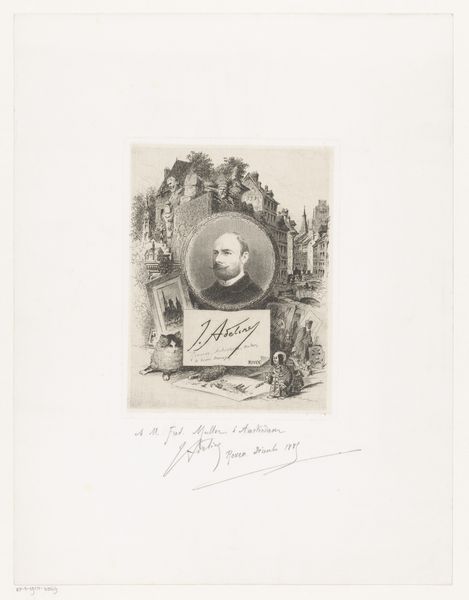
Fra Pietro og klosteret S. Bonaventerra i Rom. A. Küchler 1886
0:00
0:00


print, engraving
#
portrait
# print
#
landscape
#
history-painting
#
engraving
Dimensions: 260 mm (height) x 295 mm (width) (bladmaal)
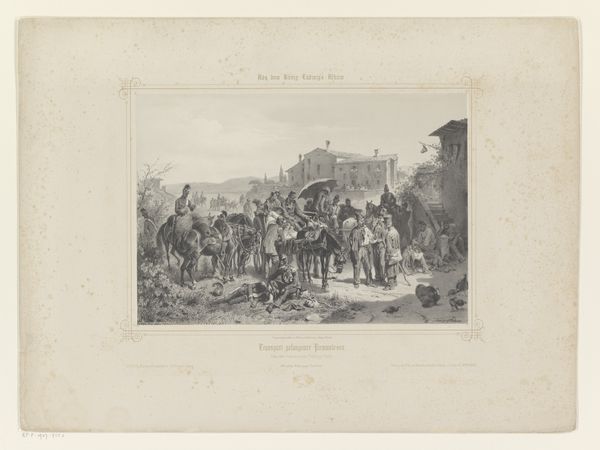
This print shows Fra Pietro and the monastery of San Bonaventura in Rome. It was made by an anonymous artist, sometime in the 19th century. Prints like this one, sold as souvenirs to visitors, reflect the growth of tourism and the public appetite for images of foreign lands and cultures. They speak to the democratization of art, as printed images made art accessible to a wider audience beyond the elite who could afford original paintings. But it's also interesting to consider the politics of representation. The artist, presumably a northerner, portrays Rome, a city laden with historical and religious significance. What does it mean to frame this image with natural motifs, juxtaposing the architectural and the natural? What does it mean to reduce the city to picturesque ruins, a vestige of a glorious past? To understand this print more fully, we might research the history of tourism in 19th-century Rome. We can also research the artist and printmaker networks that disseminated images like these.
Comments
No comments
Be the first to comment and join the conversation on the ultimate creative platform.
 Collect
 React
React Comment
More like this