carving, photography, sculpture, marble
#
portrait
#
statue
#
carving
#
figuration
#
photography
#
sculpture
#
marble
Copyright: Public domain
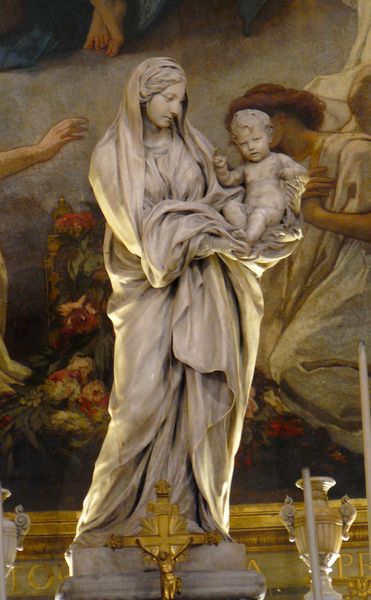
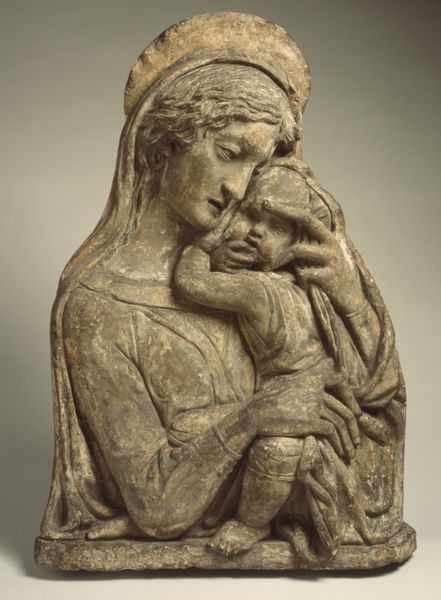
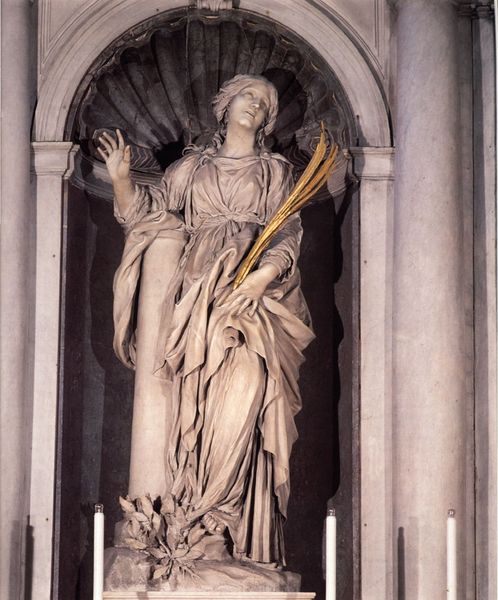
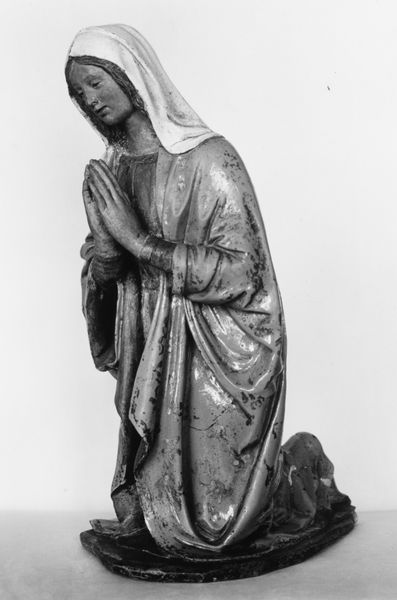
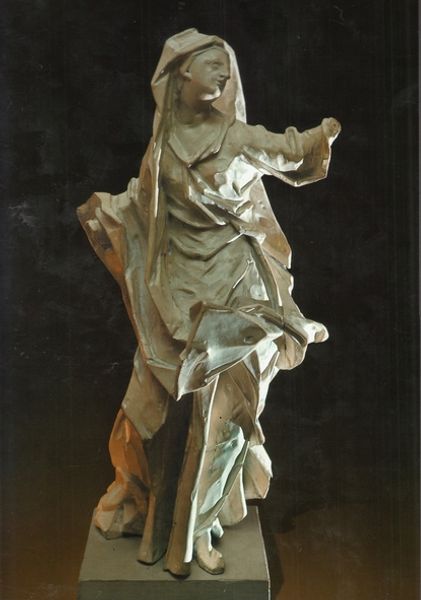
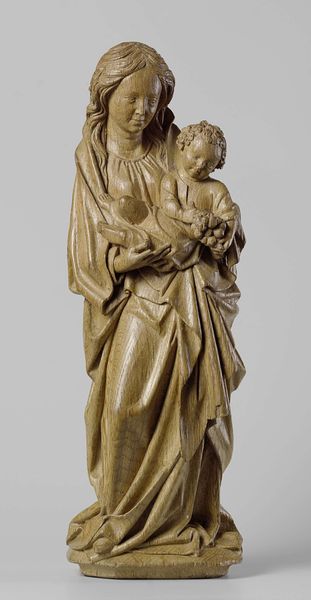
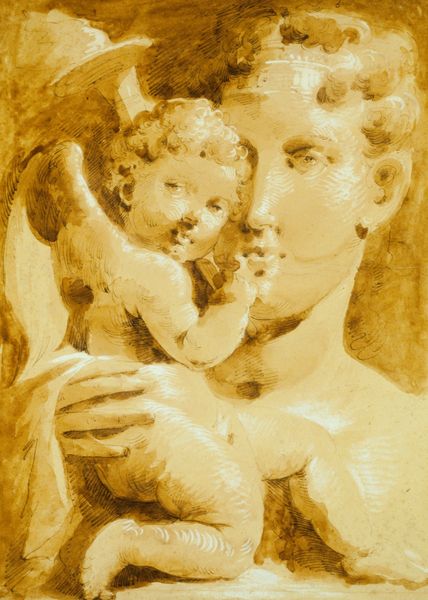
Editor: This photograph captures Jean-Baptiste Pigalle’s marble sculpture, "Chapel of the Virgin in Saint-Sulpice Church". It evokes a sense of serene power. The way the light illuminates the figures is beautiful. What can you tell me about this piece, perhaps beyond the purely aesthetic? Curator: This sculpture, like much religious art, can be viewed as a power statement. It’s not just about devotion; it reinforces specific social hierarchies and gender roles. Who is at the centre? What does that placement imply, and what narratives does it reinforce? Editor: I see the Virgin Mary holding the Christ child, but what power dynamics are in play? Is it about maternal power? Curator: It’s more complex than just maternal power. Consider how Mary, even as a powerful symbol of motherhood, is still often depicted as submissive to a higher, patriarchal power. What about the serpent coiled around the globe beneath her feet? What does that imagery communicate? Editor: The serpent symbolizes evil, crushed beneath her feet, so is this a narrative of female triumph over evil and perhaps patriarchal oppression? Curator: Precisely. But consider too how this narrative is constructed and controlled within the very patriarchal structures it might seem to subvert. The Church uses the image of female power, but within strict boundaries. Think about how societal expectations have confined and defined female roles. Editor: So, while on the surface it's a powerful image of motherhood and triumph, it’s simultaneously reinforcing the constraints placed on women? Curator: Exactly. Art is never created in a vacuum. Examining its social and historical context allows us to unpack these complex layers of meaning. Do you think our modern understanding affects how we view religious works now? Editor: Absolutely! Seeing it this way, it’s much more than just a religious icon; it’s a cultural artifact reflecting complex societal values and power struggles. Thank you for enlightening me. Curator: It's been enlightening for me as well!
Comments
No comments
Be the first to comment and join the conversation on the ultimate creative platform.
 Collect
 React
React Comment
More like this