1817
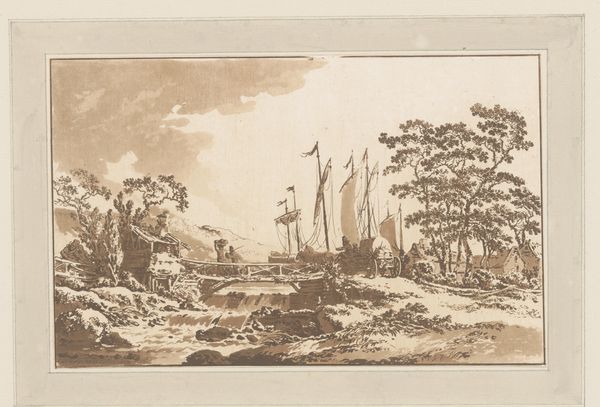
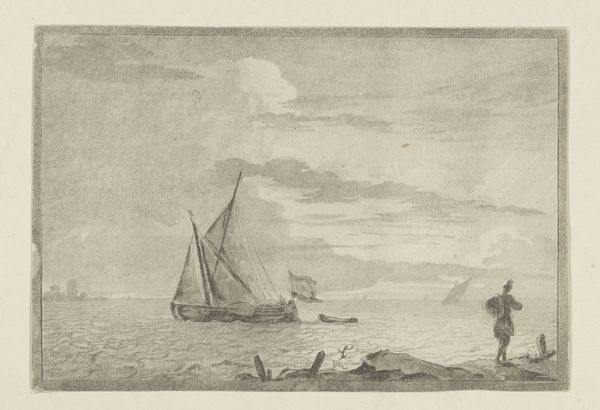
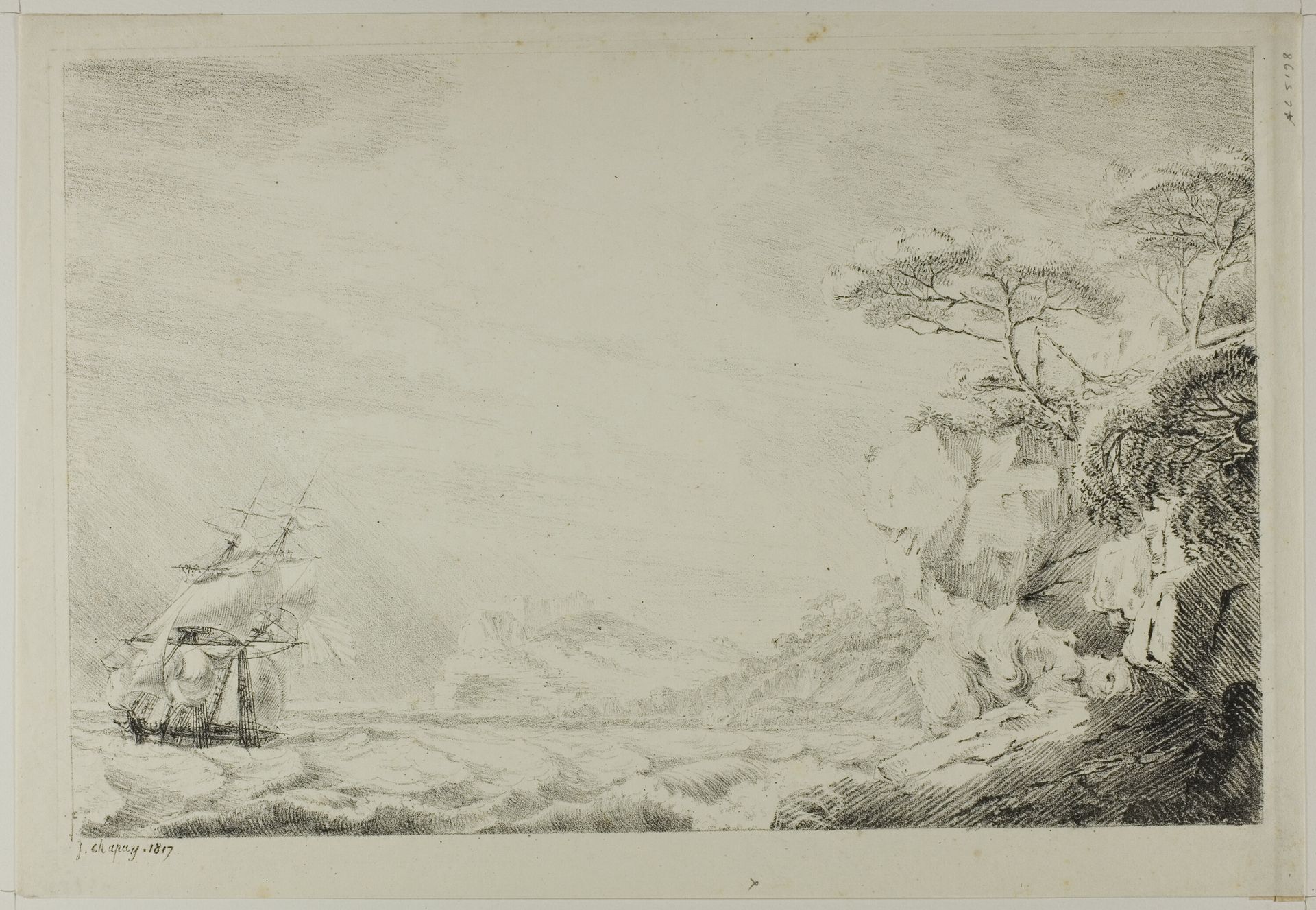
Landscape with Sailing Ship


Listen to curator's interpretation
Curatorial notes
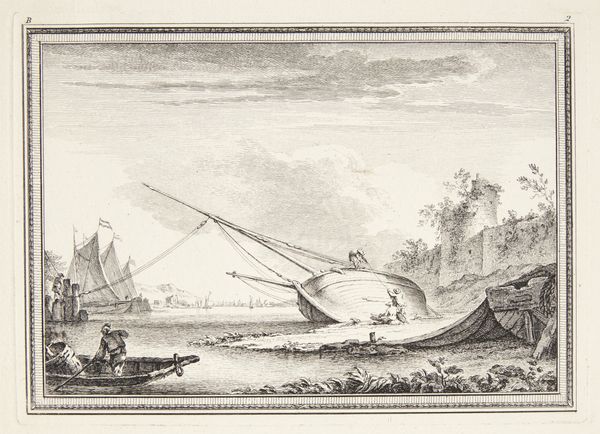
Editor: So, here we have Johann Joseph Chapuy's "Landscape with Sailing Ship" from 1817, rendered in etching and lithograph on paper. There's a delicate quality to the lines, almost ephemeral, capturing a stormy sea. What strikes me most is how the scene seems both vast and intimately rendered at the same time. What do you see in this piece? Curator: I see the confluence of craft and technology defining Romantic-era printmaking. Lithography and etching offered Chapuy relatively accessible means of producing and distributing this imagery. The textures created through these printmaking methods simulate the churning waves and wind-swept sky, highlighting how artists explored the potential of the medium to capture sensory experience. Think of the materiality of the ink itself, transferred onto paper, becoming a stand-in for the immensity of nature. How do the marks themselves evoke the scene? Editor: It’s interesting to think about the choice of materials. The swirling lines and the gradations of tone really do create the illusion of movement. I hadn’t thought about how accessible printmaking made art at that time. Curator: Exactly. We should consider how the accessibility of prints democratized art, moving it from exclusive elite collections to broader markets. Landscape became a commodity, imbued with romantic ideals, made readily available through processes replicable by skilled labor. Does knowing that change your understanding of the image? Editor: Absolutely. It reframes the work. It’s not just about the aesthetic quality of the print, but the means of its production, circulation, and consumption within a developing market. It connects art to the industrial context in a really interesting way. Curator: And understanding that connection allows us to consider art as both a product of individual skill and broader societal forces, reminding us how closely creation, consumption, and craft are interwoven.