
Curatorial notes
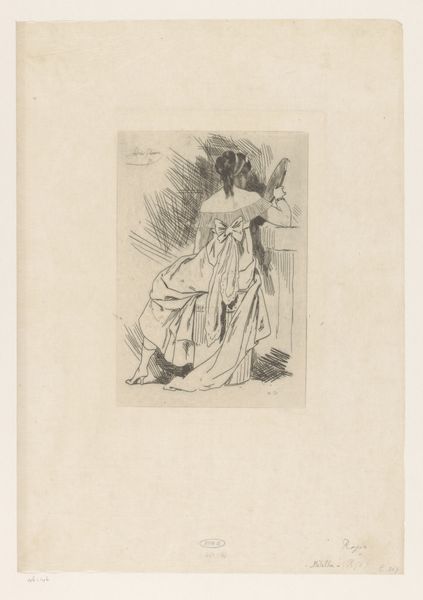
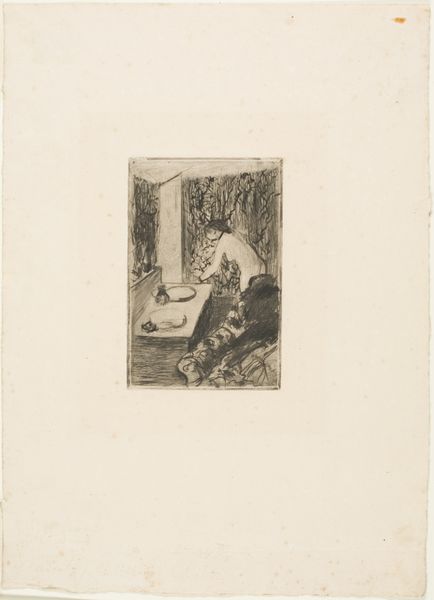
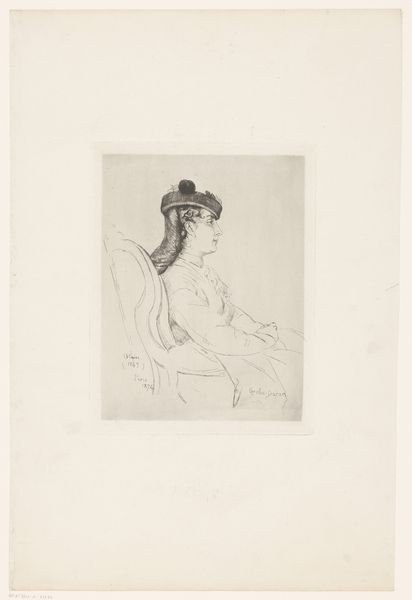
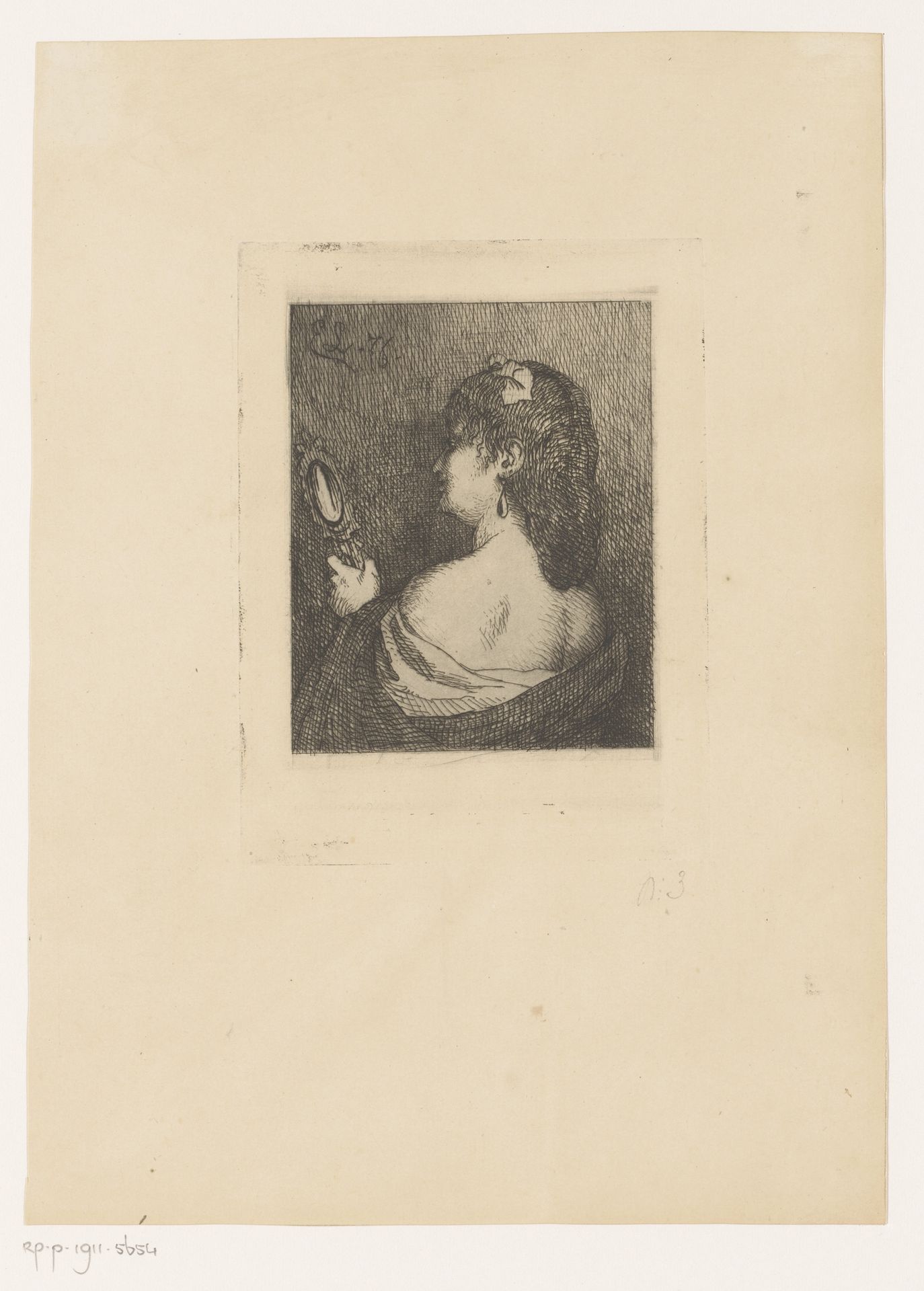
Curator: Edmond Lambrichs created this etching in 1876. It is titled, "Woman Looking in a Mirror". Editor: There's something so intimate and somber about the piece. The soft etching style creates a muted and moody atmosphere. The woman seems very contemplative. Curator: Yes, and its style is a great example of realism combined with emerging symbolism. While formally a genre scene or even portrait, the mirror introduces complex themes of self-reflection, vanity, and societal expectations for women. Editor: Absolutely, mirrors have been used for centuries to signify vanity, truth, and even the soul. The woman's bare back hints at vulnerability and a defiance of social norms, and what about the earring she wears? Is that a symbolic element as well? Curator: It certainly could be. The earring perhaps serves as a visible marker of status and femininity during a time when personal presentation was heavily scrutinized. I would be keen to study it further with some historians who have spent a great deal of time considering the politics surrounding female adornment during the period. Editor: It would be enlightening. Her reflection also sparks curiosity: is she happy with what she sees, or is there an element of self-doubt? Perhaps she's deciding which persona to present to the world. Curator: That kind of self-aware performance aligns with the changing role of women in the late 19th century. It's a powerful depiction of the inner lives of women during a time of tremendous social change. Editor: I agree; the longer I observe this image, the more it speaks to the complexities of identity and self-perception, still incredibly relevant today. Curator: Indeed, it reveals how we look at ourselves, not just in mirrors, but through the lens of society itself, it seems.