c. 1878
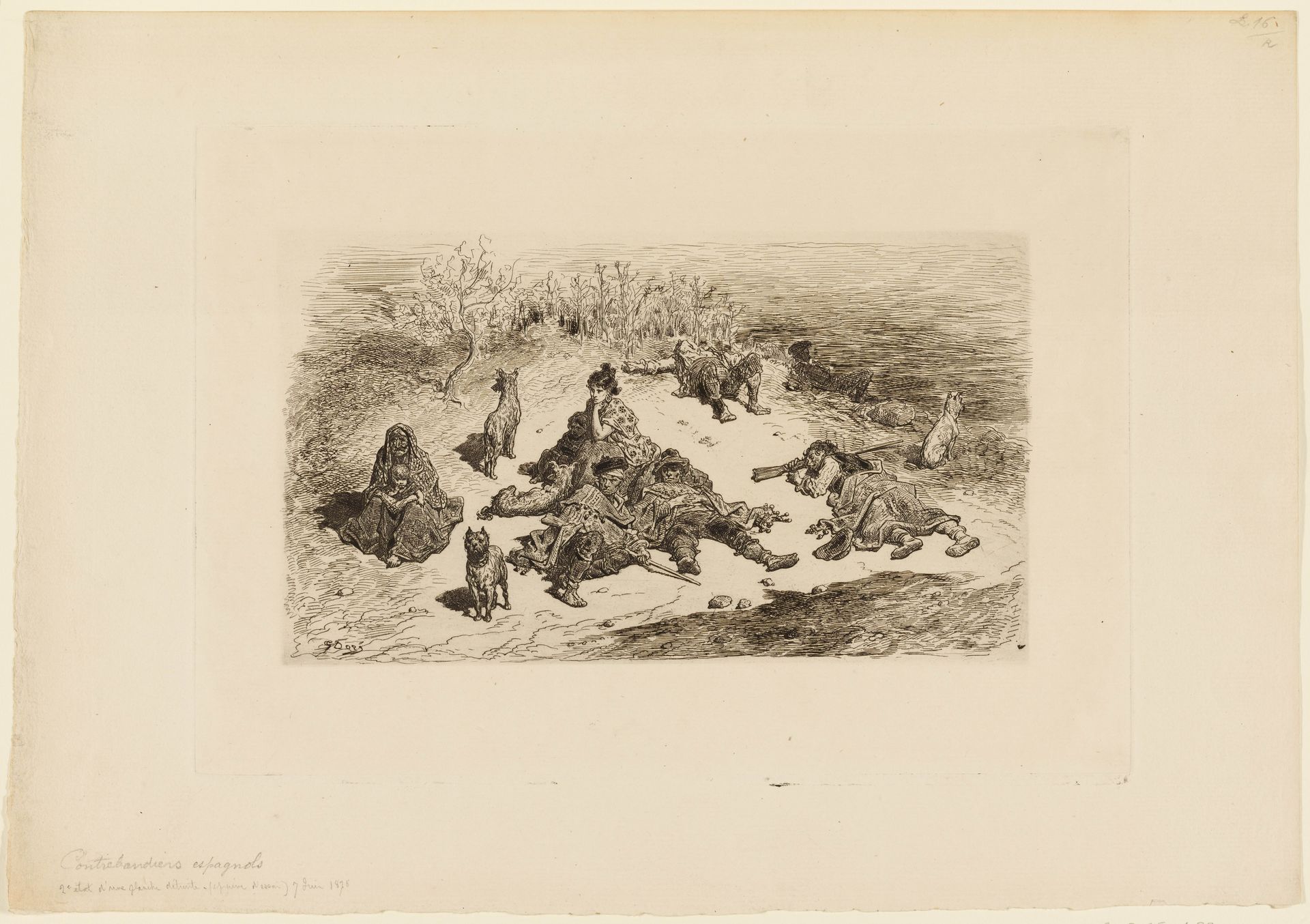
Contrebandiers espagnols (Spanish Smugglers)


Listen to curator's interpretation
Curatorial notes
Gustave Doré created this etching, *Contrebandiers espagnols*, using the intaglio printmaking technique. Here, the artist would have used a sharp needle to draw directly into a copper plate. The plate is then inked, and the surface wiped clean, leaving ink only in the etched lines. Finally, it’s pressed onto paper, creating a mirror image of the original design. Consider the inherent qualities of the etching. The stark contrast between the black lines and the white paper gives the artwork a dramatic, graphic quality. The precise, detailed lines create a sense of depth and texture, especially in the figures' clothing and the landscape. The making process has imbued the artwork with a sense of immediacy and energy, capturing a fleeting moment in the lives of these smugglers. The social context of the work is essential. The theme of smuggling suggests a world of illicit trade, economic disparity, and border crossing. Doré's choice of etching, a relatively accessible and reproducible medium, hints at a desire to disseminate this image widely, perhaps to comment on the social and economic realities of 19th-century Spain. Ultimately, the materials, making, and context of this etching are vital to understanding its full meaning, transcending traditional boundaries between fine art and social commentary.