Les invisibles en tete-a-tete c. 1810 - 1821
0:00
0:00


graphic-art, hand-colored-etching, print, etching
#
graphic-art
#
hand-colored-etching
# print
#
etching
#
caricature
#
figuration
#
romanticism
#
history-painting
#
cartoon carciture
Dimensions: 8 x 10 1/4 in. (20.32 x 26.04 cm) (plate)
Copyright: Public Domain
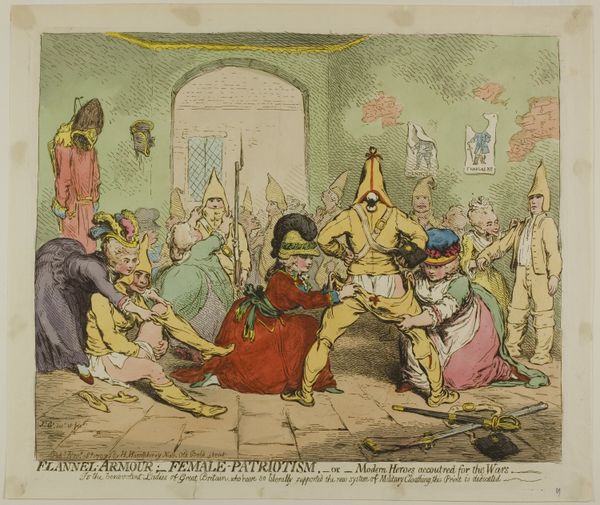
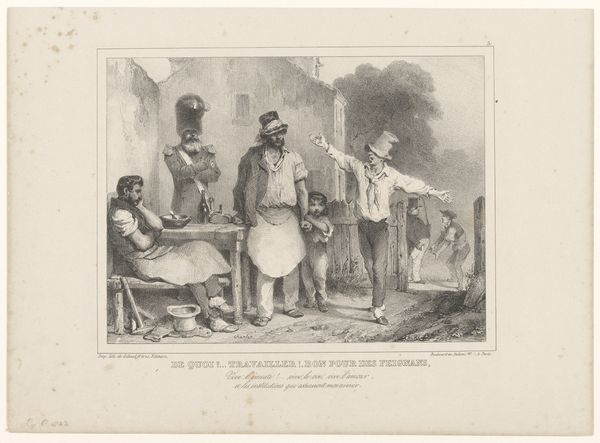
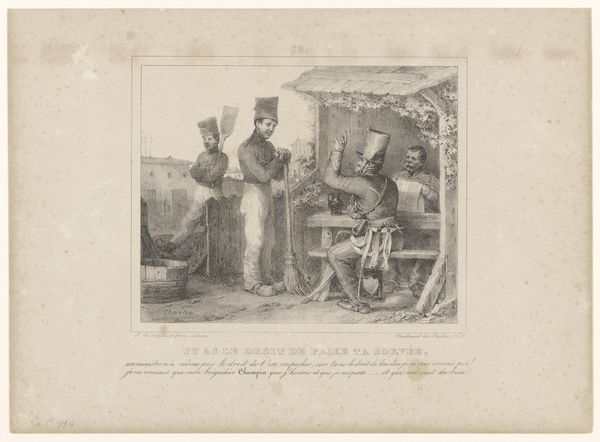
Curator: This hand-colored etching, "Les invisibles en tête-à-tête," dating from around 1810 to 1821, offers a satirical commentary on Parisian society during the Romantic era. Part of the Martinet Publishing Family collection, it's now housed here at the Minneapolis Institute of Art. Editor: My first impression is one of amusement and critique. The oversized headwear immediately draws the eye, distorting these figures into comical representations. What is it about those extravagant hats? Curator: Exactly! The towering hats aren’t merely a fashion statement. These symbolize the excesses and superficiality of the upper classes. This piece allows us to examine how status was both constructed and satirized through fashion. Editor: It's remarkable how effectively these oversized hats become a symbol. The figures seem quite literally blinded and burdened by their status. Notice how other figures further back even wear the same kinds of hats. Almost as if everyone is burdened with it, but oblivious! Curator: The artist's message touches upon how these affectations served as barriers, distancing people from genuine connection. Consider the phrase, "Les invisibles en tête-à-tête," which translates to "The invisibles face to face." The grand title itself suggests an alienation masked by outward displays. It speaks volumes about performative socializing that prevented the very real possibility of authentic relations. Editor: So it critiques more than just the fashion, but the empty interactions behind it! I can see now that these large forms almost disconnect heads to the bodies beneath them, removing one's agency. With so many satirical symbols to be found. I see why it would endure. Curator: Absolutely, this print operates as both a historical record and a timeless observation on human behavior. The way in which satire critiques and shapes perceptions of power continues to resonate today. Editor: It’s fascinating to consider how an image rooted in a specific historical context can continue to offer insights into the human condition centuries later. Curator: It encourages a deeper consideration of the interplay between fashion, identity, and societal expectations. These invisible people, as depicted, prompt us to question our modern "headwear"— the roles and titles and outfits we don in our social interactions, and the true vision it permits.
Comments
No comments
Be the first to comment and join the conversation on the ultimate creative platform.
 Collect
 React
React Comment
More like this