Characteristics in Twenty-Six Plates (cover) 1835 - 1845
0:00
0:00


drawing, print, etching
#
drawing
# print
#
etching
#
caricature
#
figuration
#
romanticism
#
history-painting
Dimensions: Sheet: 7 1/8 × 4 5/8 in. (18.1 × 11.8 cm)
Copyright: Public Domain
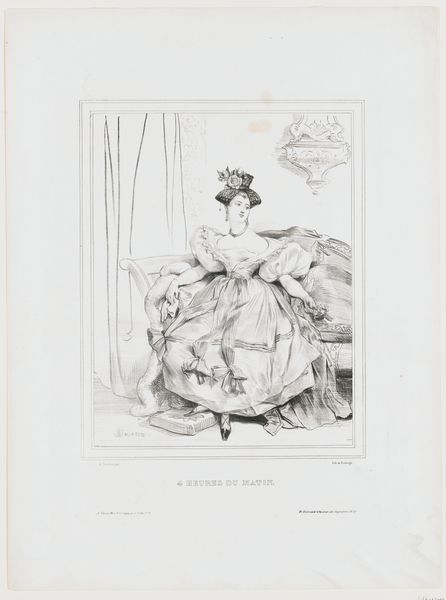
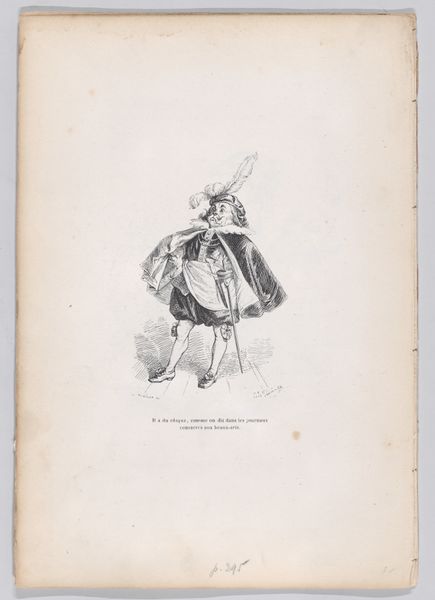
Curator: This is the cover of "Characteristics in Twenty-Six Plates" by Henry Heath, dating from around 1835-1845. It’s an etching, currently residing at the Metropolitan Museum of Art. Editor: The fashion is certainly eye-catching – almost comically exaggerated. I’m curious about the way it satirizes social norms of the time. What's your take on it? Curator: Well, given Heath's penchant for caricature, and the broader context of Romanticism, we have to consider this through a lens of social commentary. The exaggerated silhouettes of the dresses immediately suggest a critique of the constraints placed upon women through fashion, don't they? How might these "characteristics" reflect power dynamics, for example? Editor: So, you're saying the clothing isn't just funny; it's symbolic? Curator: Precisely! Consider the Industrial Revolution's impact and burgeoning middle class. These inflated dresses could represent excessive consumption, while the facelessness of the women might allude to their objectification within a patriarchal society. Even the single male figure becomes interesting. Is he observing, complicit, or also a target of critique? Editor: That makes me think about how these images circulated. The text at the bottom indicates pricing – making this a commodity, which adds another layer to your consumerism argument. Were these critiques aimed at a particular audience, and what might Heath be hoping to achieve? Curator: Absolutely! The rising middle class would likely have been the purchasers and viewers. Heath, like many artists of the time, aimed to expose and critique the follies and pretensions of his contemporaries, hoping perhaps to prompt self-reflection and societal change. It makes me wonder, what’s changed and what remains the same in how we portray gender and class today? Editor: It is fascinating to think about those connections between then and now. This seemingly simple image opens up a much bigger conversation about the social landscape. Curator: Indeed! That's the power of art.
Comments
No comments
Be the first to comment and join the conversation on the ultimate creative platform.
 Collect
 React
React Comment
More like this