1618 - 1655
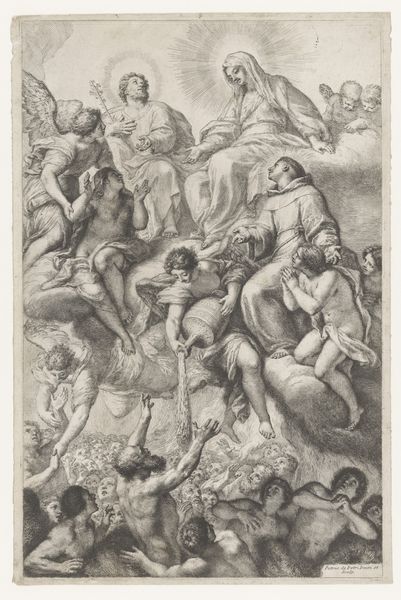
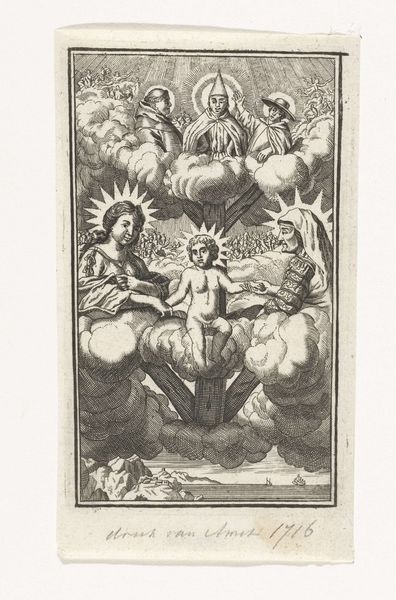
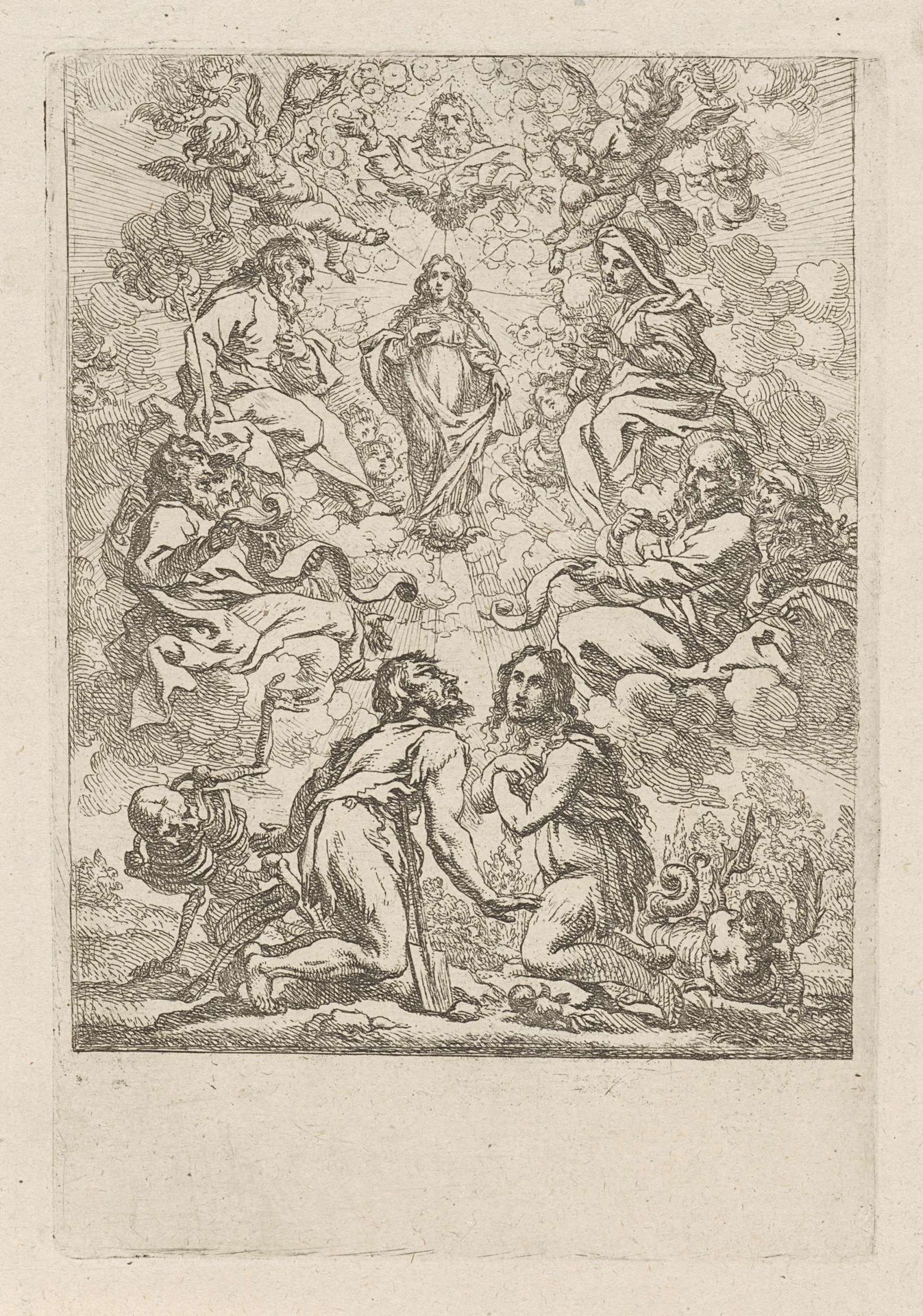
Adam en Eva knielen voor Maria

Cornelis Schut
1597 - 1655Location
RijksmuseumListen to curator's interpretation
Curatorial notes
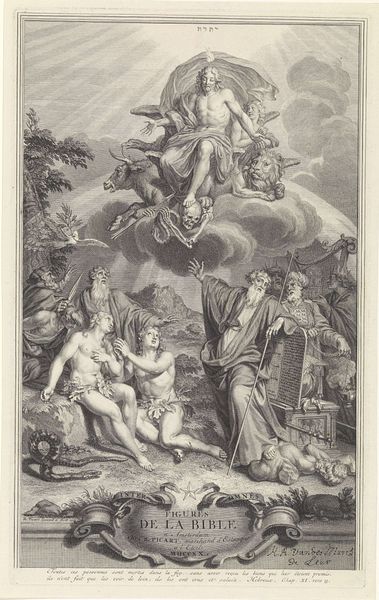
Cornelis Schut produced this small etching, Adam and Eve Kneeling Before Mary, sometime in the first half of the 17th century. It brings together the Old and New Testaments by depicting the first humans seeking intercession from the Virgin Mary. The cultural context for this imagery is the Counter-Reformation. In the wake of the Protestant Reformation, the Catholic Church emphasized the importance of Mary as an advocate for humanity. Schut was from Antwerp, in the Spanish Netherlands, where the Church was determined to reassert its authority through art. Here, the composition is organized to show a hierarchy. Mary is surrounded by saints, God, and angels, all elevated above Adam and Eve. To further emphasize the consequences of the Fall, Schut includes an image of death. Understanding the place of this image in the religious politics of its time requires a good knowledge of history. Art historians consult theological texts, local records, and the biographies of artists to better understand the social life of images.