1896
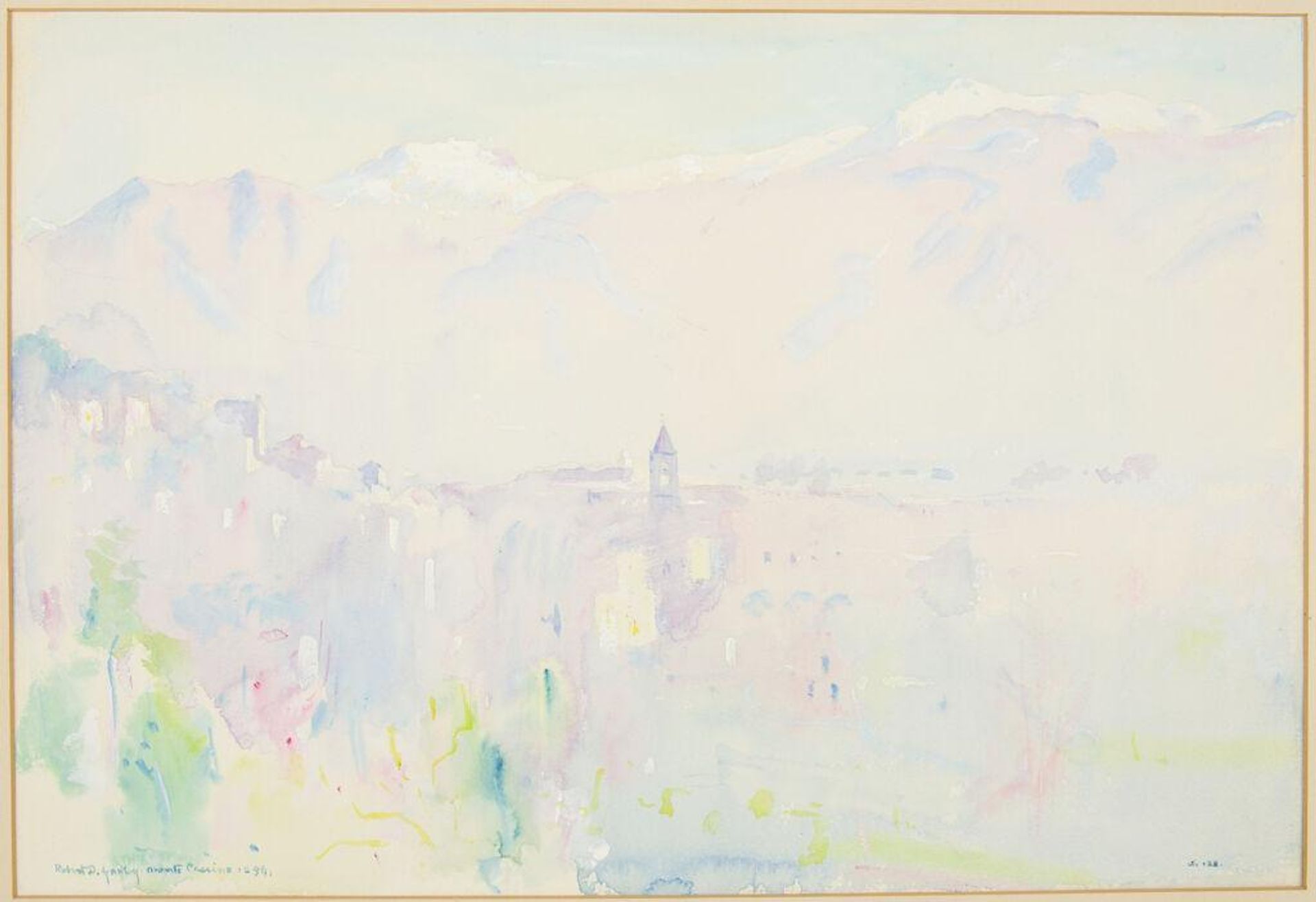
Monte Cassino

Listen to curator's interpretation
Curatorial notes
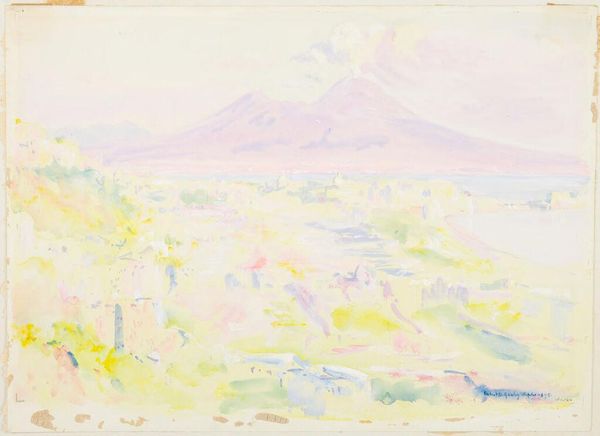
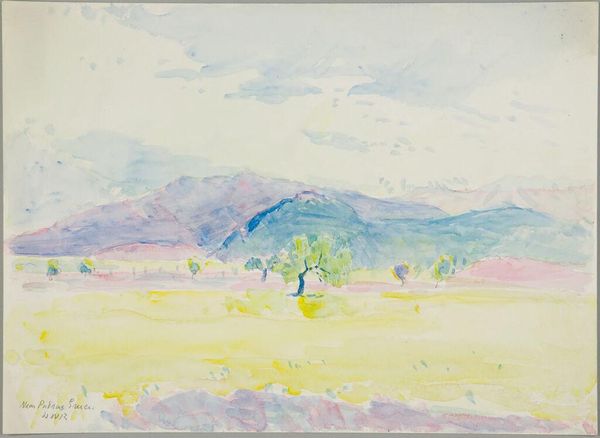
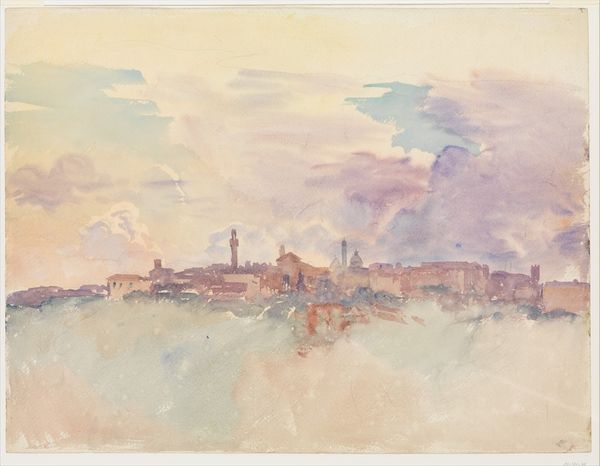
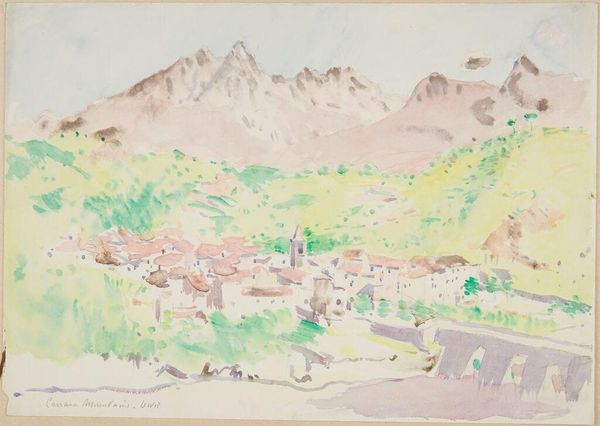
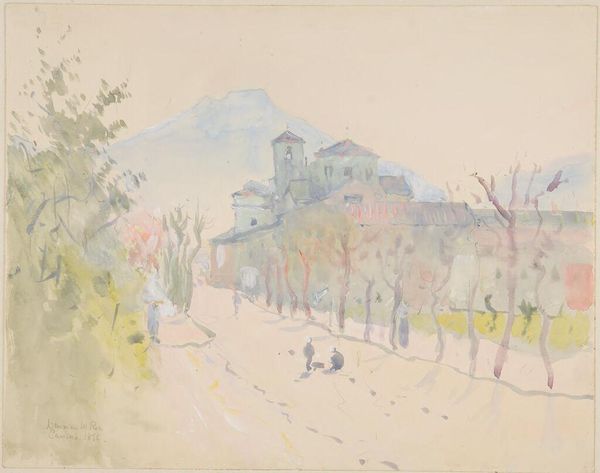
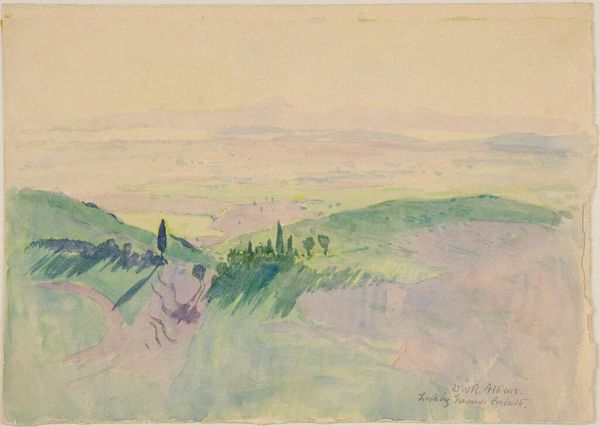
Curator: Robert David Gauley's watercolor, "Monte Cassino," presents us with a landscape viewed through a veil of pale color. The Harvard Art Museums hold this delicate work. What are your first impressions? Editor: It feels like a dreamscape, almost ethereal. The soft washes of color give it a sense of distance, both physical and perhaps temporal, like a memory fading. Curator: Monte Cassino, of course, holds powerful symbolic weight, particularly given its role in the Second World War. The abbey has been a site of spiritual significance for centuries. Editor: Yes, and the abbey's repeated destruction and reconstruction speak to resilience, but also the cyclical nature of conflict. Does Gauley's soft rendering somehow sanitize that history? Curator: Perhaps. Or it emphasizes the enduring spiritual essence, the idea of transcendence even amidst destruction. The lightness of the medium lends itself to that reading. Editor: I find myself wondering about the politics of representing such a charged site with such gentleness. Is it reverence, or avoidance? Curator: It leaves us to consider the visual language we use to depict places of both immense beauty and historical trauma. Editor: Indeed. It reminds us how complex the relationship between art, memory, and power truly is.