Dimensions: Sheet: 21 9/16 × 18 1/8 in. (54.7 × 46 cm)
Copyright: Public Domain
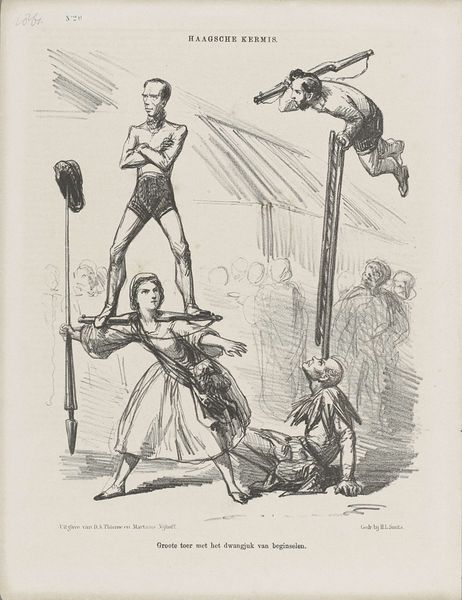
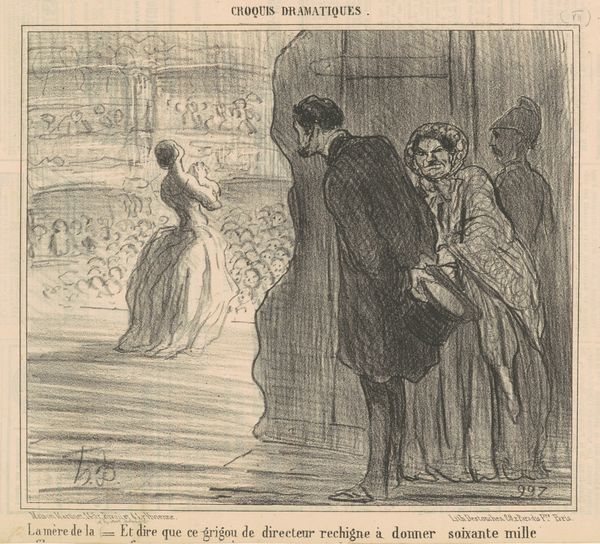
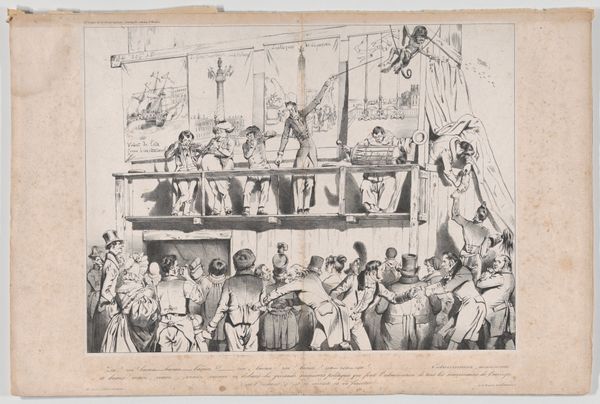
Editor: This drawing, "Trapeze Artist," from between 1850 and 1900 by an anonymous artist, shows an acrobat in mid-air, captured with what looks like pencil and colored pencil. It feels almost like a scene plucked from a fantastical storybook. How would you interpret the setting and its social context? Curator: It's a fascinating glimpse into popular entertainment of the era, isn’t it? Think about the rise of the circus as a spectacle, accessible to a wide audience. Notice how the audience is rendered - tiered, almost as if the architecture itself is performing for us, revealing different levels of society. The artist cleverly uses the trapeze artist, almost suspended in isolation, against the buzz of social life in the theater to show social stratification and how it defines access to joy. What do you notice about how the architecture defines people's roles in society at that time? Editor: That’s a perspective I hadn't considered! I was mainly focusing on the trapeze artist's daring. The depiction of the audience truly speaks of the era. What do the architectural choices then suggest in defining gender and social power within the space depicted in the drawing? Curator: Excellent question. Considering gender, notice that the theater box offers both visibility and protection, reflecting societal norms about women's roles. It creates an enclosure where they have a safe view. Now, consider that only wealthy patrons can gain entry to the theater in the first place. Now how do their class relations define what is taking place on the stage in this drawing? Editor: That's fascinating to consider - how the elite could afford a type of safety while the drawing portrays death defying danger! Curator: Indeed. This piece then tells a complex story, doesn’t it? It moves beyond mere entertainment to expose the social dynamics shaping leisure and spectatorship. Editor: I see it now! It shows a lot more than what meets the eye; a narrative of spectators, of social order and power. Curator: Exactly! A powerful reminder that art reflects not just individual skill, but the pulse of its time.
Comments
No comments
Be the first to comment and join the conversation on the ultimate creative platform.
 Collect
 React
React Comment
More like this