About this artwork
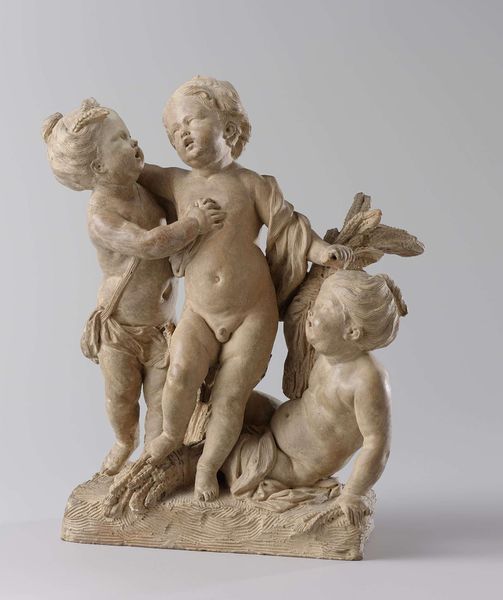
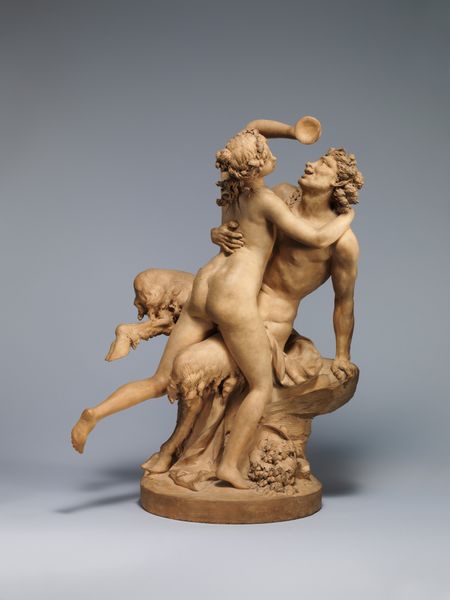
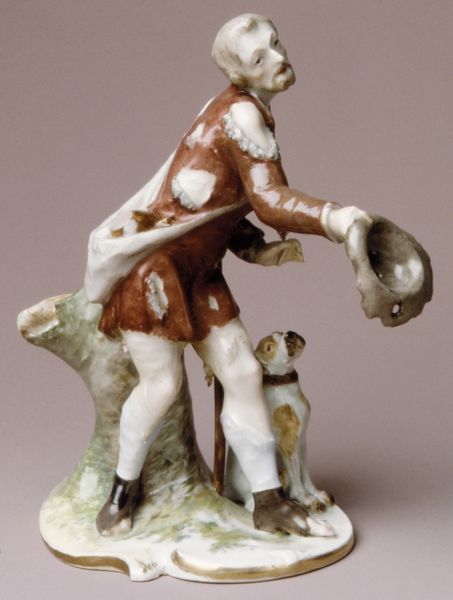
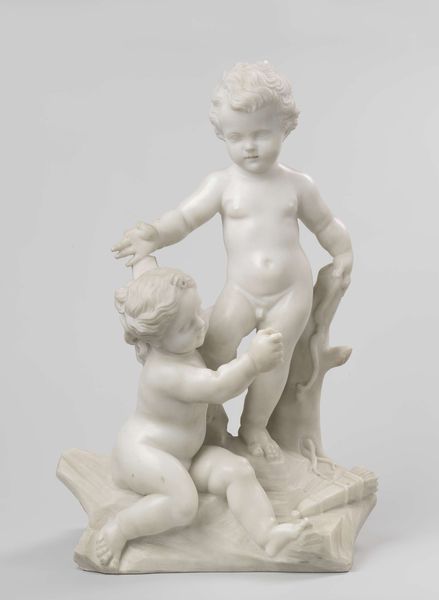
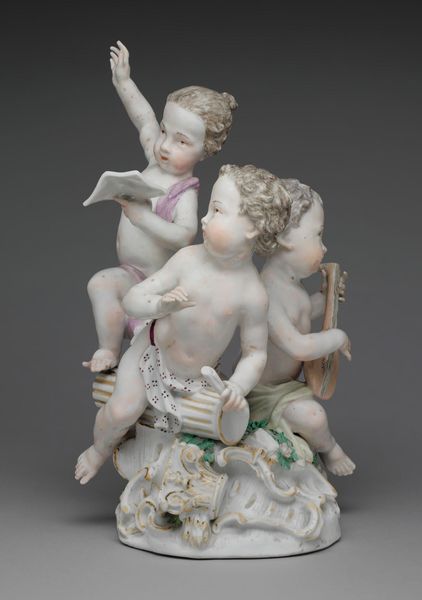
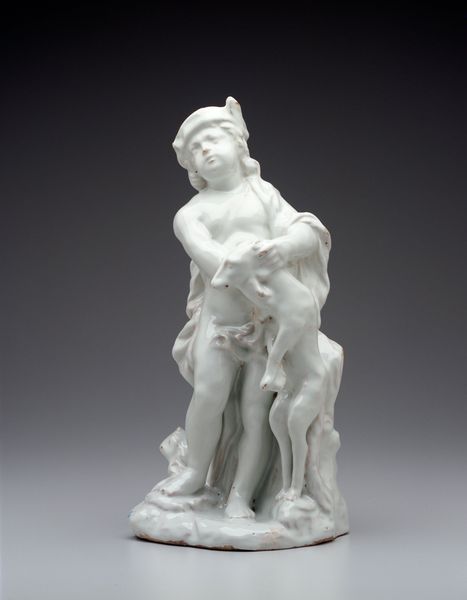
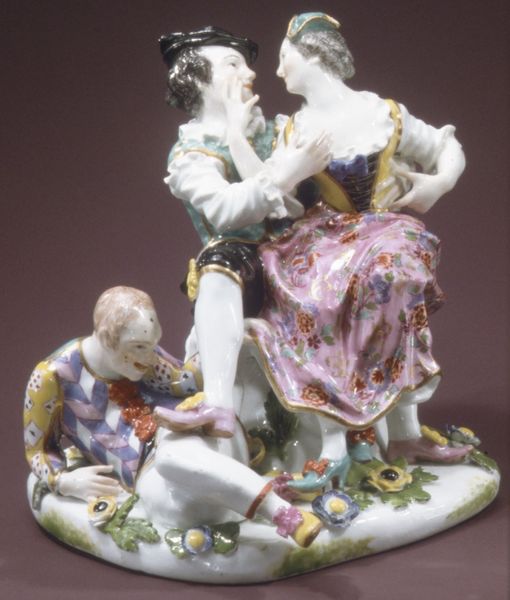
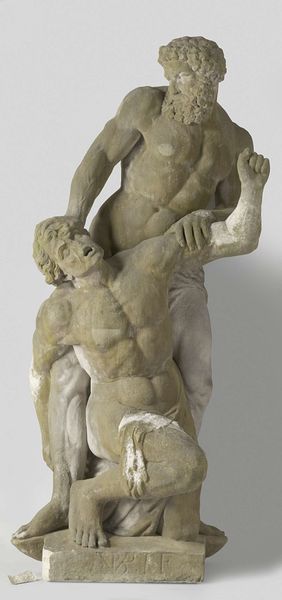
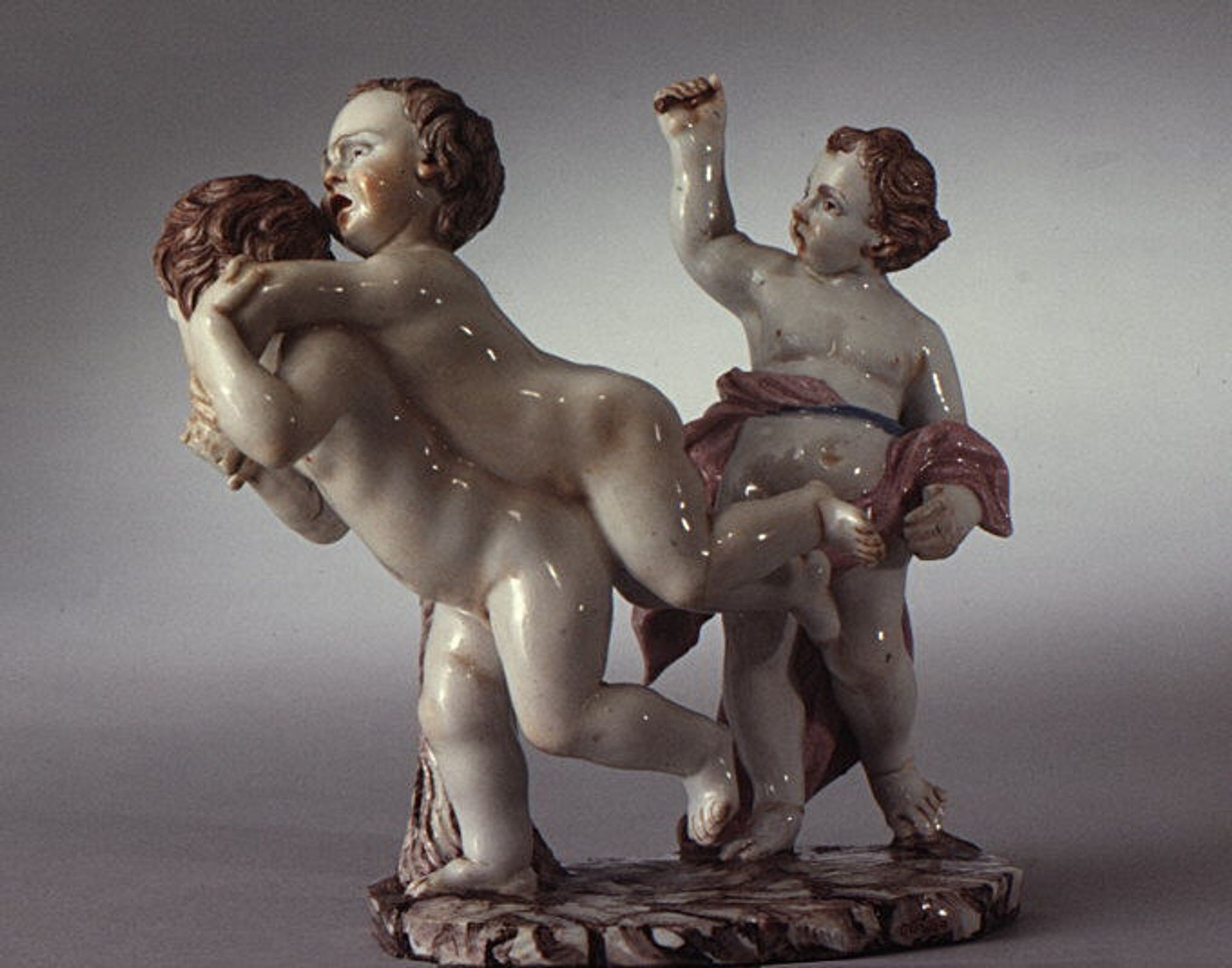
The Doccia Porcelain Manufactory crafted this small porcelain sculpture, ‘The Chastisement of Cupid.’ Note the tender, corpulent bodies of the putti, the embodiment of love and desire, now subject to playful discipline. The motif of Cupid, the mischievous god of love, being chastised harkens back to classical antiquity, where images of gods were often used to explore human emotions and moral lessons. Here, Cupid's punishment echoes the cyclical nature of desire, a recurring theme in art. Consider the power dynamics at play: one putto restraining Cupid while another threatens, perhaps a metaphor for the conflicting forces within ourselves as we grapple with love's complexities. The chastisement motif resurfaces throughout art history, each time adapting to the cultural and societal values of its era. The psychoanalytic perspective suggests that such imagery taps into our collective memory, resonating with subconscious anxieties and desires. It is a powerful symbol, continuously reborn in our cultural narrative.
The Chastisement of Cupid
1770 - 1780

Doccia Porcelain Manufactory
1737 - 1896
The Metropolitan Museum of Art
Metropolitan Museum of Art, New York, NYArtwork details
- Dimensions
- Height: 4 3/4 in. (12.1 cm)
- Location
- Metropolitan Museum of Art, New York, NY
- Copyright
- Public Domain
Comments
Share your thoughts
About this artwork
The Doccia Porcelain Manufactory crafted this small porcelain sculpture, ‘The Chastisement of Cupid.’ Note the tender, corpulent bodies of the putti, the embodiment of love and desire, now subject to playful discipline. The motif of Cupid, the mischievous god of love, being chastised harkens back to classical antiquity, where images of gods were often used to explore human emotions and moral lessons. Here, Cupid's punishment echoes the cyclical nature of desire, a recurring theme in art. Consider the power dynamics at play: one putto restraining Cupid while another threatens, perhaps a metaphor for the conflicting forces within ourselves as we grapple with love's complexities. The chastisement motif resurfaces throughout art history, each time adapting to the cultural and societal values of its era. The psychoanalytic perspective suggests that such imagery taps into our collective memory, resonating with subconscious anxieties and desires. It is a powerful symbol, continuously reborn in our cultural narrative.
Comments
Share your thoughts