About this artwork
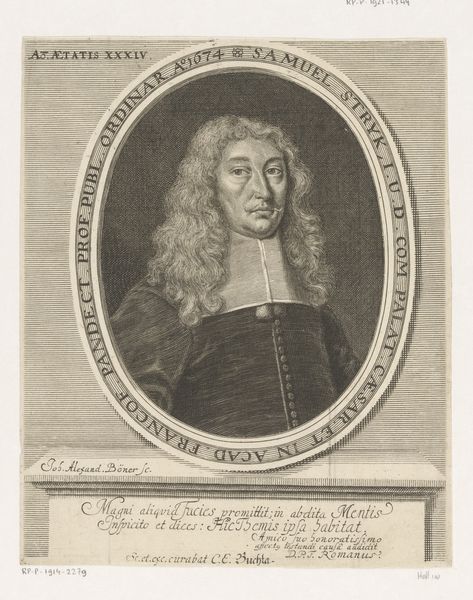
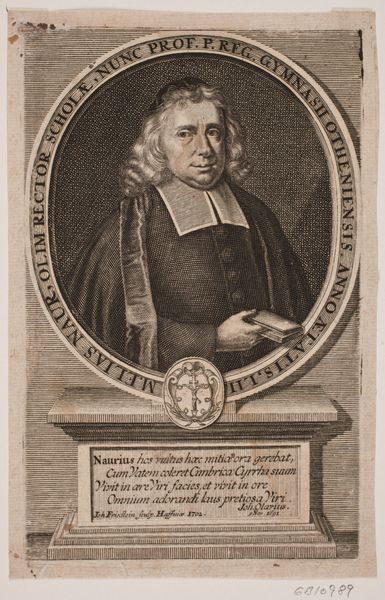
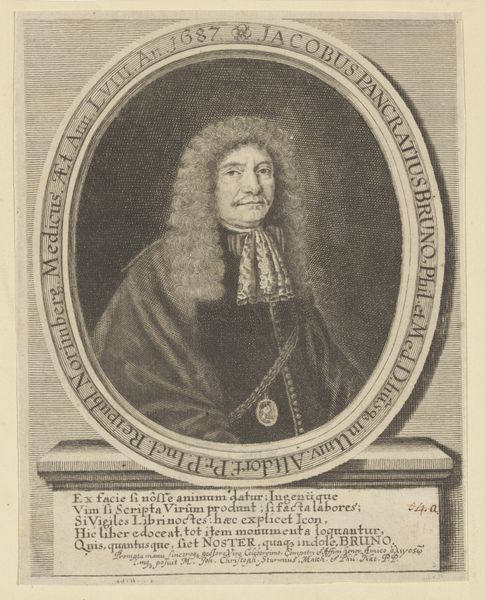
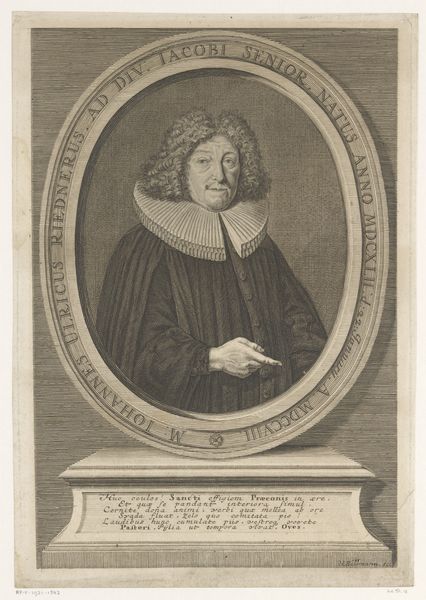
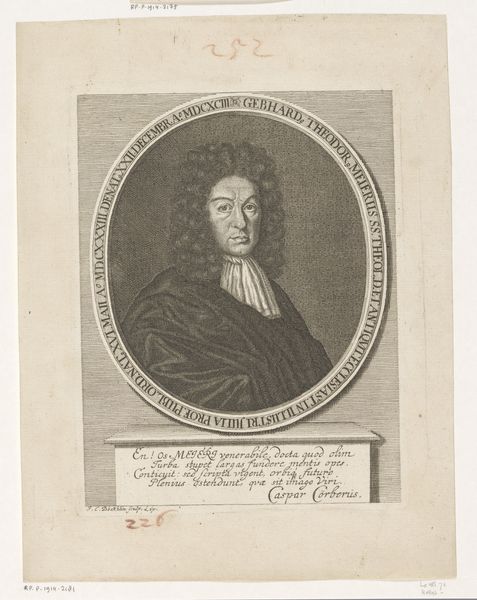
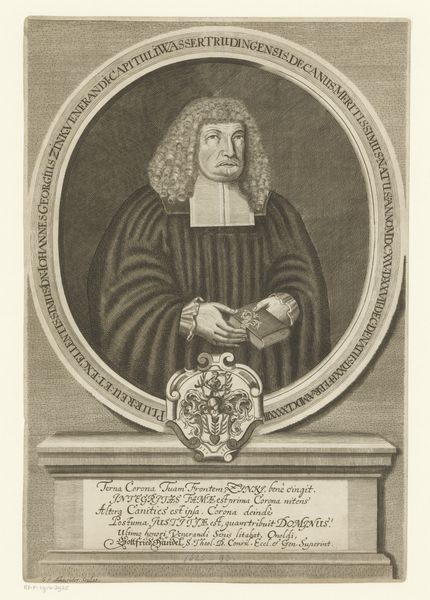
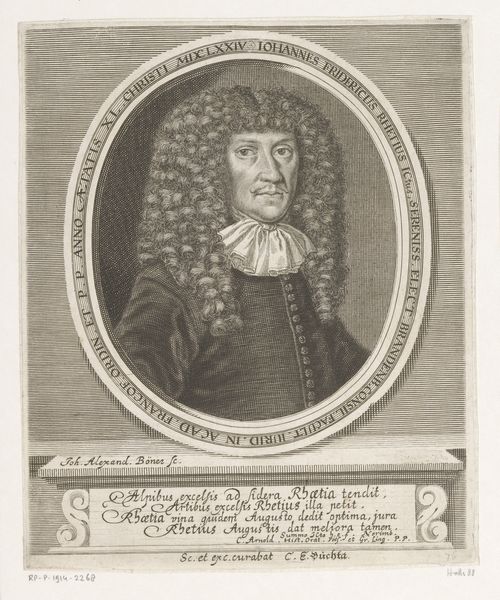
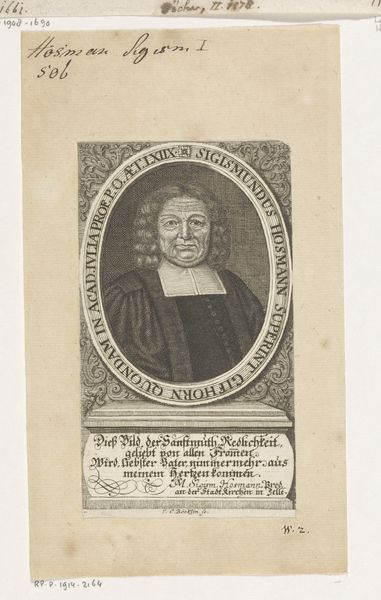
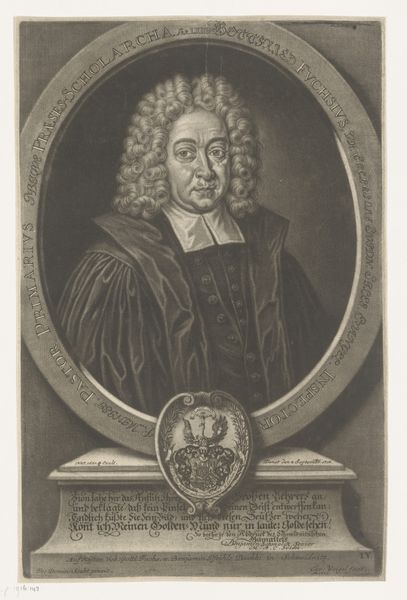
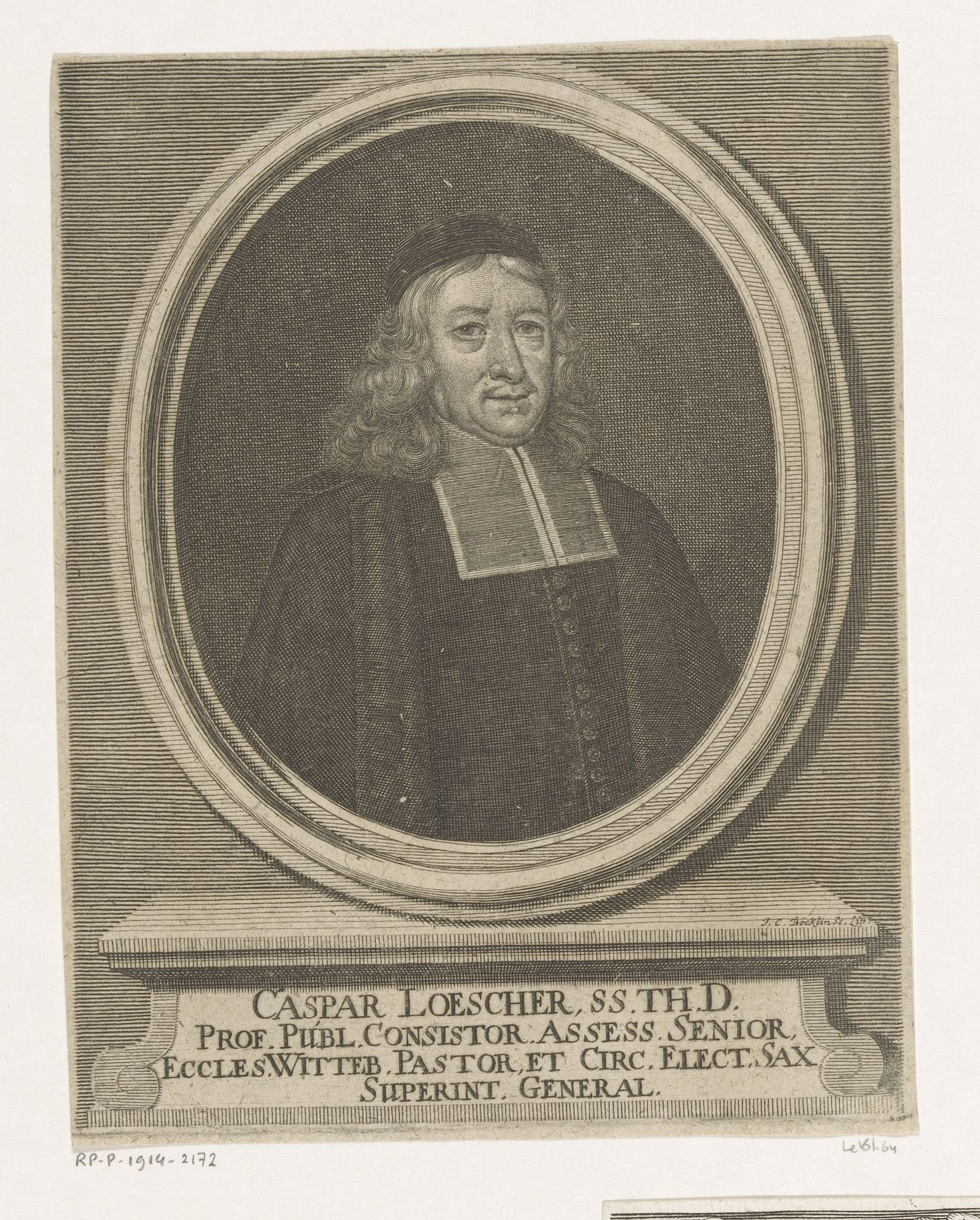
Curator: This engraving from between 1687 and 1709, attributed to Johann Christoph Boecklin, presents a portrait of Caspar Löscher. Editor: My first thought is one of somber authority. There's a real gravity to this man's gaze, even captured in an engraving. The fine lines create incredible detail, especially in his hair. Curator: Absolutely. And, look at the text inscription at the bottom of the piece. It highlights Löscher's extensive titles, showing his significant role within his community and the church. It really contextualizes the political power held by religious figures. Editor: It’s striking how Baroque portraiture serves to immortalize and legitimize individuals. Think about what representation means in a time when access to images was so carefully managed. It wasn't just about likeness, but about reinforcing the social order. Curator: Indeed. These visual strategies functioned to solidify hierarchy and ensure Löscher's role was appropriately recognized, not only during his life, but also for posterity within the public sphere. Editor: I'm curious about Boecklin’s artistic choices. The oval frame within the engraving softens the subject, creating this visual separation but it simultaneously elevates him, presenting Löscher within a polished context. Curator: What strikes me is the public dimension of this work. Engravings were reproducible, so that increased the work’s availability and served to disseminate images of important societal figures to a wider public. Editor: Agreed. Considering today’s discourse surrounding the decolonization of images, I cannot help but think about how power structures from prior historical moments influence even how and who gets depicted, affecting who attains symbolic representation within society. Curator: A lot to think about here concerning visual representations of status and power. Thank you. Editor: My pleasure. It's been illuminating to unpack the intricacies embedded within this engraving.
Portret van Caspar Löscher 1687 - 1709

Johann Christoph Boecklin
1657 - 1709Location
RijksmuseumArtwork details
- Medium
- engraving
- Dimensions
- height 171 mm, width 132 mm
- Location
- Rijksmuseum
- Copyright
- Rijks Museum: Open Domain
Tags
portrait
baroque
old engraving style
charcoal drawing
engraving
Comments
No comments
About this artwork
Curator: This engraving from between 1687 and 1709, attributed to Johann Christoph Boecklin, presents a portrait of Caspar Löscher. Editor: My first thought is one of somber authority. There's a real gravity to this man's gaze, even captured in an engraving. The fine lines create incredible detail, especially in his hair. Curator: Absolutely. And, look at the text inscription at the bottom of the piece. It highlights Löscher's extensive titles, showing his significant role within his community and the church. It really contextualizes the political power held by religious figures. Editor: It’s striking how Baroque portraiture serves to immortalize and legitimize individuals. Think about what representation means in a time when access to images was so carefully managed. It wasn't just about likeness, but about reinforcing the social order. Curator: Indeed. These visual strategies functioned to solidify hierarchy and ensure Löscher's role was appropriately recognized, not only during his life, but also for posterity within the public sphere. Editor: I'm curious about Boecklin’s artistic choices. The oval frame within the engraving softens the subject, creating this visual separation but it simultaneously elevates him, presenting Löscher within a polished context. Curator: What strikes me is the public dimension of this work. Engravings were reproducible, so that increased the work’s availability and served to disseminate images of important societal figures to a wider public. Editor: Agreed. Considering today’s discourse surrounding the decolonization of images, I cannot help but think about how power structures from prior historical moments influence even how and who gets depicted, affecting who attains symbolic representation within society. Curator: A lot to think about here concerning visual representations of status and power. Thank you. Editor: My pleasure. It's been illuminating to unpack the intricacies embedded within this engraving.
Comments
No comments