drawing, print, engraving
#
portrait
#
pencil drawn
#
drawing
#
neoclacissism
# print
#
pencil sketch
#
old engraving style
#
caricature
#
pencil drawing
#
line
#
portrait drawing
#
history-painting
#
academic-art
#
engraving
Dimensions: height 165 mm, width 115 mm
Copyright: Rijks Museum: Open Domain
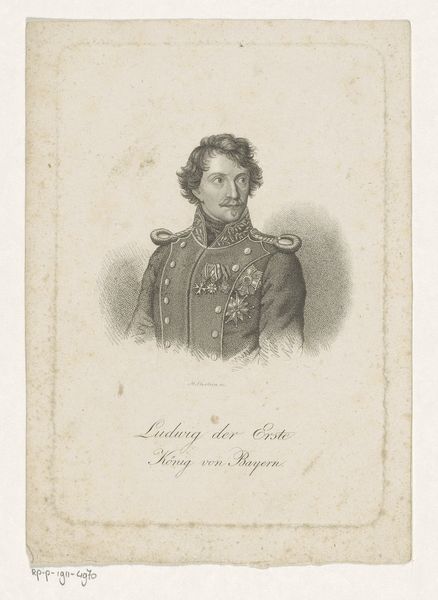
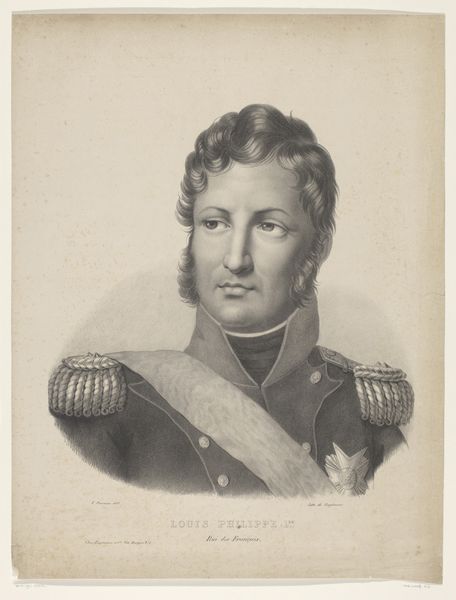
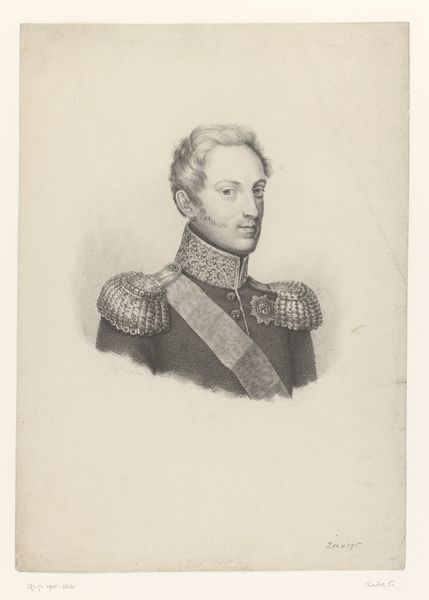
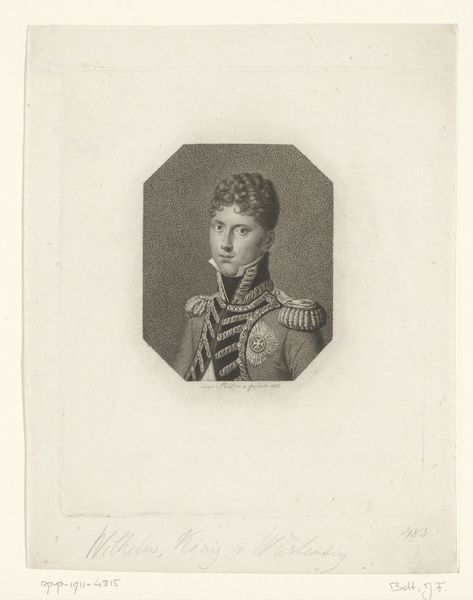
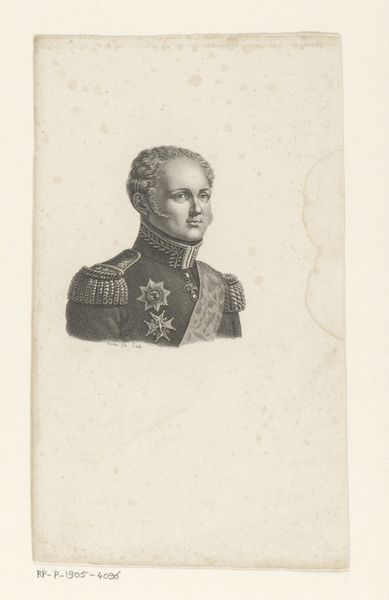
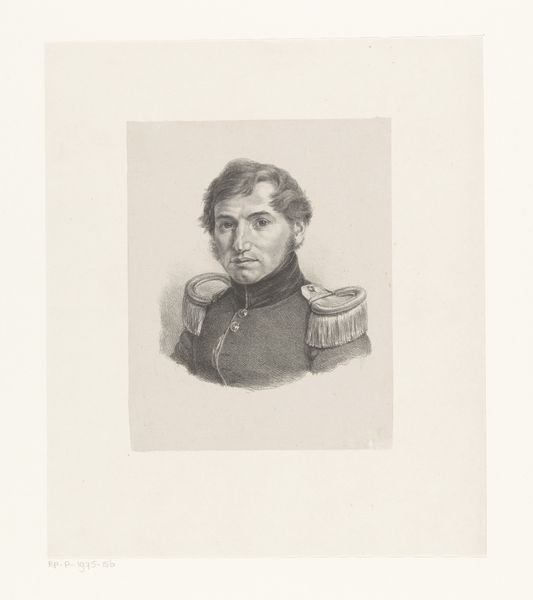
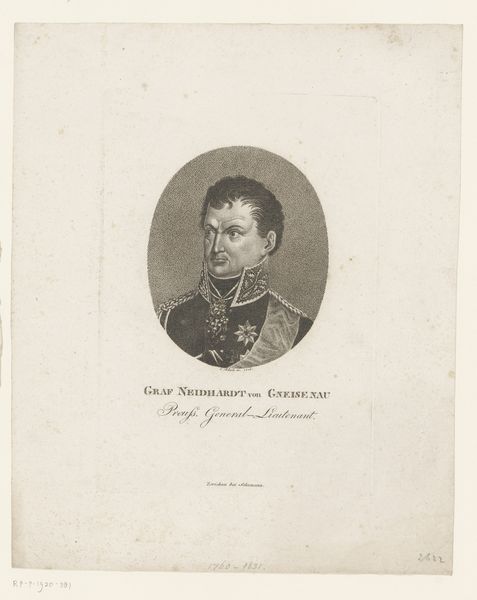
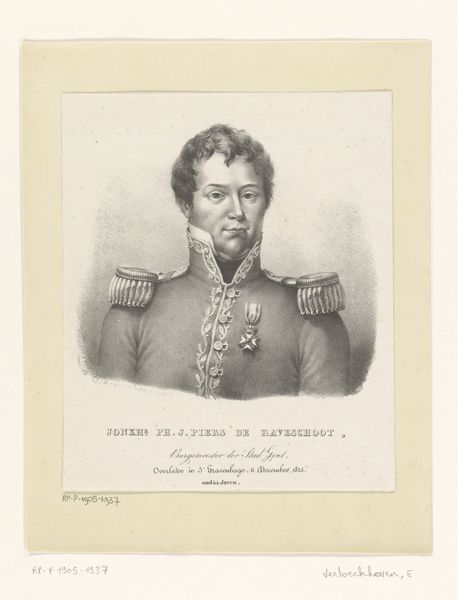
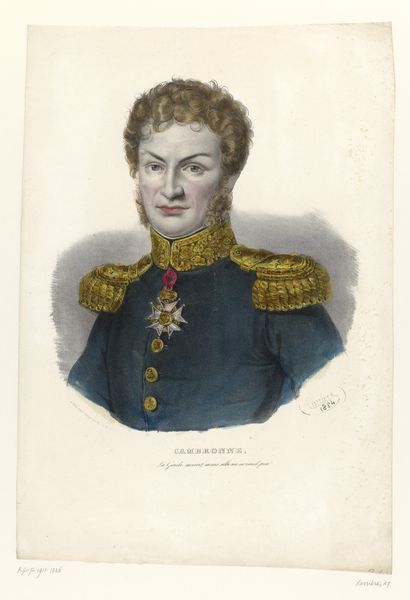
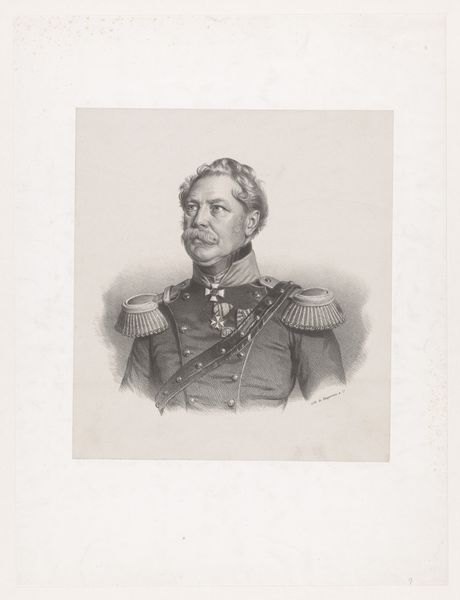
Editor: So, here we have an engraving of "Portret van Karel van Pruisen" by Friedrich Rossmässler, dating from 1785 to 1858. It's quite detailed, but it gives off a very formal, almost rigid impression. What's your take on it? Curator: This portrait is more than just a depiction of Prince Carl; it's a visual statement embedded in a complex socio-political context. Think about the prevailing artistic trends of the time – Neoclassicism. It harked back to the ideals of ancient Greece and Rome, projecting an image of order and reason, important in the age of revolutions. How do you think this desire for order is manifested in the prince’s portrait? Editor: Well, his pose is very upright and symmetrical, his gaze is direct, and his uniform looks impeccable. Everything is very controlled. Curator: Exactly. The artist uses this visual language to convey power and legitimacy. Consider, though, that while appearing timeless, these images actively participated in building national identities. By visually connecting the Prince to past empires, they sought to solidify the monarchy's position and perhaps distract from growing social unrest. How effective do you find this visual strategy, knowing that this portrait emerged during revolutionary times? Editor: I suppose it depends on the viewer. Today, it reads as propaganda. Back then, maybe it inspired confidence. Curator: Perhaps. But power is never absolute. The very act of creating and disseminating such images indicates a perceived need to reinforce authority. It speaks to underlying anxieties about social order, and the challenges to that order. Considering this work in the context of its time, it suggests the fragility of power, doesn't it? Editor: It does. I hadn't thought of it that way before, but I see your point about these images doing more than meets the eye. They speak to an attempt at social control and preservation of a status quo. Thanks!
Comments
No comments
Be the first to comment and join the conversation on the ultimate creative platform.
 Collect
 React
React Comment
More like this