c. 1485
Christ on the Cross


Listen to curator's interpretation
Curatorial notes
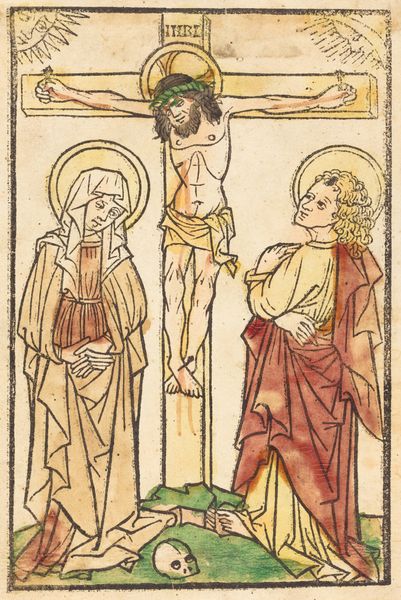
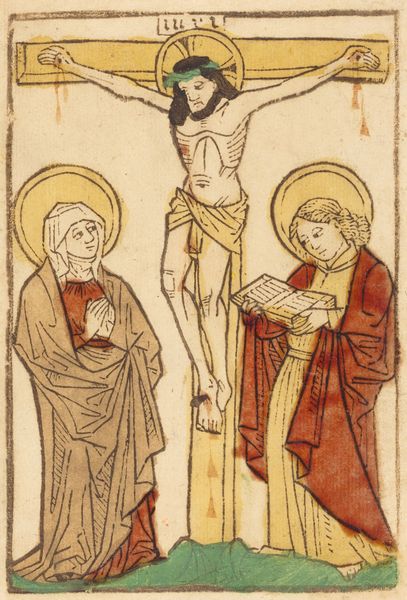
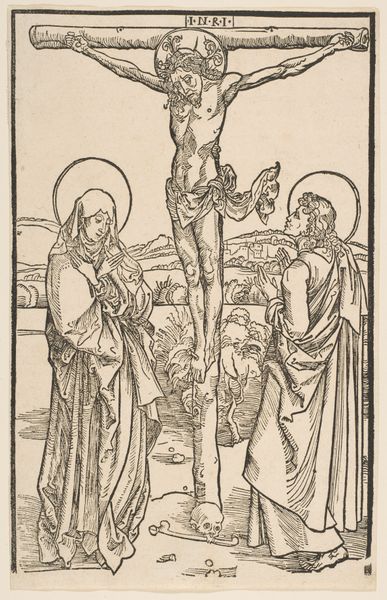
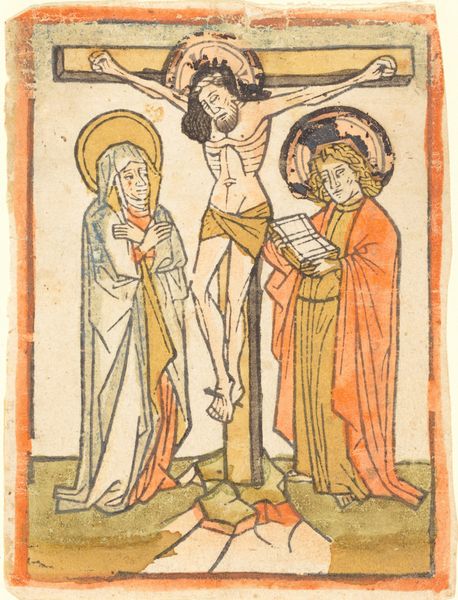
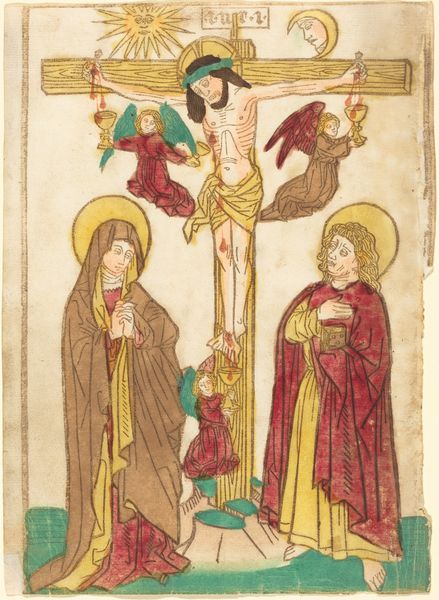
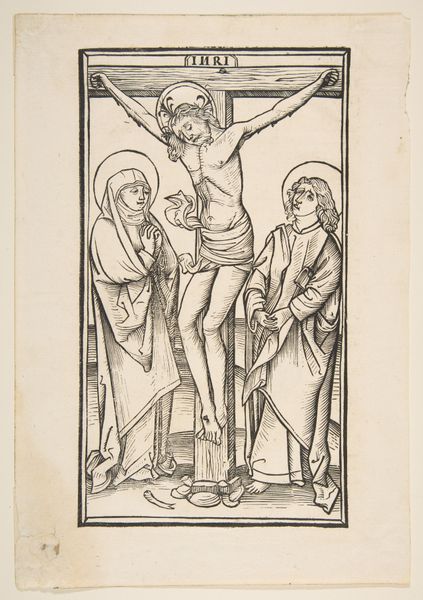
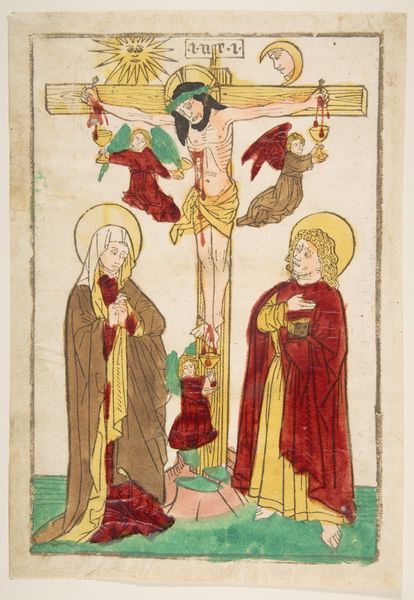
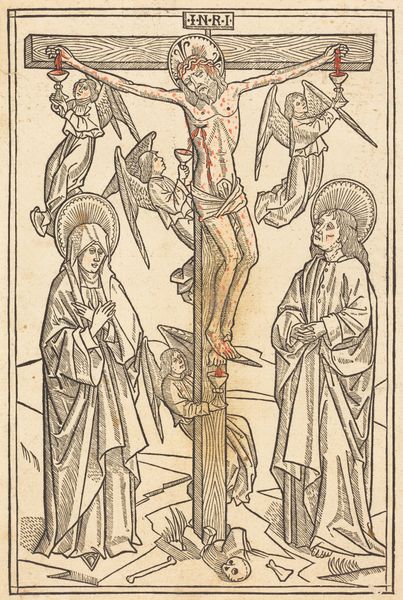
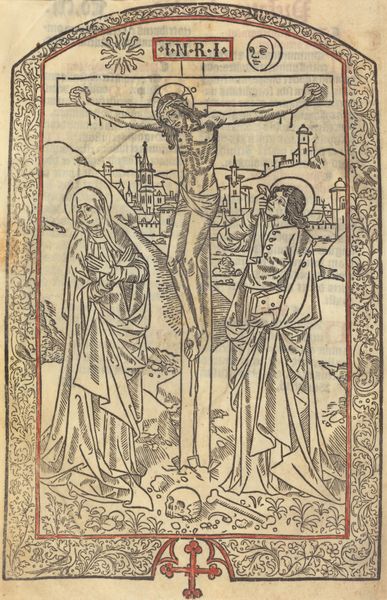
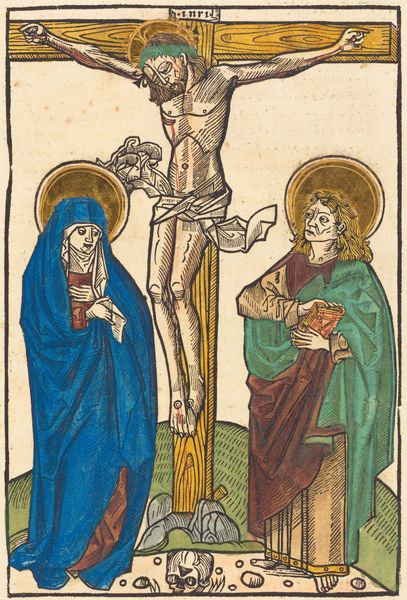
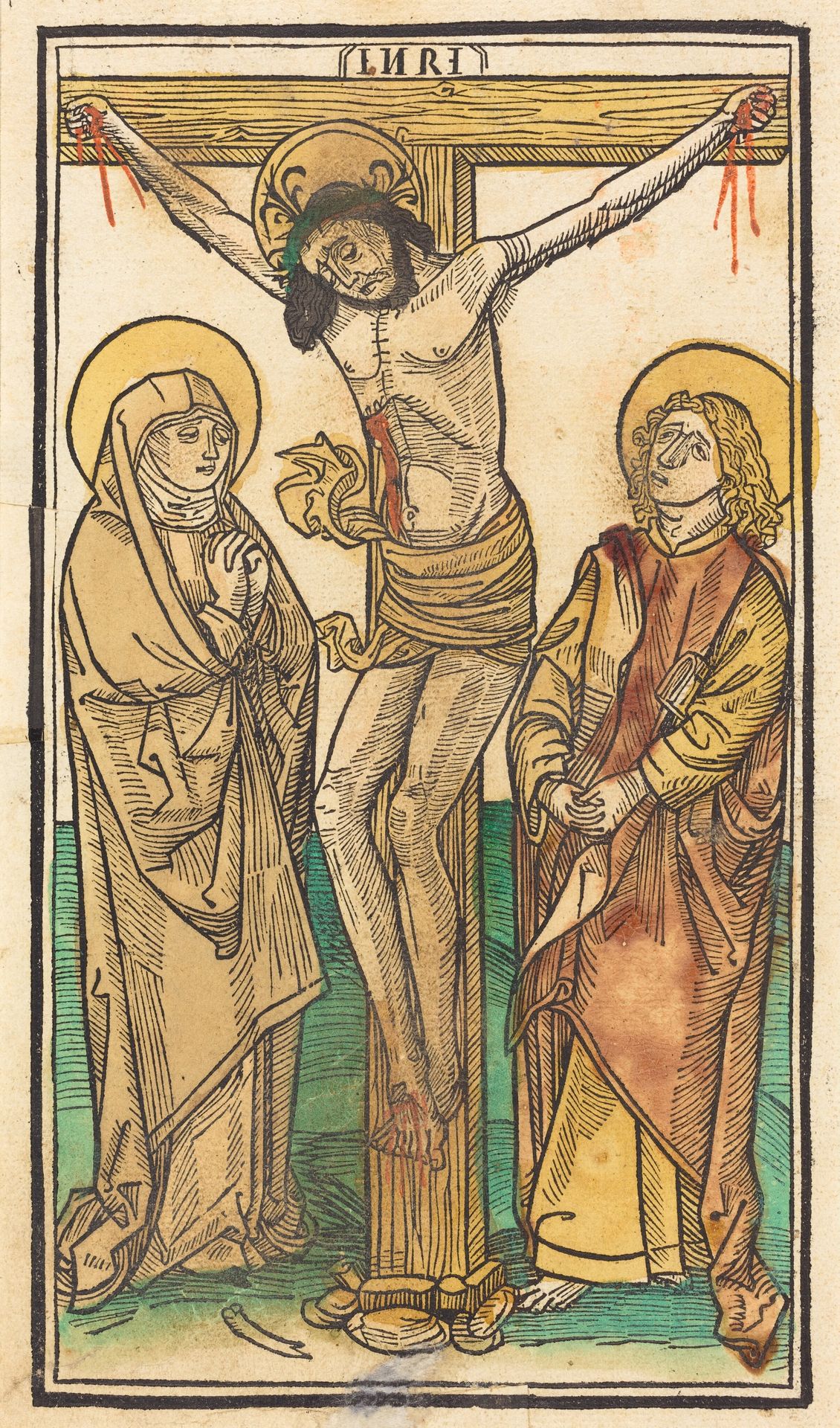
Editor: Here we have an anonymous woodcut, "Christ on the Cross," likely from around 1485. It’s quite striking – the limited color palette really emphasizes the drama, doesn't it? What do you see in this piece, especially considering its time period? Curator: Indeed. This woodcut serves as a potent visual shorthand. Consider the use of line – almost harsh, direct. It mirrors a cultural yearning for immediate, accessible spiritual truths. The blood isn’t just a physical reality; it is a direct conduit. Editor: A conduit to...what exactly? Is it purely religious, or is there a social element too? Curator: It’s deeply entwined. The "INRI" inscription atop the cross – Iesus Nazarenus Rex Iudaeorum, Jesus of Nazareth, King of the Jews – becomes a charged declaration. In a time of profound social upheaval, images like these reiterated a familiar order, a promise of divine rule amidst earthly chaos. Think of the continued use of halo. Is this image to reinforce existing beliefs? What message is conveyed? Editor: So the visual language becomes a tool for maintaining stability? A kind of cultural anchor? Curator: Precisely. Symbols tap into collective memory, offering reassurance and a shared narrative. Even the choice of a woodcut, a relatively accessible medium, speaks volumes about the intention to disseminate these ideas widely. What feeling emanates to you as a viewer? Editor: It's interesting how the apparent simplicity is loaded with symbolic meaning. I initially just saw a somber religious scene, but now it's much richer, telling of societal anxieties and reaffirmation through symbolism. Thanks for enlightening me. Curator: My pleasure. Art invites us to continually reassess our understanding, seeing not just what is depicted, but how those depictions shape our collective consciousness.