

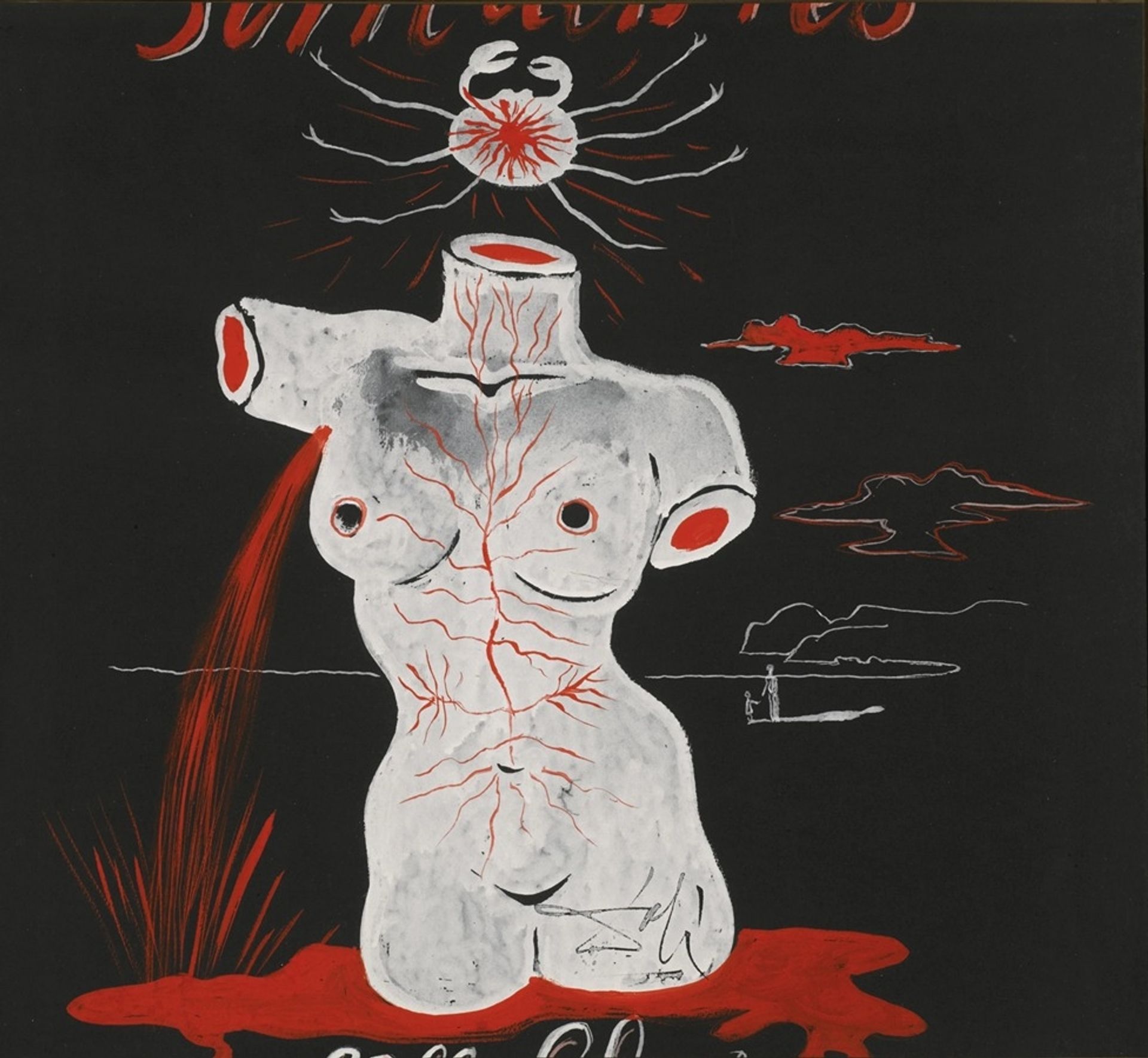
Projet pour une conférence surréaliste

Listen to curator's interpretation
Curatorial notes
Curator: The mixed-media piece you're now viewing is titled "Projet pour une conference surrealiste", a concept for a surrealist conference by Salvador Dalí. Its creation date is unspecified, but its striking imagery makes a considerable impact. What’s your first take on this work? Editor: Visually arresting, immediately. The stark contrast of the red against the black, and that dismembered torso... it’s dripping with a violent, primal energy. It really does feel like a potent vision from the subconscious. Curator: Indeed. Given Dalí’s broader artistic inclinations, this potent imagery resonates profoundly within the sociopolitical milieu of early 20th-century Europe. One can analyze his surrealist renderings not only through their psychoanalytic weight but also the historical backdrop against which his imagery emerged. Editor: Exactly! The imagery feels so symbolic: the crab above the dismembered body suggests an astrological aspect, a possible commentary about Cancer; this could also be a symbolic depiction of internal emotional struggles as interpreted in psychology, perhaps suggesting emotional vulnerabilities, while the veins crawling like rivers across the figure suggests both anatomical realism and internal turmoil, almost biblical, it certainly evokes cultural archetypes... what is its public impact, in your view? Curator: The visceral elements provoke introspection in museum-goers, a direct challenge to institutional narratives about aesthetic boundaries. It is a bold statement about humanity stripped bare, emotionally raw, in public view, a defiance of cultural restraint that’s simultaneously unsettling and incredibly thought-provoking. Editor: It does leave a powerful mark on cultural memory. This convergence of fear and intrigue can evoke a primal experience of self-discovery and invite intense, personal interpretations. Thank you, fascinating work by Dalí, especially considering his historical circumstances. Curator: It offers insight not only into Dalí’s inner psyche but into the cultural tensions defining the first half of the twentieth century, which allows us to view it through our present social anxieties and hopes, as well.