1542 - 1543
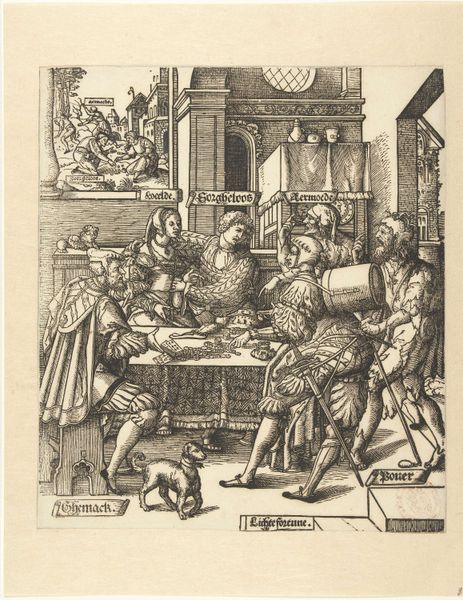
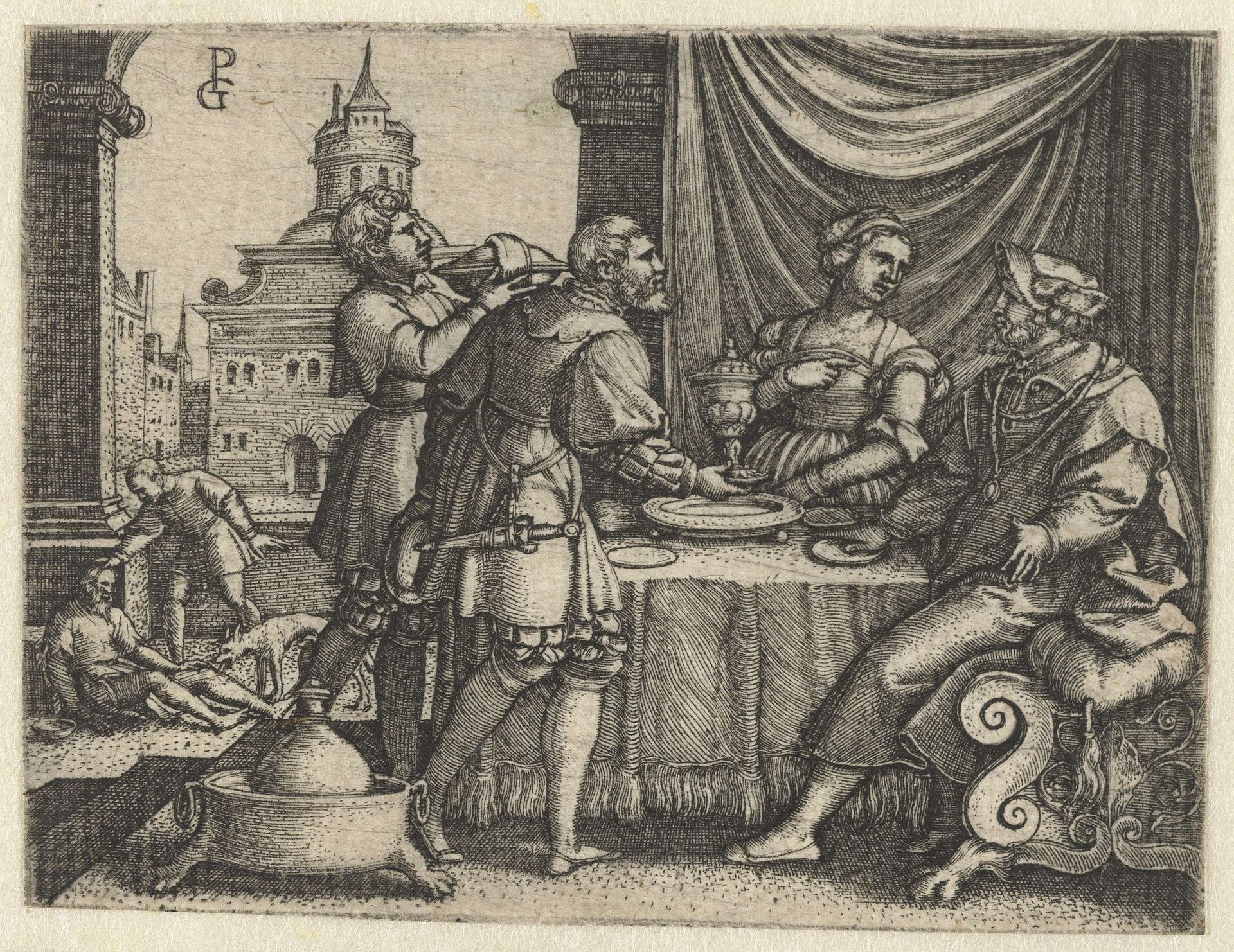
Feestmaal van de rijke man

Georg Pencz
1500 - 1550Location
RijksmuseumListen to curator's interpretation
Curatorial notes
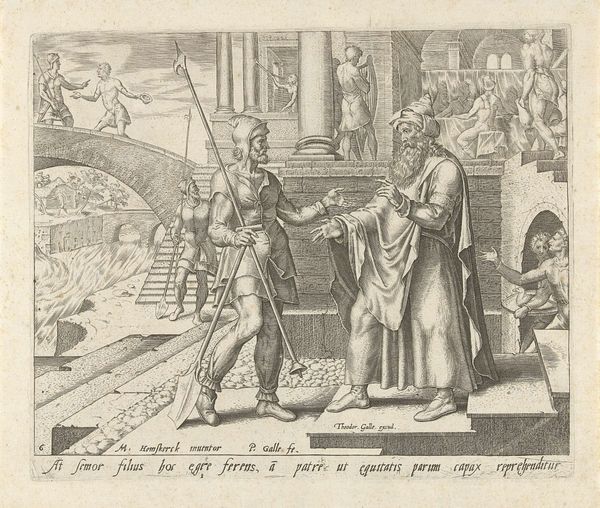
Georg Pencz created this etching, "Feast of the Rich Man," in 16th-century Germany. The image depicts a lavish banquet inside a grand house, but beyond this scene of excess, a stark contrast unfolds. In the foreground we see the poor and the sick, begging for scraps, and the architecture hints at a wealthy urban landscape. Pencz was associated with the Little Masters, a group of German printmakers known for their small-scale, intricate engravings. This work encapsulates the social commentary often found in their art. The opulence of the feast is juxtaposed against the misery outside, highlighting the disparities in wealth and well-being during the Reformation. Pencz’s imagery invites us to reflect on the social structures of his time. To fully understand this piece, research into the economic conditions and religious debates of 16th-century Germany is essential. Art like this reflects, and sometimes challenges, the norms of its time.