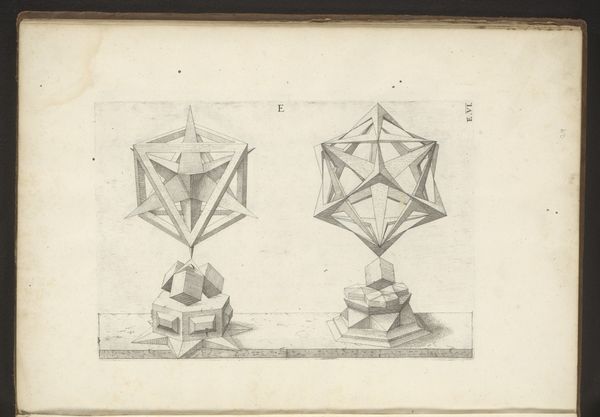
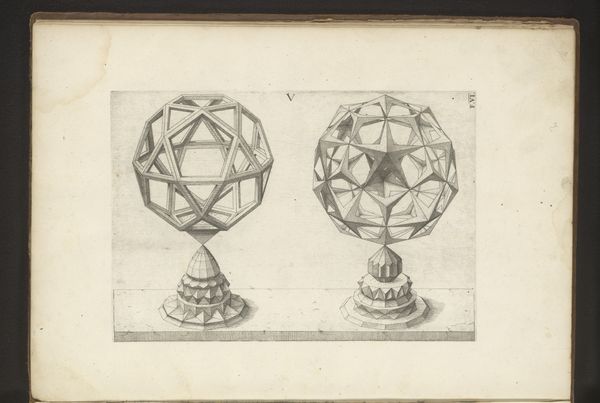
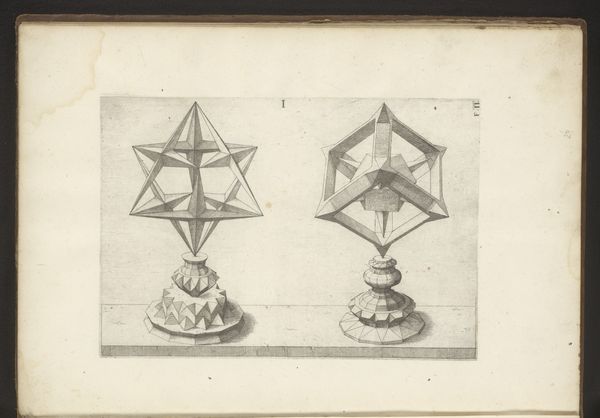
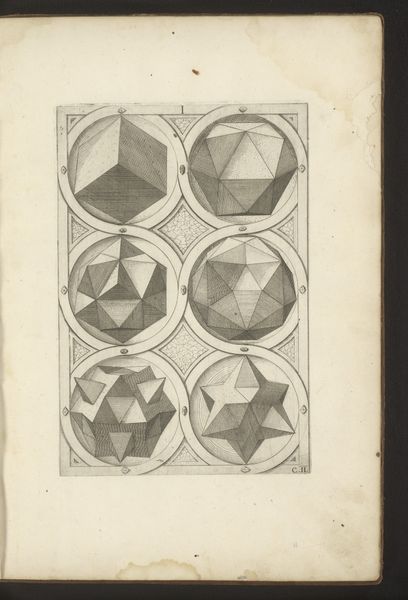
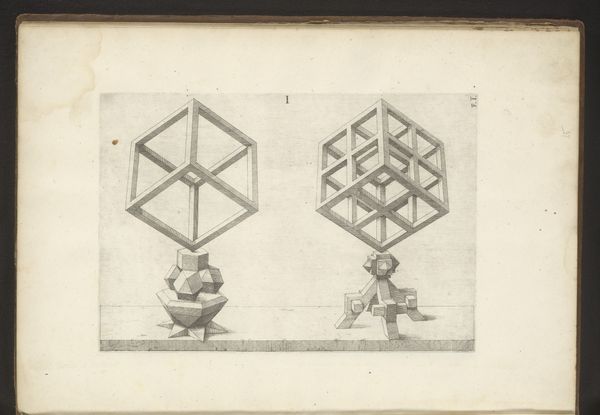
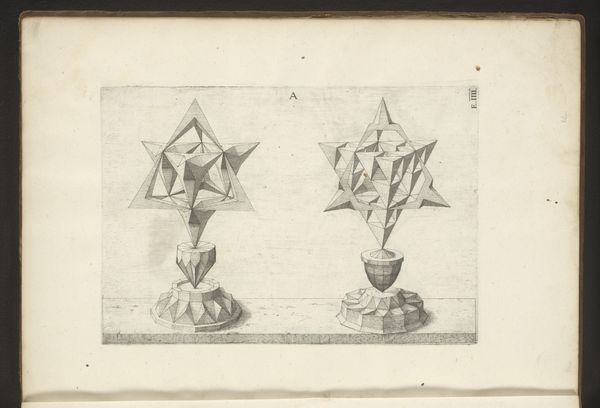
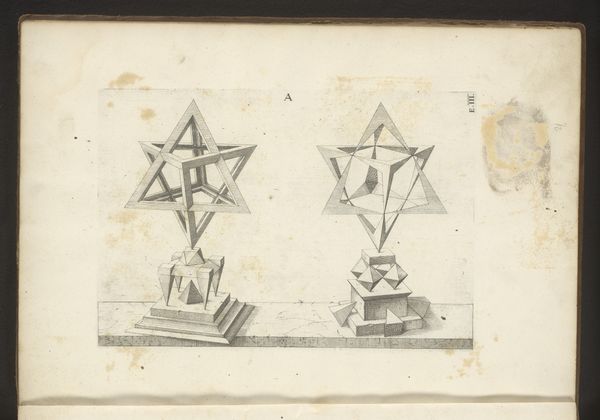
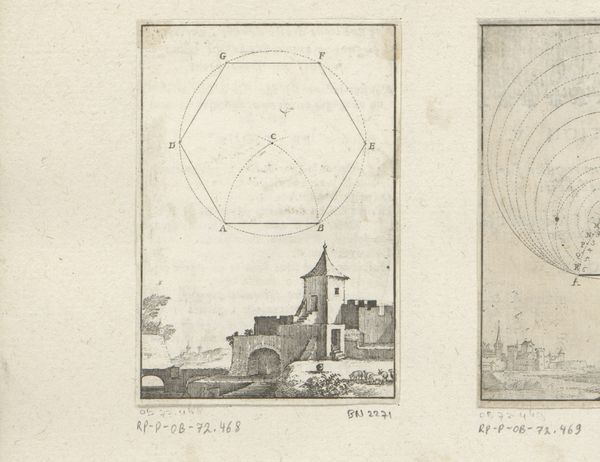
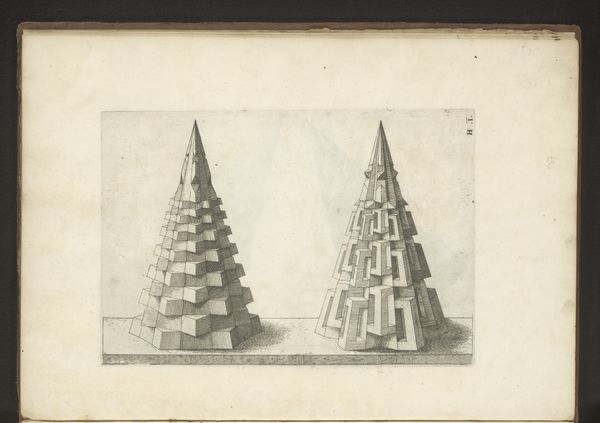
Twee veelvlakken met een icosaëder en een rombische triacontaëder als uitgangspunt 1568
0:00
0:00

jostamman
Rijksmuseum
drawing, print, engraving
#
drawing
#
aged paper
#
toned paper
#
light pencil work
#
ink paper printed
# print
#
old engraving style
#
11_renaissance
#
personal sketchbook
#
geometric
#
pen-ink sketch
#
engraving
Dimensions: height 259 mm, width 178 mm
Copyright: Rijks Museum: Open Domain
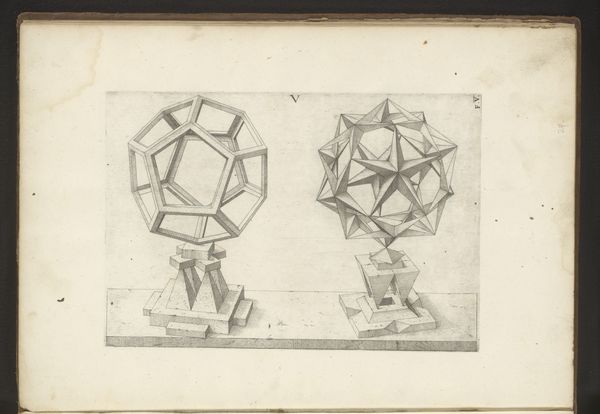
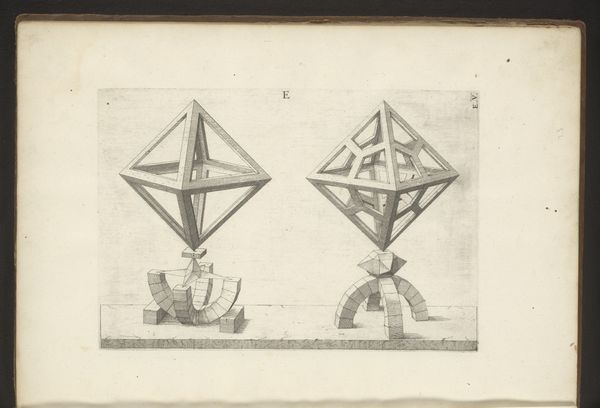
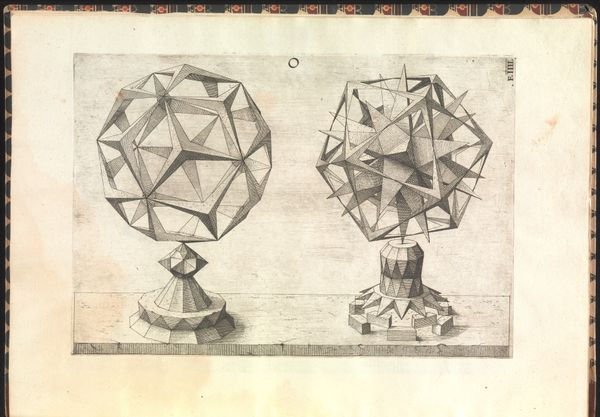
Here we see an engraving by Jost Amman, depicting two polyhedra, likely made sometime in the late 16th century. The printmaking process is crucial here. Amman would have started with a metal plate, carefully incising lines into its surface. Ink is then applied, and the excess wiped away, leaving it only in the carved lines. Finally, paper is pressed onto the plate, transferring the image. This method allowed for the relatively quick reproduction of complex designs. Consider the implications: mathematical knowledge, once closely guarded, could now be widely disseminated. The crisp precision of the engraving, while not as sensuous as a drawing, lends an air of authority to the geometry. The very act of printing these images reflects a shift towards standardized knowledge, a key aspect of the burgeoning scientific revolution and its reliance on dissemination. It blurs the lines between art, craft, and the spread of ideas.
Comments
No comments
Be the first to comment and join the conversation on the ultimate creative platform.
 Collect
 React
React Comment
More like this