About this artwork
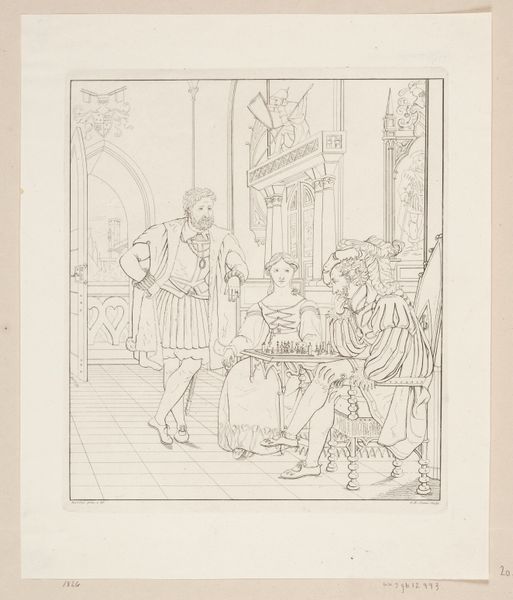
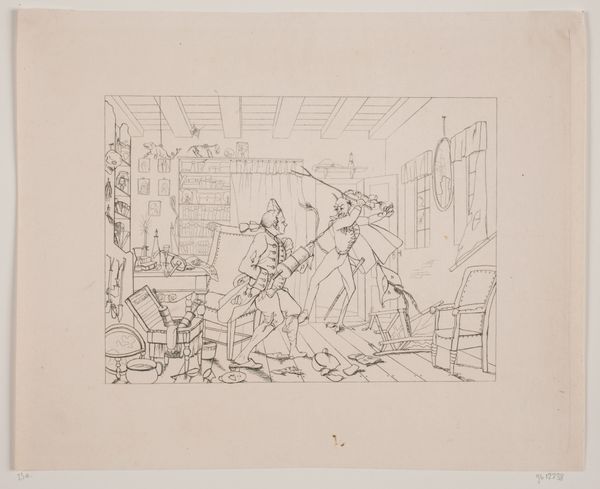
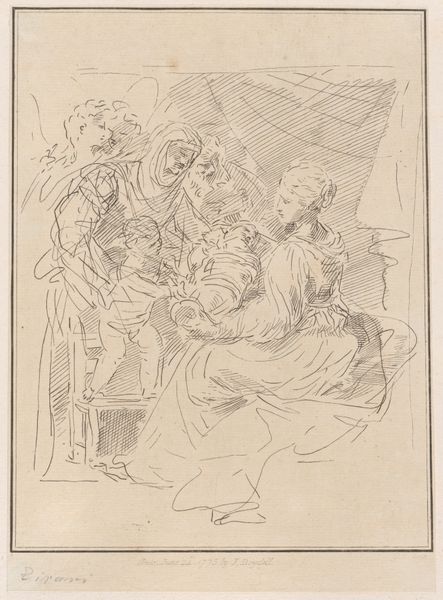
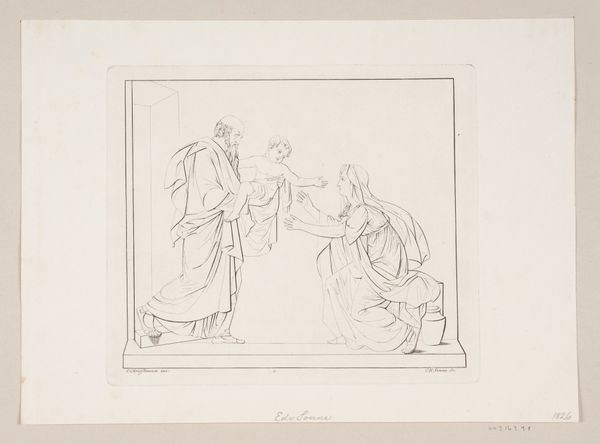
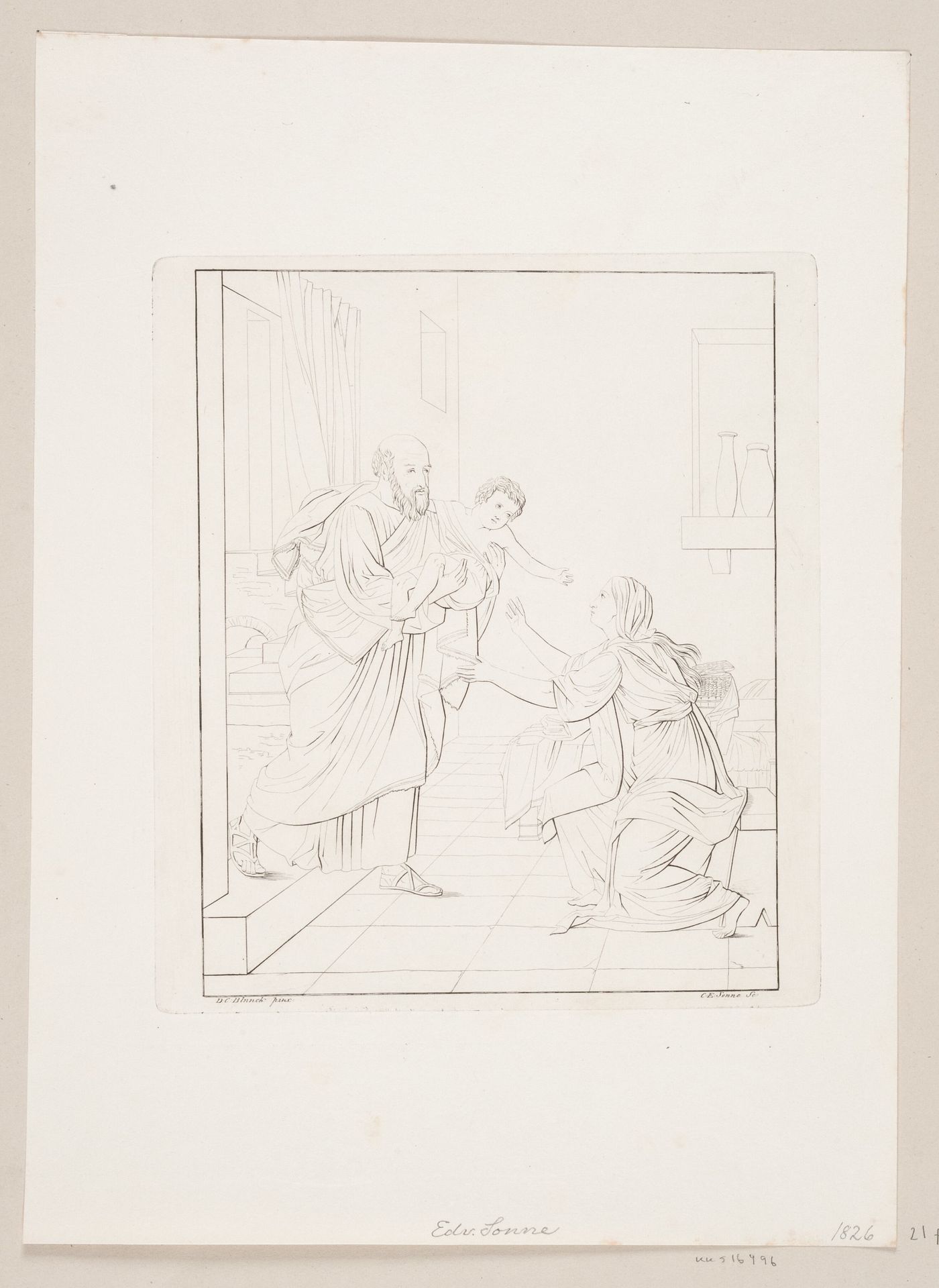
Edvard Sonne created this drawing, “Elias opvækker Enkens søn,” with pencil in 1826. The composition is dominated by the linearity of the figures and architecture, creating a sense of classical balance. Sonne’s formal approach emphasizes clear outlines and a structured arrangement, focusing on the contours and forms within the narrative scene. The drawing's organization reveals a deeper engagement with the artistic and philosophical ideas of its time. Sonne uses a minimal yet effective semiotic system of lines to convey depth, emotion, and movement. This economy of means invites us to decode not just the biblical narrative but also the underlying structures of human relationships depicted. Sonne's work challenges fixed meanings through its engagement with space and representation. By stripping down the scene to its essential lines, he prompts us to reconsider the core values it presents. The starkness of the drawing forces us to recognize that art is not about definitive answers but rather a site of ongoing interpretation.
Elias opvækker Enkens søn
1827


Artwork details
- Medium
- drawing, print, intaglio, paper, engraving
- Dimensions
- 223 mm (height) x 196 mm (width) (plademaal)
- Location
- SMK - Statens Museum for Kunst
Tags
Comments
Share your thoughts
About this artwork
Edvard Sonne created this drawing, “Elias opvækker Enkens søn,” with pencil in 1826. The composition is dominated by the linearity of the figures and architecture, creating a sense of classical balance. Sonne’s formal approach emphasizes clear outlines and a structured arrangement, focusing on the contours and forms within the narrative scene. The drawing's organization reveals a deeper engagement with the artistic and philosophical ideas of its time. Sonne uses a minimal yet effective semiotic system of lines to convey depth, emotion, and movement. This economy of means invites us to decode not just the biblical narrative but also the underlying structures of human relationships depicted. Sonne's work challenges fixed meanings through its engagement with space and representation. By stripping down the scene to its essential lines, he prompts us to reconsider the core values it presents. The starkness of the drawing forces us to recognize that art is not about definitive answers but rather a site of ongoing interpretation.
Comments
Share your thoughts