About this artwork
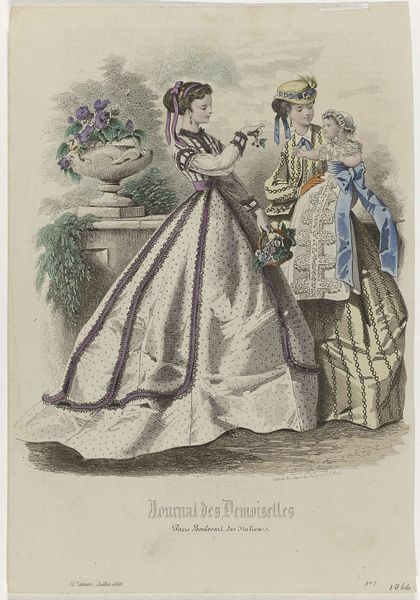
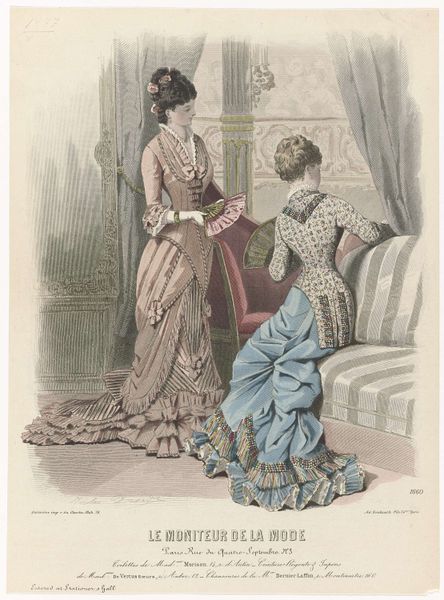
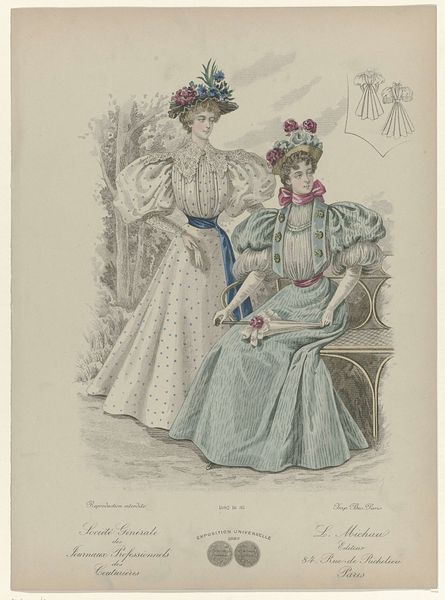
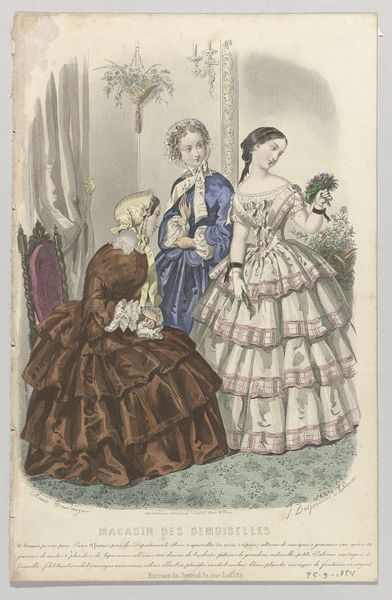
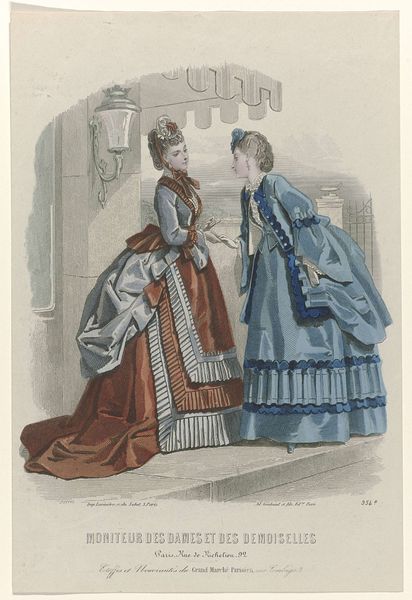
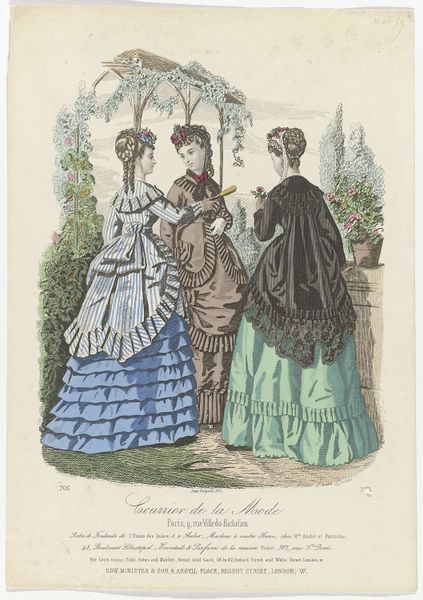
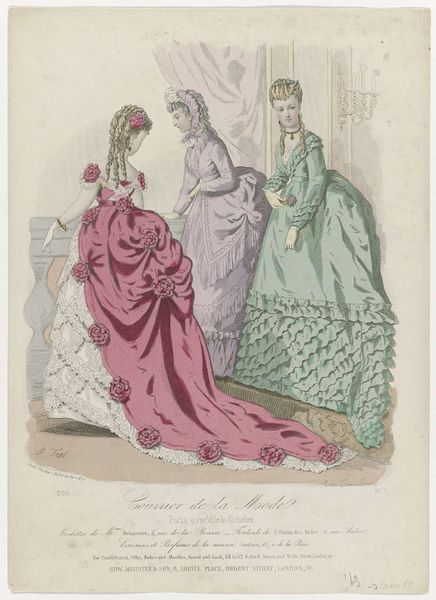
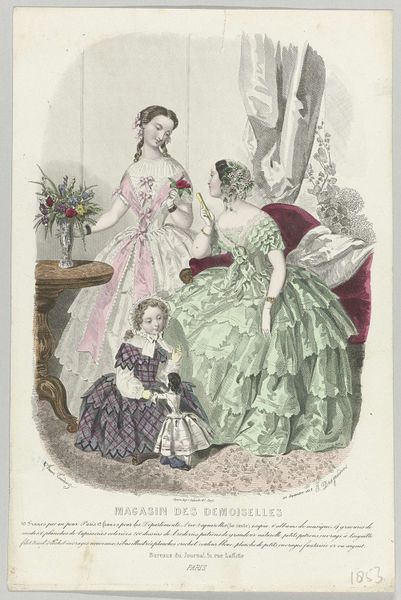
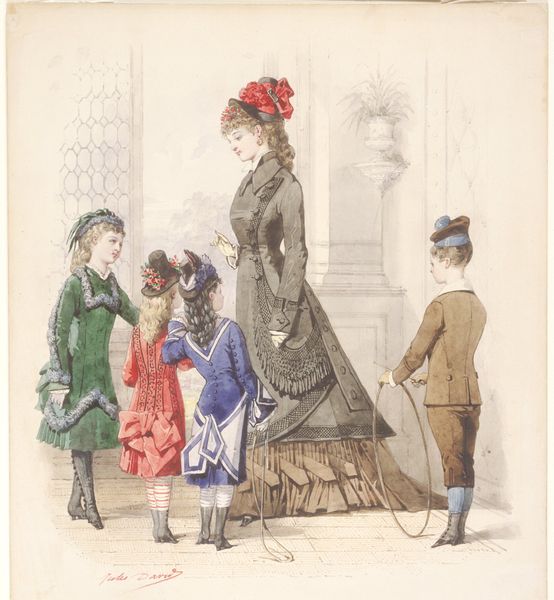
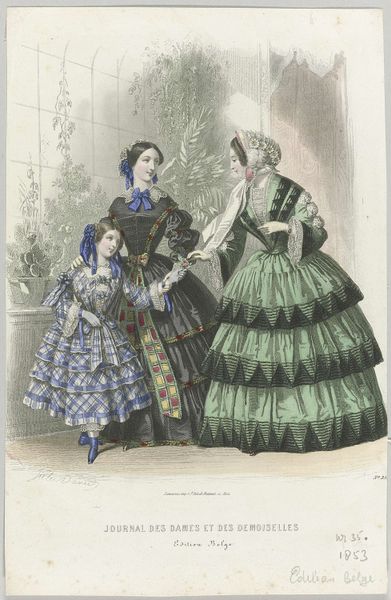
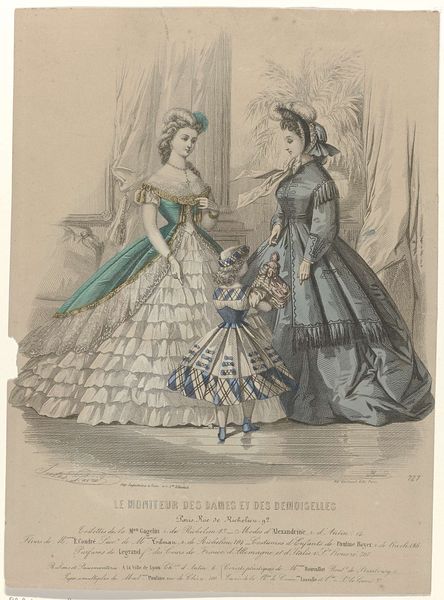
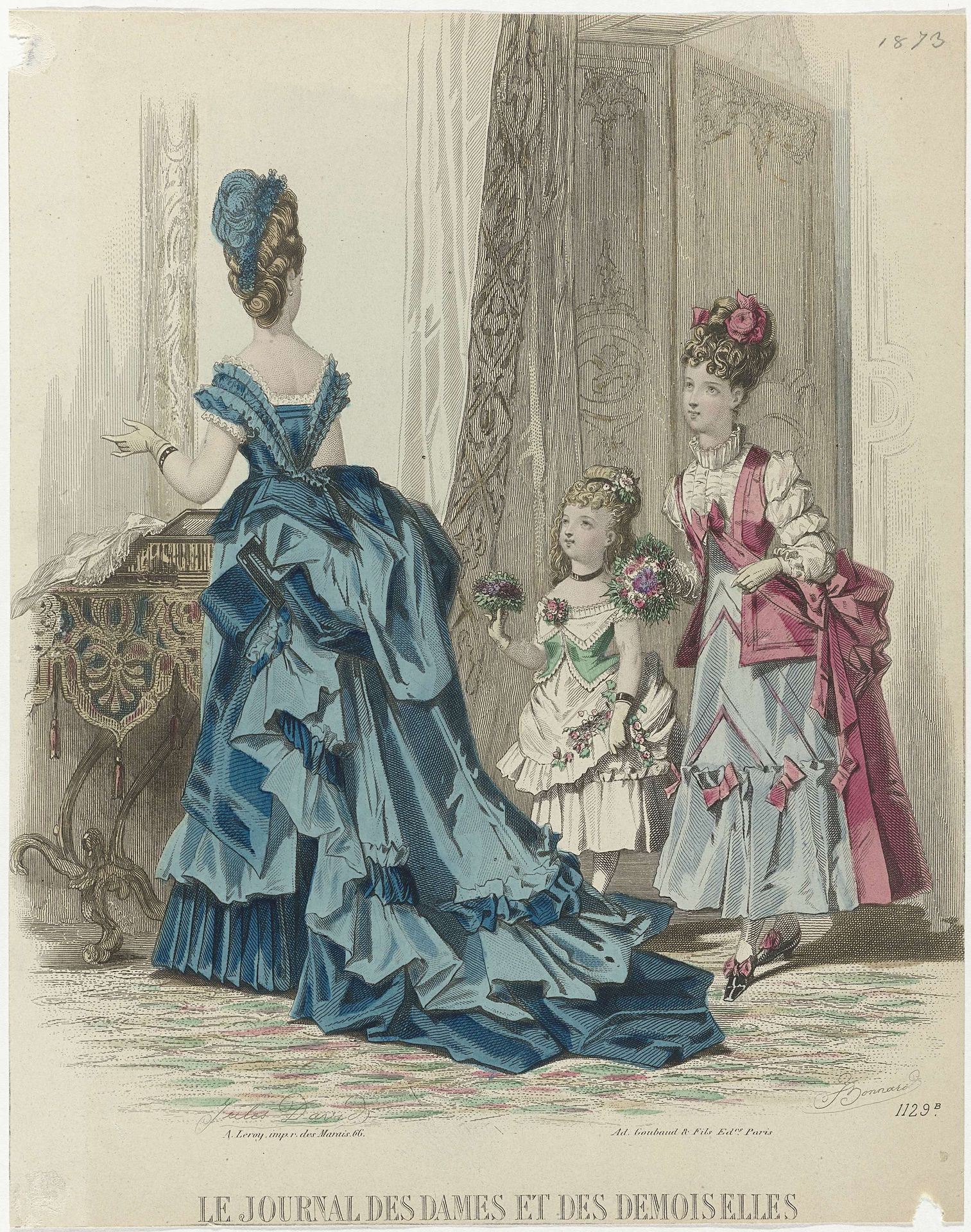
J. Bonnard created this fashion plate, *Le Journal des Dames et des Demoiselles*, in 1873, using etching and hand-coloring. It depicts three women dressed in elaborate gowns, likely made of silk or a similar fine fabric, showcasing the height of Parisian fashion. Consider the labor involved in producing these garments. Beyond the skilled hands of dressmakers, think of the textile workers, dyers, and embroiderers. Each gown represents countless hours of specialized work, reflecting a complex economy of production and consumption. The etching itself is also a form of skilled labor. The fine lines and delicate shading were achieved through a painstaking process. The hand-coloring adds another layer of artisanal work. These fashion plates circulated widely, influencing tastes and fueling demand. They blur the lines between art, commerce, and social aspiration. Looking closely at these images, we are reminded that even seemingly frivolous objects carry deep social and economic significance. They tell a story of materials, making, and the complex world of 19th-century society.

Artwork details
- Medium
- drawing, print, etching, engraving
- Dimensions
- height 234 mm, width 184 mm
- Copyright
- Rijks Museum: Open Domain
Tags
Comments
Share your thoughts
About this artwork
J. Bonnard created this fashion plate, *Le Journal des Dames et des Demoiselles*, in 1873, using etching and hand-coloring. It depicts three women dressed in elaborate gowns, likely made of silk or a similar fine fabric, showcasing the height of Parisian fashion. Consider the labor involved in producing these garments. Beyond the skilled hands of dressmakers, think of the textile workers, dyers, and embroiderers. Each gown represents countless hours of specialized work, reflecting a complex economy of production and consumption. The etching itself is also a form of skilled labor. The fine lines and delicate shading were achieved through a painstaking process. The hand-coloring adds another layer of artisanal work. These fashion plates circulated widely, influencing tastes and fueling demand. They blur the lines between art, commerce, and social aspiration. Looking closely at these images, we are reminded that even seemingly frivolous objects carry deep social and economic significance. They tell a story of materials, making, and the complex world of 19th-century society.
Comments
Share your thoughts