drawing, pencil
#
portrait
#
drawing
#
romanticism
#
pencil
#
portrait drawing
Copyright: Public domain
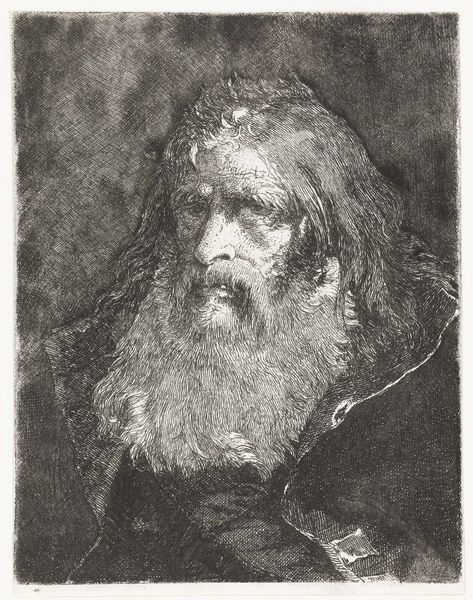
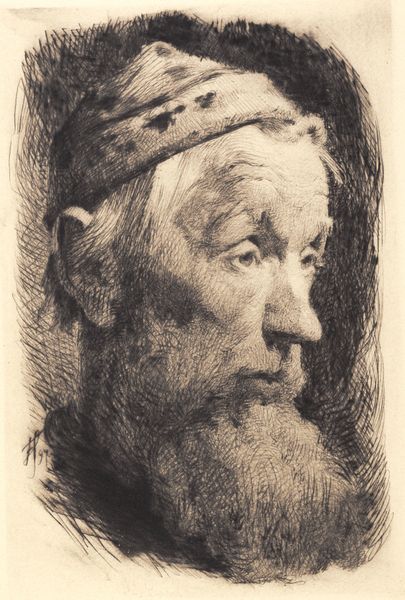
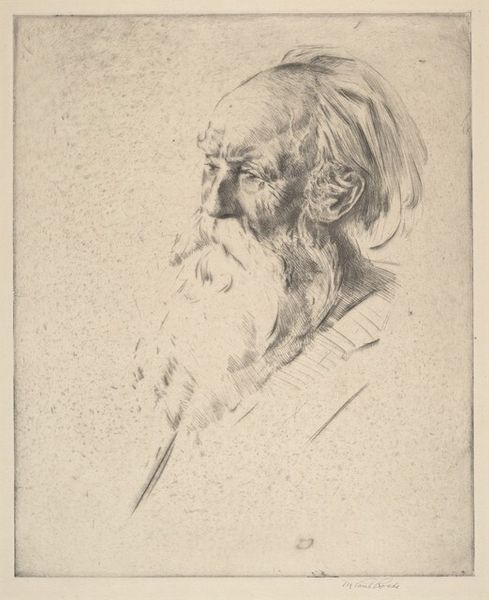
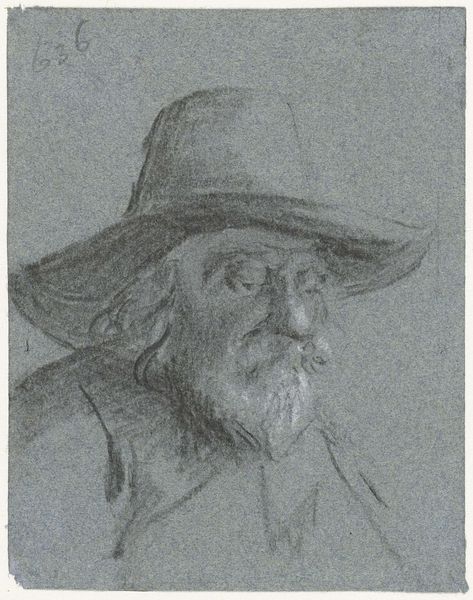
Curator: Orest Kiprensky’s pencil drawing, "The Old Man’s Head," from 1807 offers a striking image. There's something quite captivating in its stark simplicity. Editor: Yes, I am struck by its quiet intensity and frankly its poignancy. He looks…burdened. The heavy shadows definitely contribute to that impression. Curator: Absolutely, it's the masterful manipulation of the pencil that commands our attention. The raw texture of the paper interacts with the graphite creating a tangible presence. Considering it as a work on paper also informs a view of production costs and studio work during the time period. Editor: Looking closer, it’s not just about skill but a statement regarding access and visibility. Who were portraits typically reserved for at the time, and who did Kiprensky choose to elevate? This portrait challenges the conventional norms by celebrating lived experience beyond social status, suggesting beauty lies in the individual’s depth and character. The fact that the piece focuses on a male is curious, do other images of the time show such unromantic perspectives on gender, masculinity, and ageing? Curator: The medium and the romantic style really underline these ideas. Kiprensky's method isn't polished—we see the process of drawing itself. And speaking of materiality, think about where the artist might have sourced such materials in the early 19th century; was there a burgeoning market for art supplies, even then? Editor: Exactly! Moreover, his decision is especially powerful, prompting us to ask important questions about who society chooses to valorize. This is also evident through the lens of romanticism – an interest in emotion but also disruption and unconventional figures. I wonder, how does this disrupt ideas and definitions of identity? Does that shift based on historical norms? Curator: Such nuanced readings open our eyes not just to the subject, but also to the socio-economic conditions of art production. Kiprensky is not simply making art; he’s part of a material chain. Editor: Indeed. It highlights how artists shape our perspectives and disrupt narratives – both in their choice of subject matter and in how their work encourages dialogue. "The Old Man’s Head" invites us to see beyond the surface and to find meaning and beauty where we might least expect it.
Comments
No comments
Be the first to comment and join the conversation on the ultimate creative platform.
 Collect
 React
React Comment
More like this