About this artwork
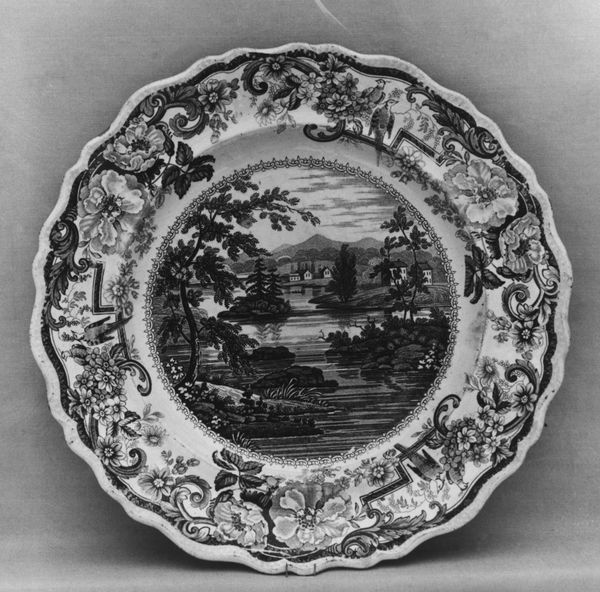
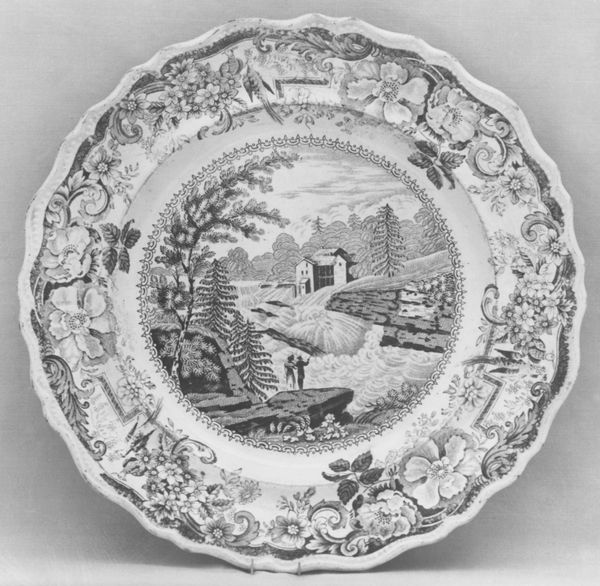
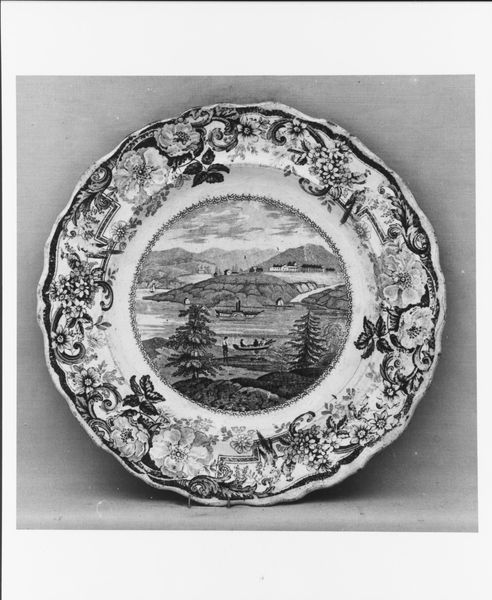
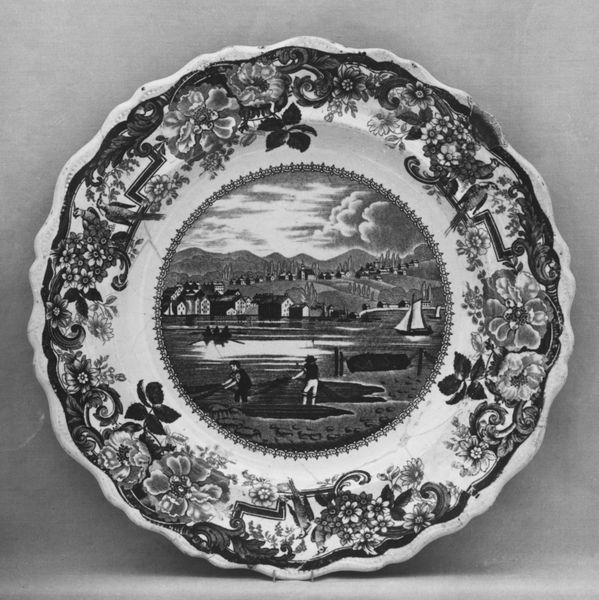
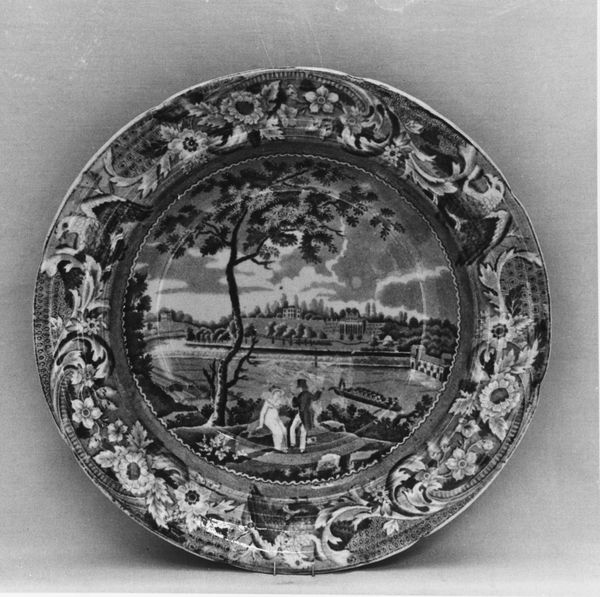
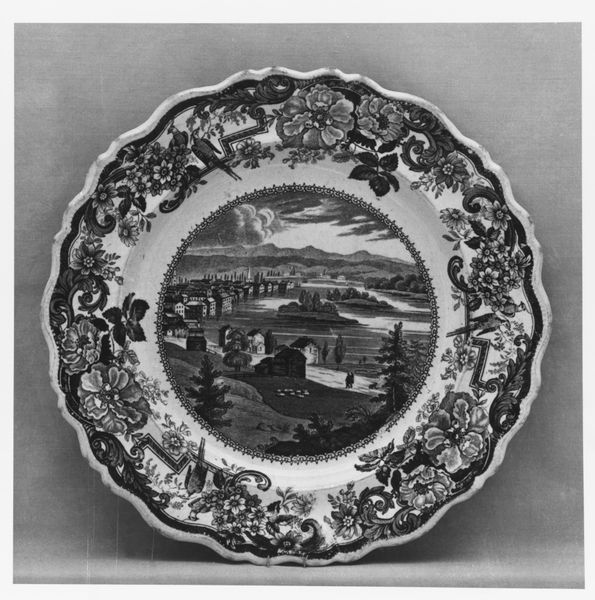
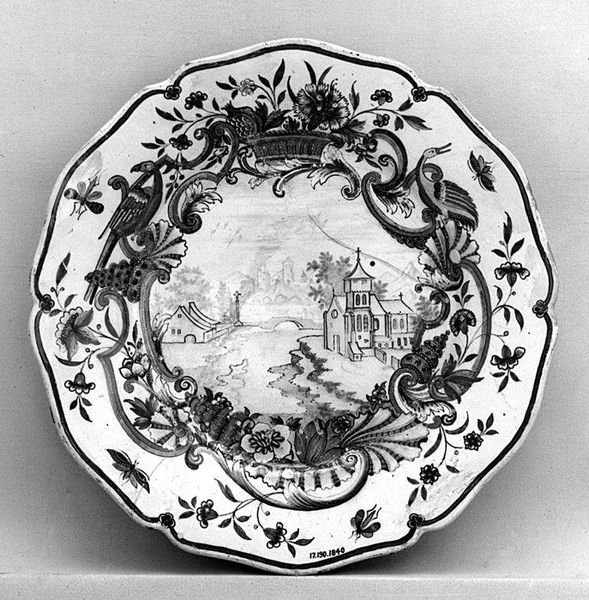
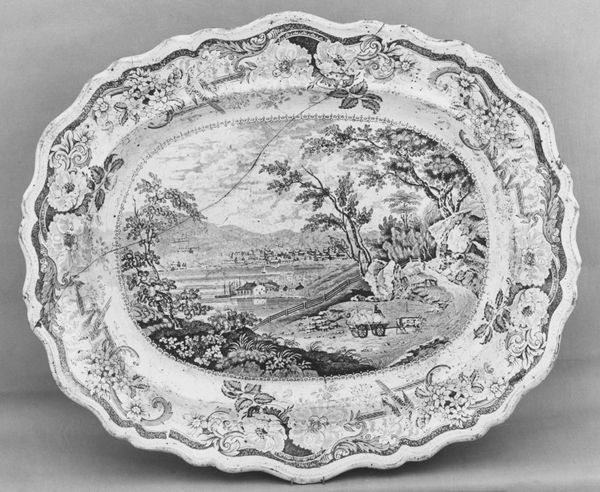
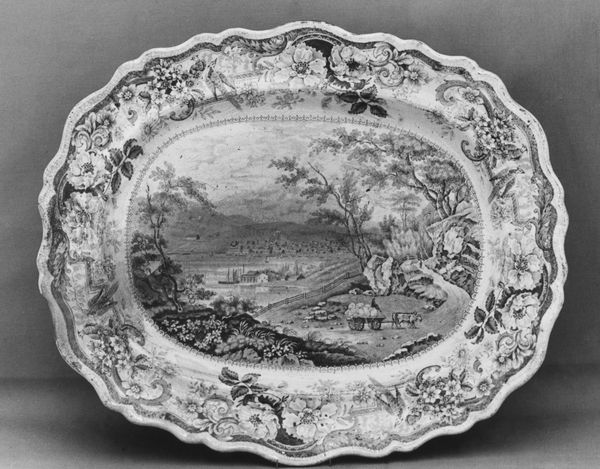
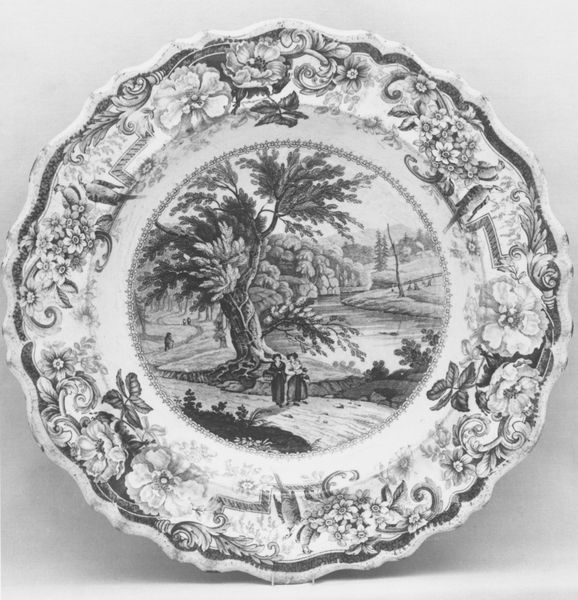
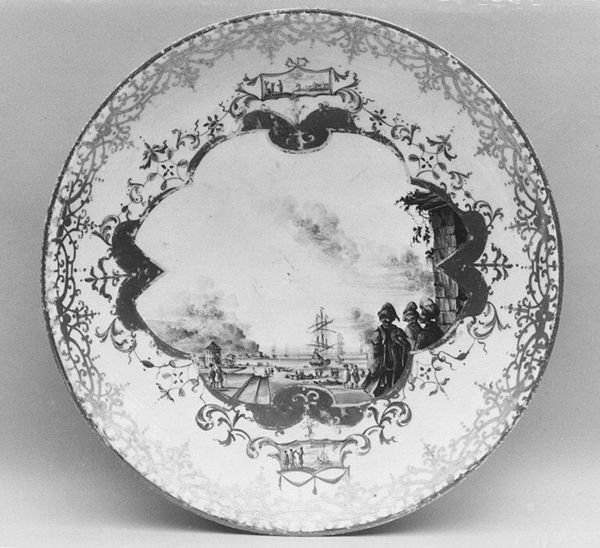
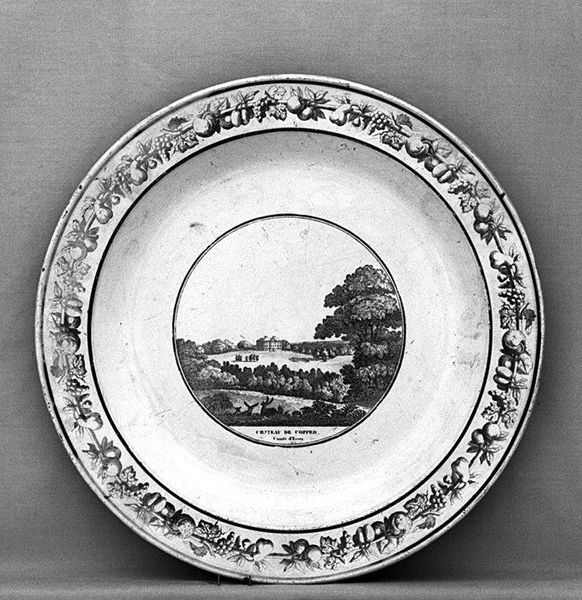
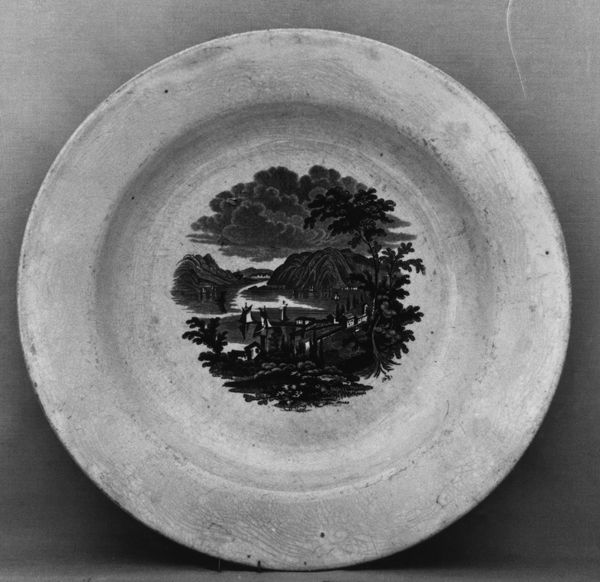
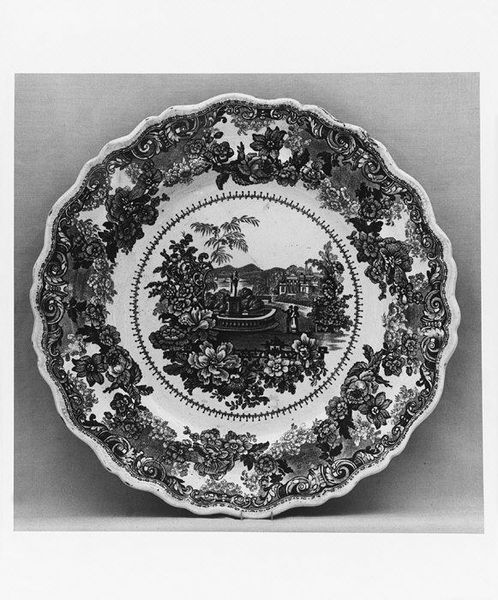
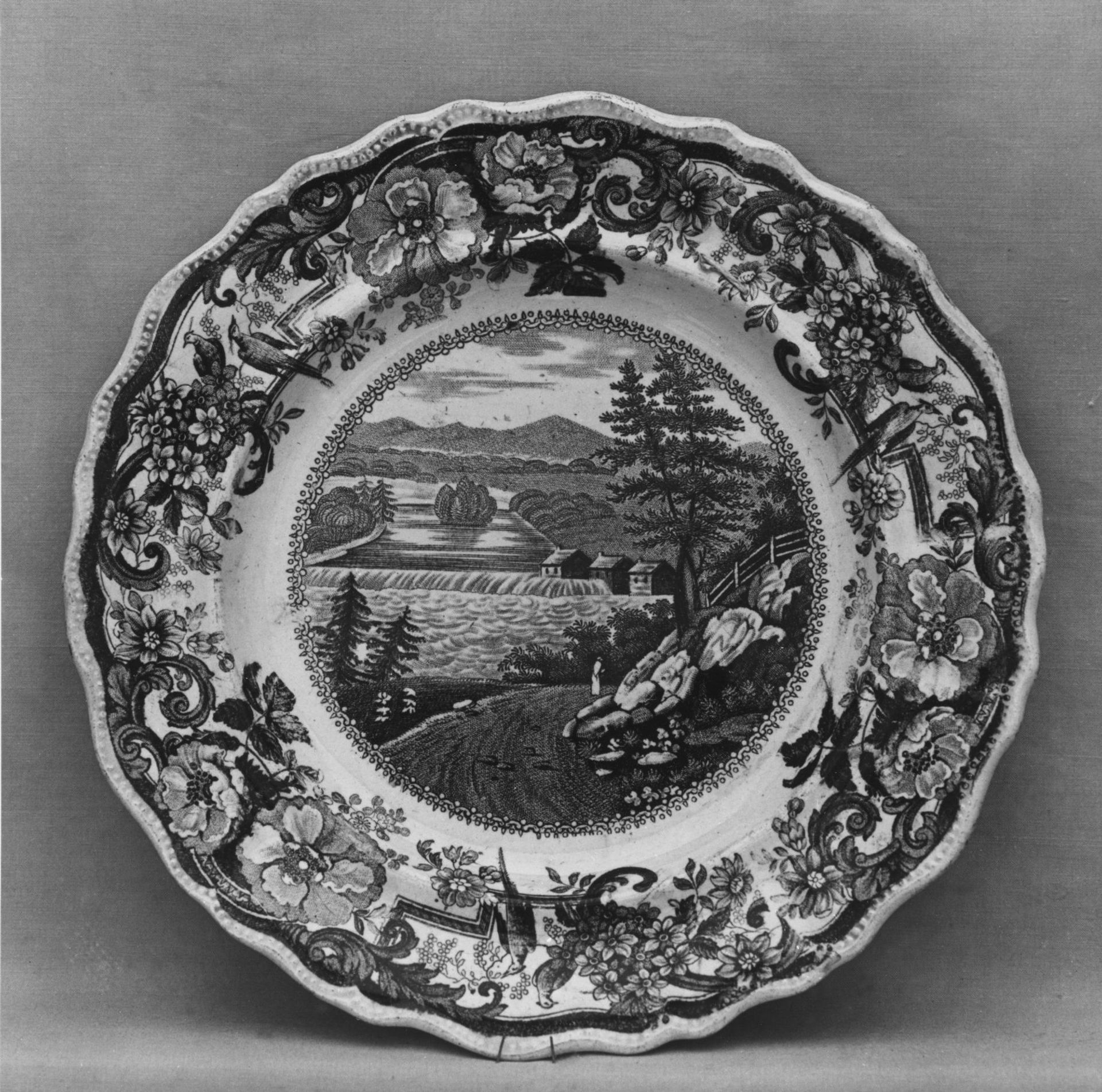
This plate was produced in Staffordshire, England by James and Ralph Clews during the early 19th century. Decorated with transfer-printed images, it shows a romanticized landscape that reflects the burgeoning interest in picturesque scenery during that era. The Clews brothers were part of a large community of potters capitalizing on the growing middle-class market for affordable ceramics. Transfer printing allowed manufacturers to mass-produce detailed images, making decorative tableware accessible to a wider audience. The landscape depicted here evokes an idealized vision of rural life, tapping into a longing for nature amidst rapid industrialization. These plates were not merely functional objects; they were also carriers of cultural values and aspirations. Examining pattern books, trade catalogs, and archival records can reveal much about the social and economic forces that shaped their production and consumption. Understanding the historical context allows us to see these objects as more than just pretty decorations.
Plate
1819 - 1837

James and Ralph Clews
1813 - 1836
The Metropolitan Museum of Art
Metropolitan Museum of Art, New York, NYArtwork details
- Medium
- print, ceramic, earthenware, sculpture
- Dimensions
- Diam. 7 3/4 in. (19.7 cm)
- Location
- Metropolitan Museum of Art, New York, NY
- Copyright
- Public Domain
Tags
Comments
Share your thoughts
About this artwork
This plate was produced in Staffordshire, England by James and Ralph Clews during the early 19th century. Decorated with transfer-printed images, it shows a romanticized landscape that reflects the burgeoning interest in picturesque scenery during that era. The Clews brothers were part of a large community of potters capitalizing on the growing middle-class market for affordable ceramics. Transfer printing allowed manufacturers to mass-produce detailed images, making decorative tableware accessible to a wider audience. The landscape depicted here evokes an idealized vision of rural life, tapping into a longing for nature amidst rapid industrialization. These plates were not merely functional objects; they were also carriers of cultural values and aspirations. Examining pattern books, trade catalogs, and archival records can reveal much about the social and economic forces that shaped their production and consumption. Understanding the historical context allows us to see these objects as more than just pretty decorations.
Comments
Share your thoughts