About this artwork
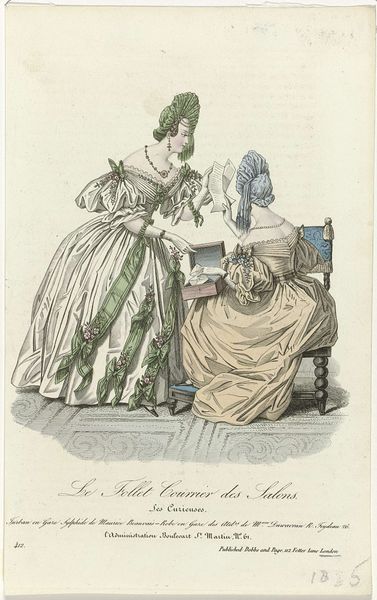
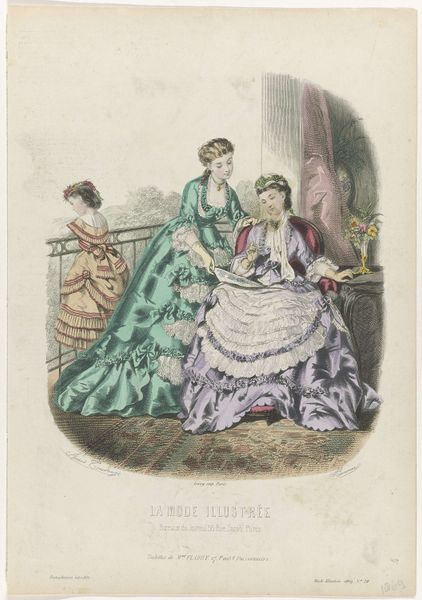
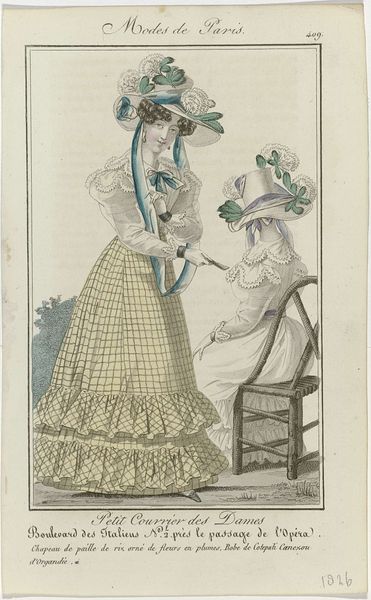
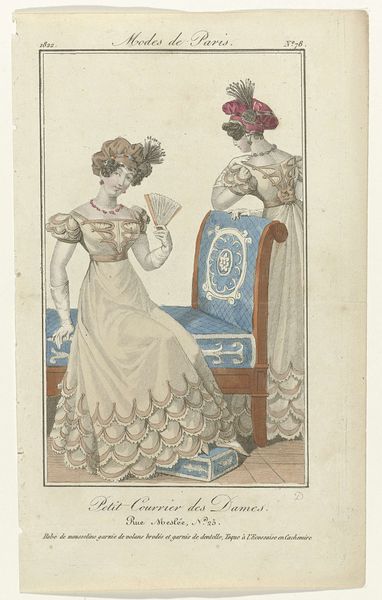
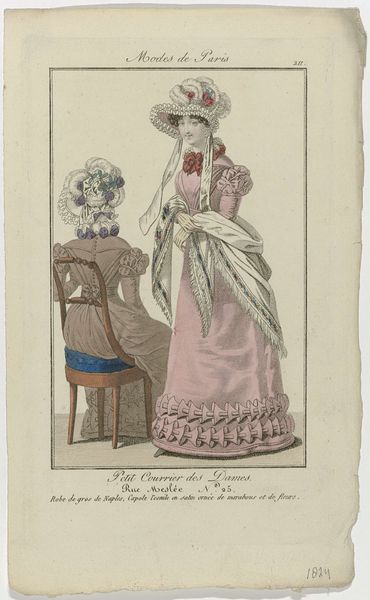
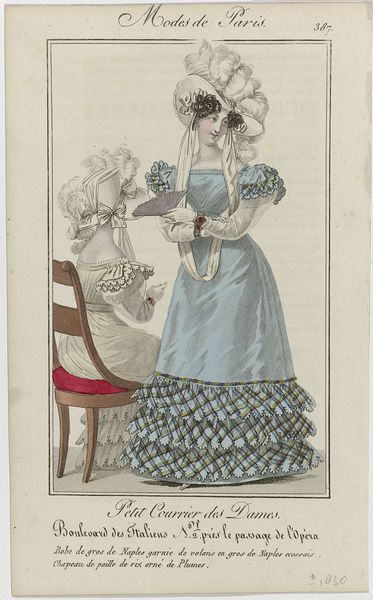
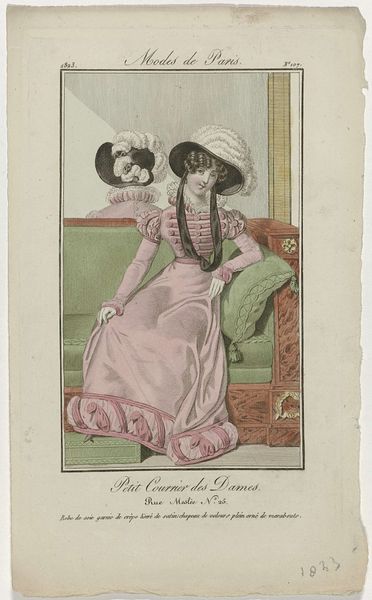
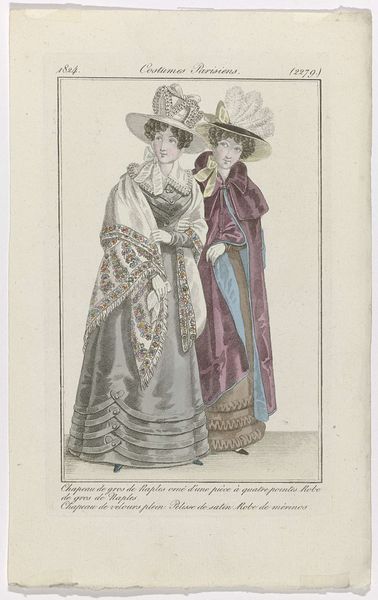
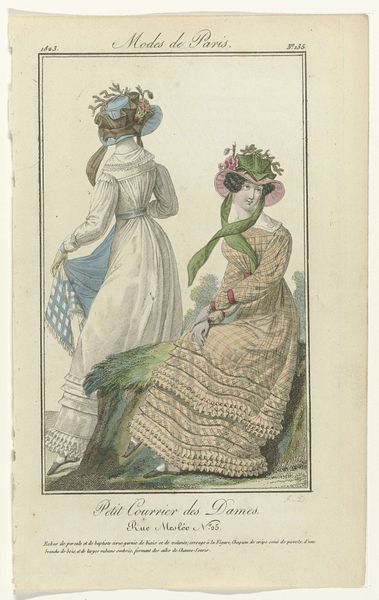
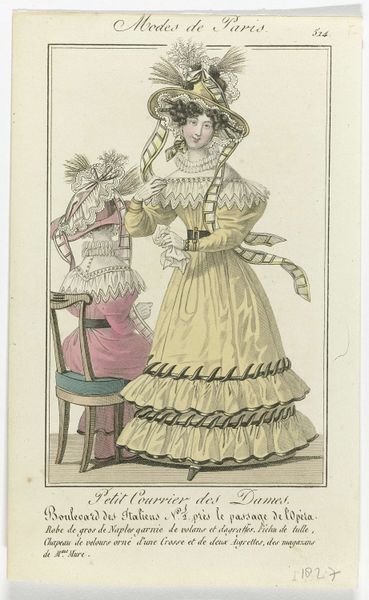
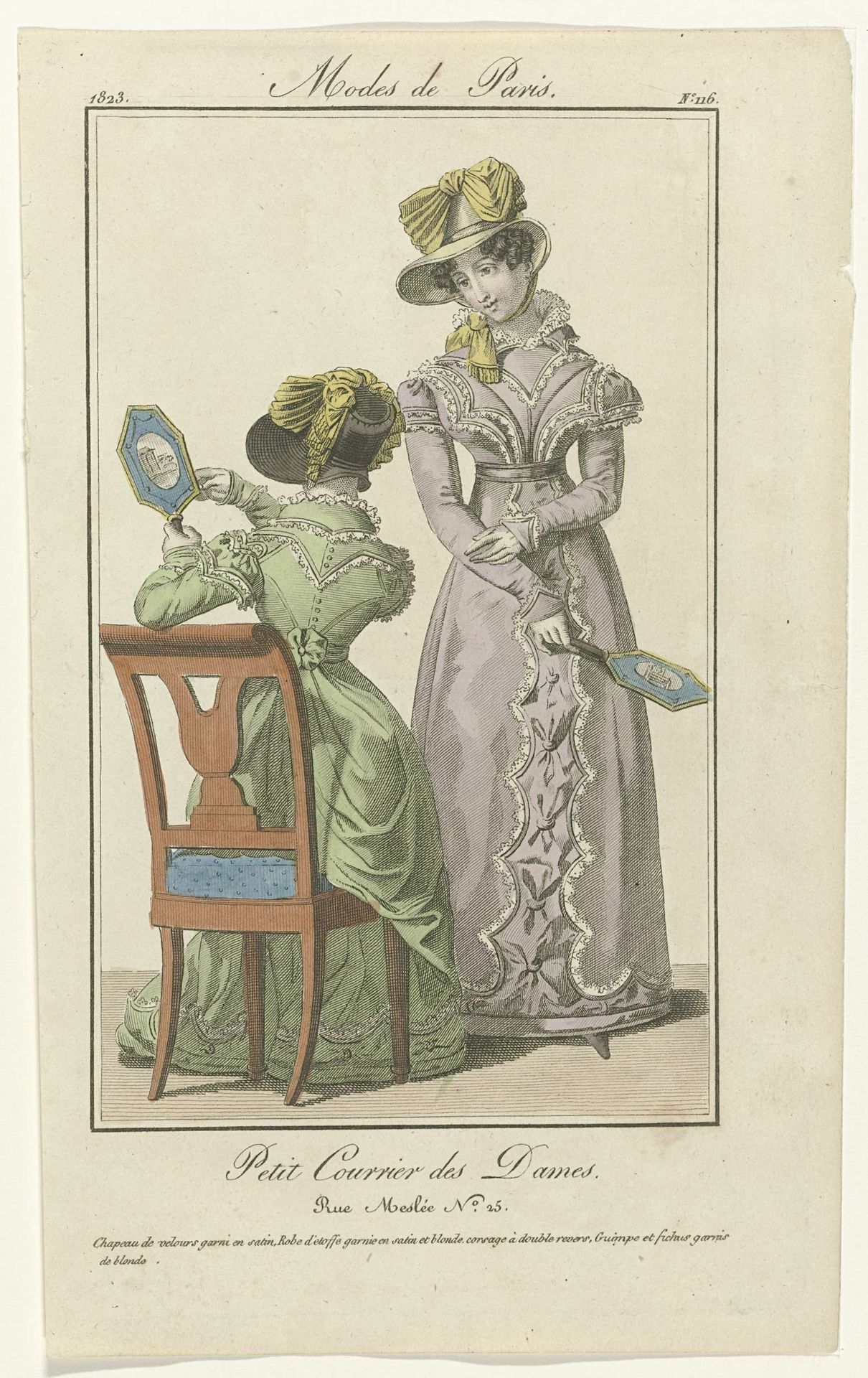
Curator: This print, "Petit Courrier des Dames, 1823, No. 116" from an anonymous artist, showcases early 19th-century fashion. Etched lines filled with delicate color…what immediately strikes you? Editor: Well, the detail on the dresses is pretty remarkable, especially considering it's a print. I’m curious about the amount of labor that went into creating those lace details and embellishments, both in reality and in representing it in this medium. Curator: Precisely. Look at how the print functions as a record, almost an advertisement, of the incredible textile production of the era. Think of the workshops and the people involved. Editor: So, it’s less about artistic expression and more about the display of available commodities? Curator: It is both. The etching and the color contribute to the allure, enticing the consumer. The “Petit Courrier des Dames” served a real purpose. Did these prints celebrate artistry or promote consumption? Editor: Possibly both, simultaneously. The skill in rendering the fabrics elevates it beyond a simple catalog, but its primary function was commercial. The contrast between the delicate aesthetic and the labor involved is interesting. Curator: Think of the materiality here. Paper, ink, dyes, the fabrics themselves… Consumption then had tangible form in everyday life. Editor: That makes me consider how our perception of fashion images may change by just thinking about its context. Thank you. Curator: It's a dialogue between the creation, consumption and circulation that’s vital to understand these works beyond their immediate aesthetic appeal.

Artwork details
- Medium
- drawing, print, etching
- Dimensions
- height 201 mm, width 124 mm
- Copyright
- Rijks Museum: Open Domain
Tags
Comments
Share your thoughts
About this artwork
Curator: This print, "Petit Courrier des Dames, 1823, No. 116" from an anonymous artist, showcases early 19th-century fashion. Etched lines filled with delicate color…what immediately strikes you? Editor: Well, the detail on the dresses is pretty remarkable, especially considering it's a print. I’m curious about the amount of labor that went into creating those lace details and embellishments, both in reality and in representing it in this medium. Curator: Precisely. Look at how the print functions as a record, almost an advertisement, of the incredible textile production of the era. Think of the workshops and the people involved. Editor: So, it’s less about artistic expression and more about the display of available commodities? Curator: It is both. The etching and the color contribute to the allure, enticing the consumer. The “Petit Courrier des Dames” served a real purpose. Did these prints celebrate artistry or promote consumption? Editor: Possibly both, simultaneously. The skill in rendering the fabrics elevates it beyond a simple catalog, but its primary function was commercial. The contrast between the delicate aesthetic and the labor involved is interesting. Curator: Think of the materiality here. Paper, ink, dyes, the fabrics themselves… Consumption then had tangible form in everyday life. Editor: That makes me consider how our perception of fashion images may change by just thinking about its context. Thank you. Curator: It's a dialogue between the creation, consumption and circulation that’s vital to understand these works beyond their immediate aesthetic appeal.
Comments
Share your thoughts