About this artwork
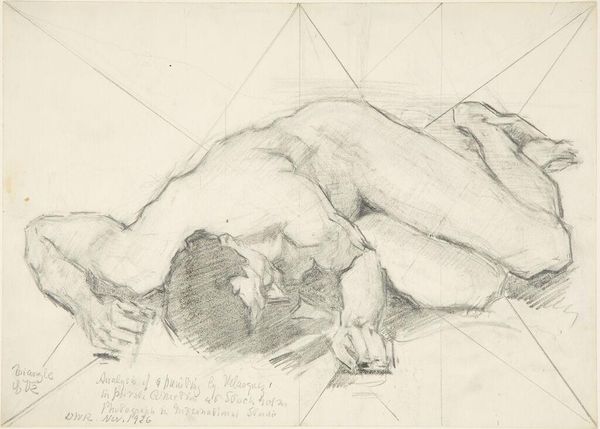
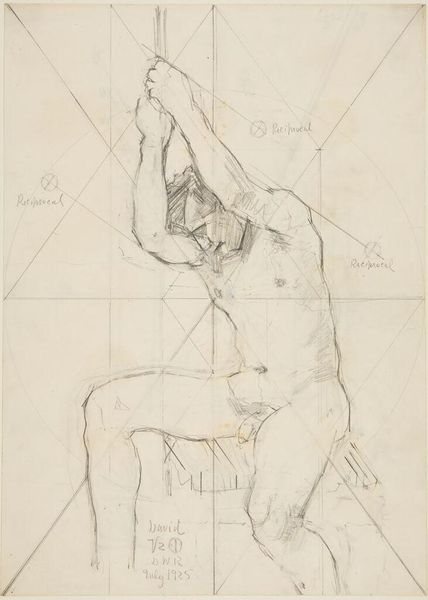
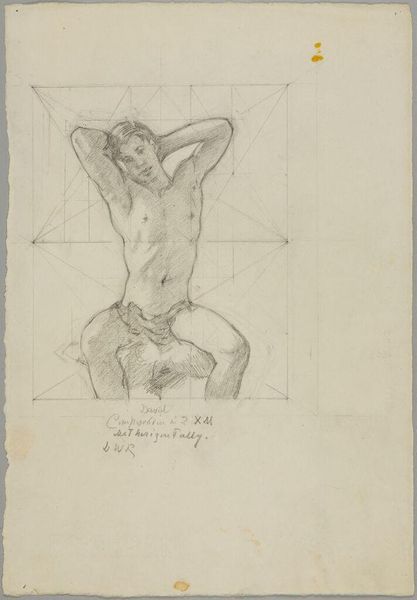
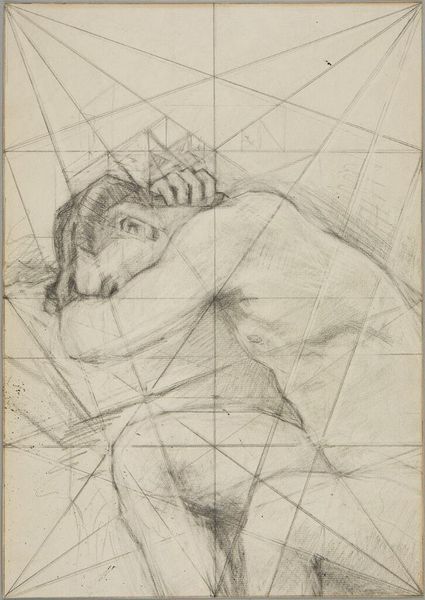
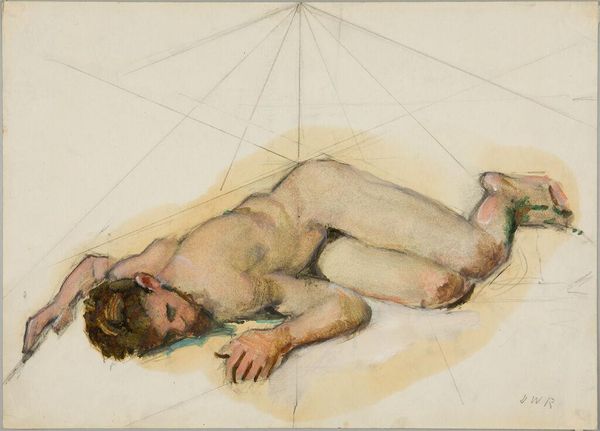
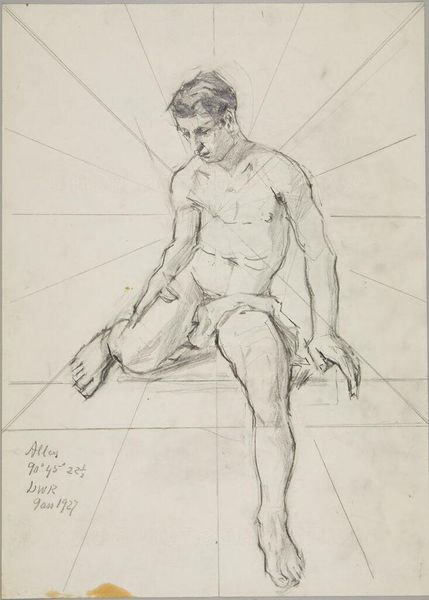
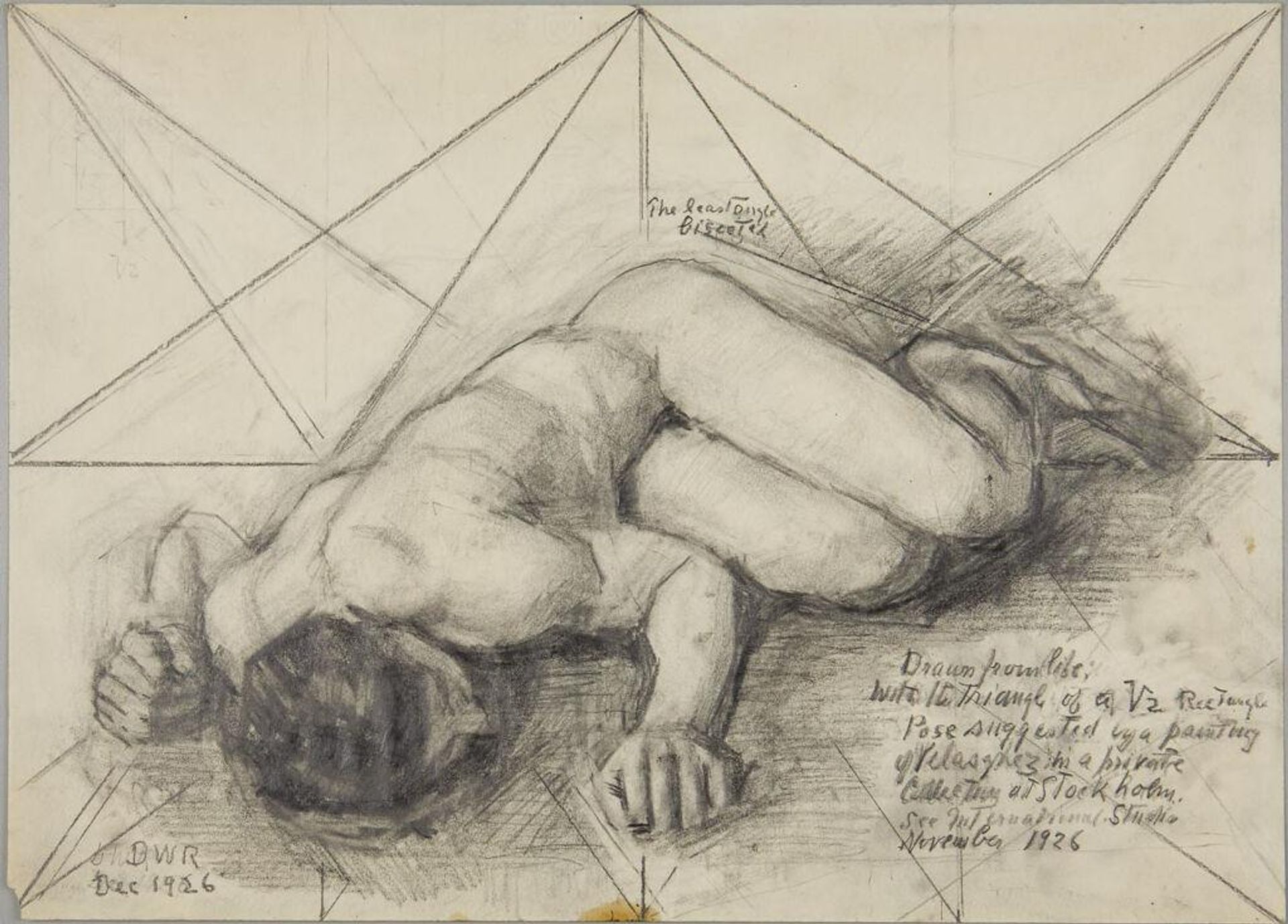
Editor: This is Denman Waldo Ross's "Reclining Male Nude," drawn in 1926. It appears to be a study, perhaps preparatory. I am struck by the geometric shapes overlaid on the figure; what do you see in this piece? Curator: The geometric structure reveals the academic framework underlying even what appears to be a spontaneous life drawing. It's interesting how Ross uses geometry to, in a sense, contain and control the potentially unruly human form. How might that relate to the traditional role of art academies? Editor: So, the geometry represents institutional control and the nude is the raw artistic talent needing refinement? Curator: Precisely. The artwork becomes a visual argument about the relationship between individual expression and institutional authority. Editor: I hadn't considered the power dynamics at play. It makes you wonder who art serves and whom it excludes. Curator: Indeed, and the overlaid geometry as the institution itself may change how we see the artwork in its entirety.
Reclining Male Nude
1926

Artwork details
- Dimensions
- 25.5 x 35.6 cm (10 1/16 x 14 in.)
- Location
- Harvard Art Museums
- Copyright
- CC0 1.0
Comments
Share your thoughts
About this artwork
Editor: This is Denman Waldo Ross's "Reclining Male Nude," drawn in 1926. It appears to be a study, perhaps preparatory. I am struck by the geometric shapes overlaid on the figure; what do you see in this piece? Curator: The geometric structure reveals the academic framework underlying even what appears to be a spontaneous life drawing. It's interesting how Ross uses geometry to, in a sense, contain and control the potentially unruly human form. How might that relate to the traditional role of art academies? Editor: So, the geometry represents institutional control and the nude is the raw artistic talent needing refinement? Curator: Precisely. The artwork becomes a visual argument about the relationship between individual expression and institutional authority. Editor: I hadn't considered the power dynamics at play. It makes you wonder who art serves and whom it excludes. Curator: Indeed, and the overlaid geometry as the institution itself may change how we see the artwork in its entirety.
Comments
Share your thoughts