

c. 1880 - 1895
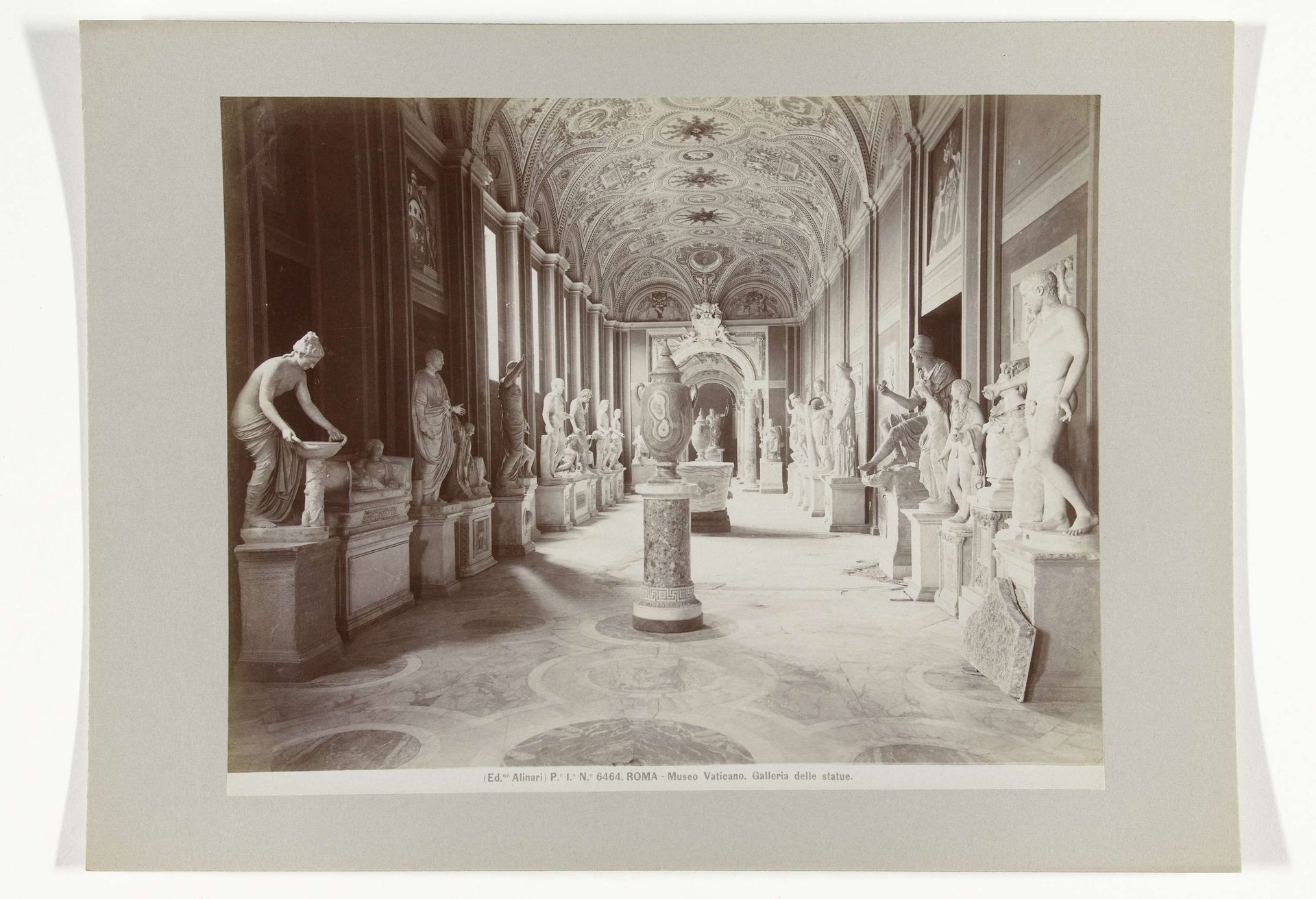
Galleria delle statue in het Museo Vaticano

Fratelli Alinari
@fratellialinariLocation
RijksmuseumListen to curator's interpretation
Curatorial notes
Editor: This is “Galleria delle statue in het Museo Vaticano” by Fratelli Alinari, from around 1880 to 1895. It shows a hall filled with classical sculptures. What strikes me is the almost clinical, sterile atmosphere, despite the presence of all these figures. What do you see in this piece? Curator: Well, this image, beyond just depicting a space, offers a peek into the 19th-century's relationship with classical art. This isn't just a record; it's a statement about how institutions like the Vatican Museums controlled and presented narratives of history and culture to the public. The arrangement, the lighting... It all speaks to a desire to impose order and convey authority through art. Editor: So, the arrangement of statues, even the photo itself, is a curated experience? Curator: Precisely. Think about the socio-political context of the late 19th century: nationalism, colonialism, and the rise of museums as tools of cultural power. Images like this would have been widely circulated, reinforcing the idea of European cultural dominance and the continuity with a glorious classical past. Does the photo give any hints as to the space being intended for the general public versus for scholars or elites? Editor: The cleanliness and open space feels like it's made to be observed by the public rather than interacted with by a close group. The figures are certainly showcased. Curator: Indeed. How do you think seeing artwork represented in this way shapes our understanding or perception of it? Editor: It almost makes the sculptures seem like relics or historical artifacts, taken out of their original context and almost… sterilized. I see now that viewing this work through its history completely shifts my perception. Curator: Exactly! Thinking about its historical context allows us to unravel the complex ways in which art is used to convey power.