About this artwork
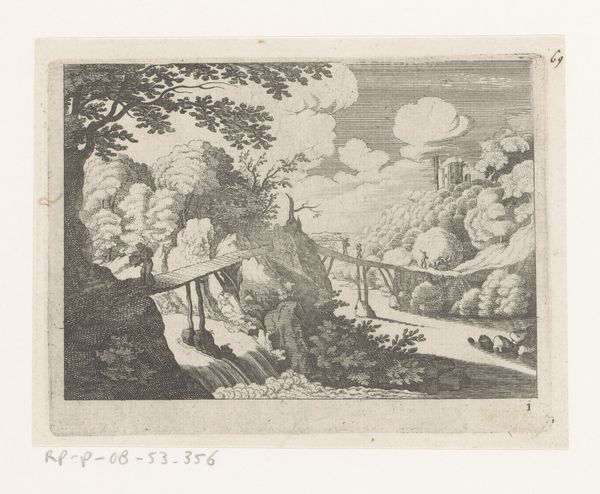
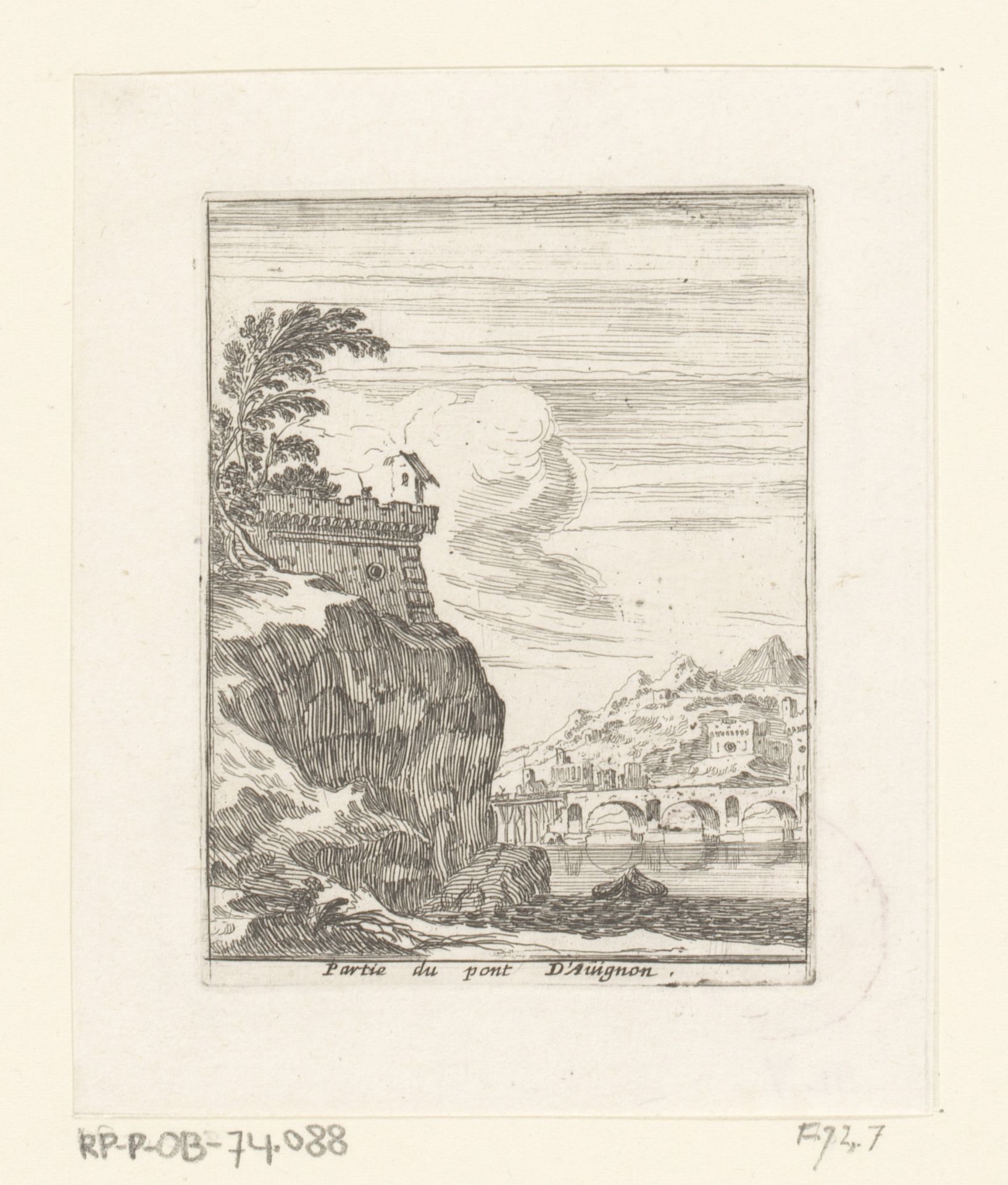
Editor: This is Israel Silvestre's "View of a Section of the Pont Saint-Bénézet," an etching dating between 1631 and 1661, housed in the Rijksmuseum. I’m immediately struck by how detailed and evocative the landscape is, even in such a small scale print. What symbolic weight do you think this bridge holds? Curator: Bridges, literally and figuratively, are liminal spaces. They connect, yes, but they also mark a transition, a journey from one state to another. Notice how the artist positions the ruined bridge against the backdrop of a distant city. What might the brokenness of the bridge symbolize in contrast to the continuous, albeit miniaturized, cityscape? Editor: I guess it speaks to a passage of time, perhaps even lost potential. A city signifies community, growth, the future, whereas the ruined bridge... feels more about memory, even a little tragic. Curator: Precisely. Now consider the tower with a tiny building perched atop it. Doesn't it echo a similar theme of aspiration and vulnerability? That small structure, defying gravity on the edge, evokes the precariousness of human endeavor, a fragile assertion against the forces of nature and time. What feeling does the overall composition instill in you? Editor: I see what you mean. There’s a strong contrast. Maybe… melancholy? Like a bittersweet remembrance of something grand that has faded, with only a suggestion of the world beyond? Curator: Melancholy is fitting. Silvestre captured a potent visual metaphor for the fleeting nature of human ambition and the enduring power of nature and history. How do the elements in the natural and built worlds echo off one another? Editor: That’s interesting! Thinking about it now, I'm starting to think differently about prints like this. It's more than just a pretty scene; it’s rich with meaning and memory. Curator: Exactly. Every etched line carries a potential echo of a much larger cultural conversation.
Gezicht op een deel van de Pont Saint-Bénézet
1631 - 1661

Israel Silvestre
1621 - 1691Location
RijksmuseumArtwork details
- Medium
- print, etching
- Dimensions
- height 84 mm, width 65 mm
- Location
- Rijksmuseum
- Copyright
- Rijks Museum: Open Domain
Tags
Comments
Share your thoughts
About this artwork
Editor: This is Israel Silvestre's "View of a Section of the Pont Saint-Bénézet," an etching dating between 1631 and 1661, housed in the Rijksmuseum. I’m immediately struck by how detailed and evocative the landscape is, even in such a small scale print. What symbolic weight do you think this bridge holds? Curator: Bridges, literally and figuratively, are liminal spaces. They connect, yes, but they also mark a transition, a journey from one state to another. Notice how the artist positions the ruined bridge against the backdrop of a distant city. What might the brokenness of the bridge symbolize in contrast to the continuous, albeit miniaturized, cityscape? Editor: I guess it speaks to a passage of time, perhaps even lost potential. A city signifies community, growth, the future, whereas the ruined bridge... feels more about memory, even a little tragic. Curator: Precisely. Now consider the tower with a tiny building perched atop it. Doesn't it echo a similar theme of aspiration and vulnerability? That small structure, defying gravity on the edge, evokes the precariousness of human endeavor, a fragile assertion against the forces of nature and time. What feeling does the overall composition instill in you? Editor: I see what you mean. There’s a strong contrast. Maybe… melancholy? Like a bittersweet remembrance of something grand that has faded, with only a suggestion of the world beyond? Curator: Melancholy is fitting. Silvestre captured a potent visual metaphor for the fleeting nature of human ambition and the enduring power of nature and history. How do the elements in the natural and built worlds echo off one another? Editor: That’s interesting! Thinking about it now, I'm starting to think differently about prints like this. It's more than just a pretty scene; it’s rich with meaning and memory. Curator: Exactly. Every etched line carries a potential echo of a much larger cultural conversation.
Comments
Share your thoughts