About this artwork
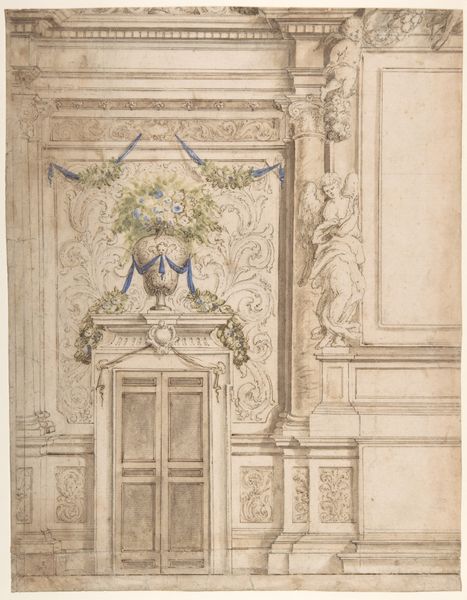
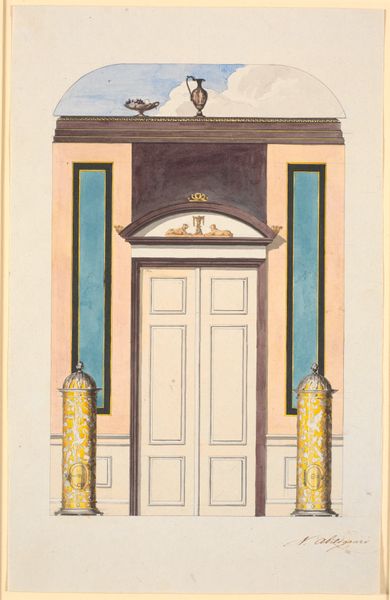
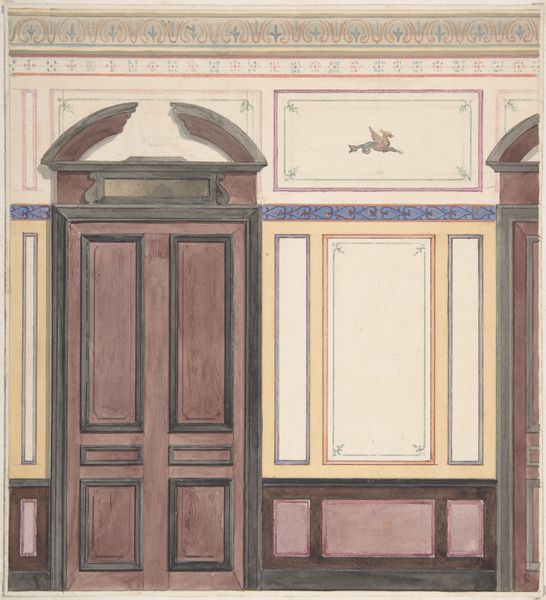
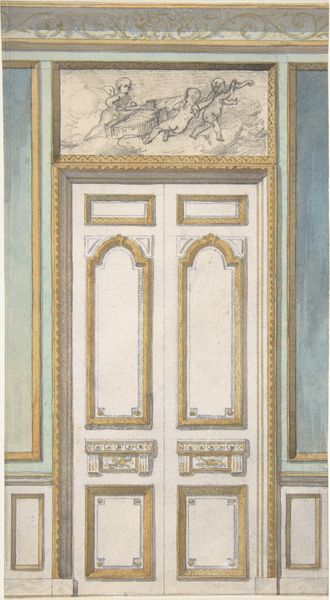
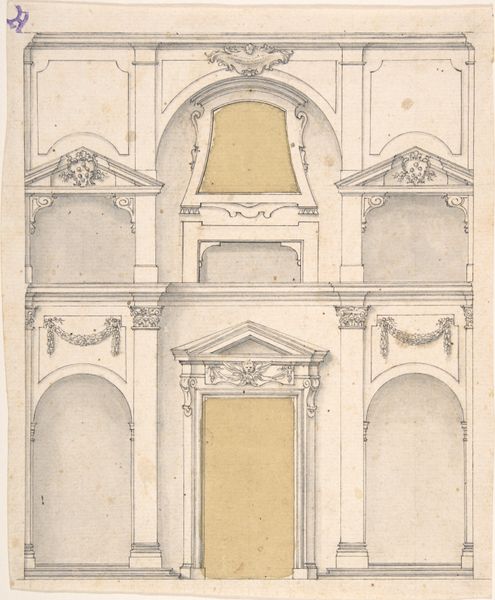
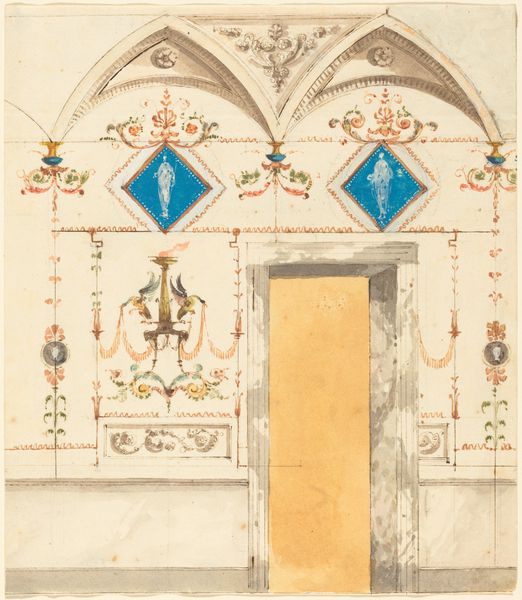
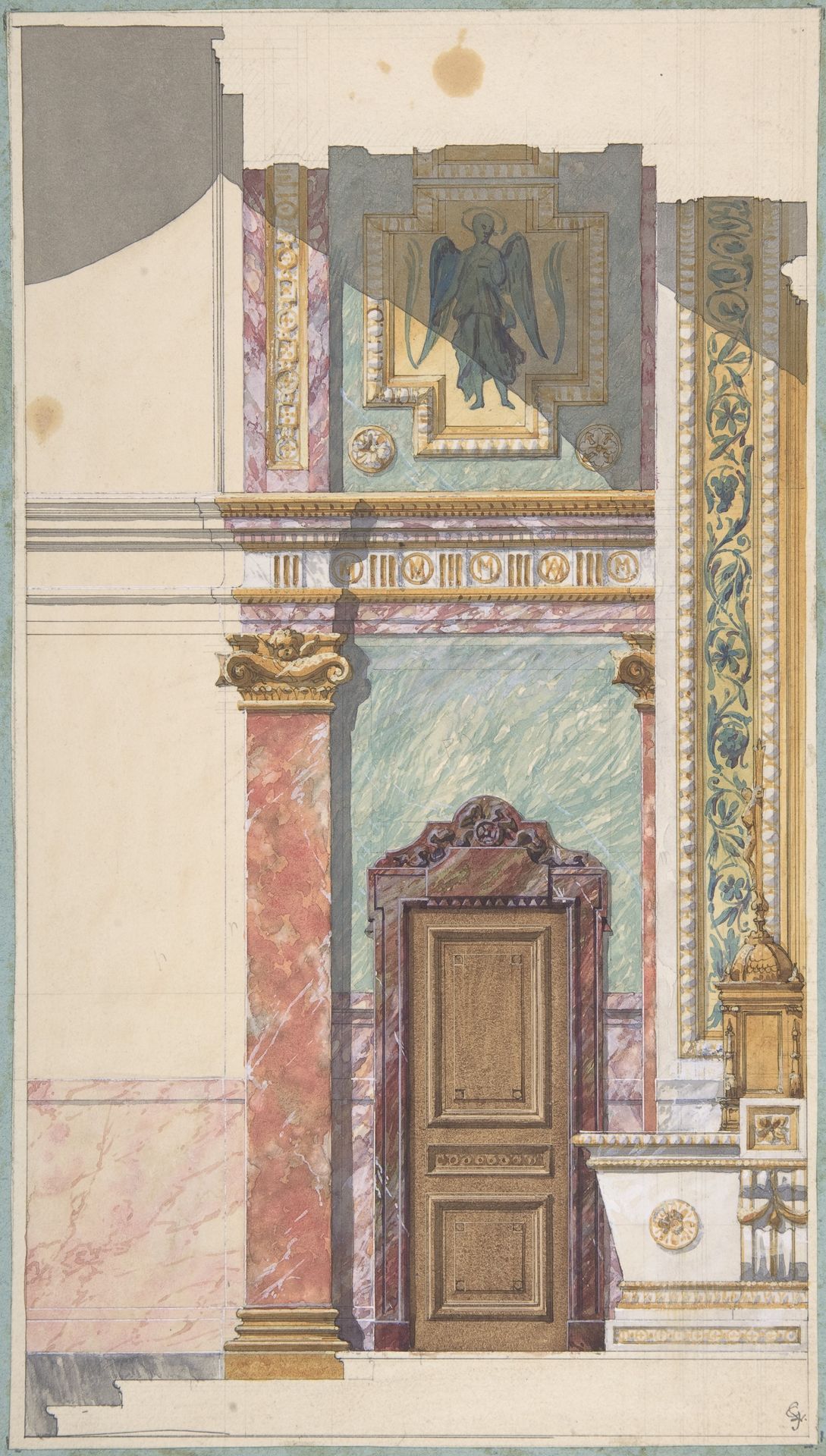
Here we see Jules-Edmond-Charles Lachaise’s design for an altar, rendered in delicate watercolor and pencil. The winged angel looms large, overseeing this sacred space, and this figure is a fascinating convergence of religious and artistic traditions. The angel, a messenger of God, has roots stretching back to ancient winged deities. We see echoes of Nike, the Greek goddess of victory, in its poised stance and outstretched wings. Consider how the angel in Lachaise's design, much like Nike, embodies a divine presence. And look at how the floral ornamentation, spirals and geometric patterns that climb the columns and frame the door, speak to a deep-seated human need for order and beauty in the face of existential uncertainty. These symbols, passed down through generations, tap into our collective unconscious. Lachaise, through his design, evokes a sense of awe and reverence that transcends any one specific religious doctrine. The emotional power of such imagery is undeniable, engaging viewers on a profound, subconscious level. These symbols carry with them the weight of history, memory, and the ever-evolving human experience.
Side View of Design for Altar
1850 - 1900

Jules-Edmond-Charles Lachaise
1897
The Metropolitan Museum of Art
Metropolitan Museum of Art, New York, NYArtwork details
- Medium
- drawing, print, architecture
- Dimensions
- 12 1/2 x 7 1/16 in. (31.8 x 18 cm)
- Location
- Metropolitan Museum of Art, New York, NY
- Copyright
- Public Domain
Tags
Comments
Share your thoughts
About this artwork
Here we see Jules-Edmond-Charles Lachaise’s design for an altar, rendered in delicate watercolor and pencil. The winged angel looms large, overseeing this sacred space, and this figure is a fascinating convergence of religious and artistic traditions. The angel, a messenger of God, has roots stretching back to ancient winged deities. We see echoes of Nike, the Greek goddess of victory, in its poised stance and outstretched wings. Consider how the angel in Lachaise's design, much like Nike, embodies a divine presence. And look at how the floral ornamentation, spirals and geometric patterns that climb the columns and frame the door, speak to a deep-seated human need for order and beauty in the face of existential uncertainty. These symbols, passed down through generations, tap into our collective unconscious. Lachaise, through his design, evokes a sense of awe and reverence that transcends any one specific religious doctrine. The emotional power of such imagery is undeniable, engaging viewers on a profound, subconscious level. These symbols carry with them the weight of history, memory, and the ever-evolving human experience.
Comments
Share your thoughts