Possibly 1692 - 1704
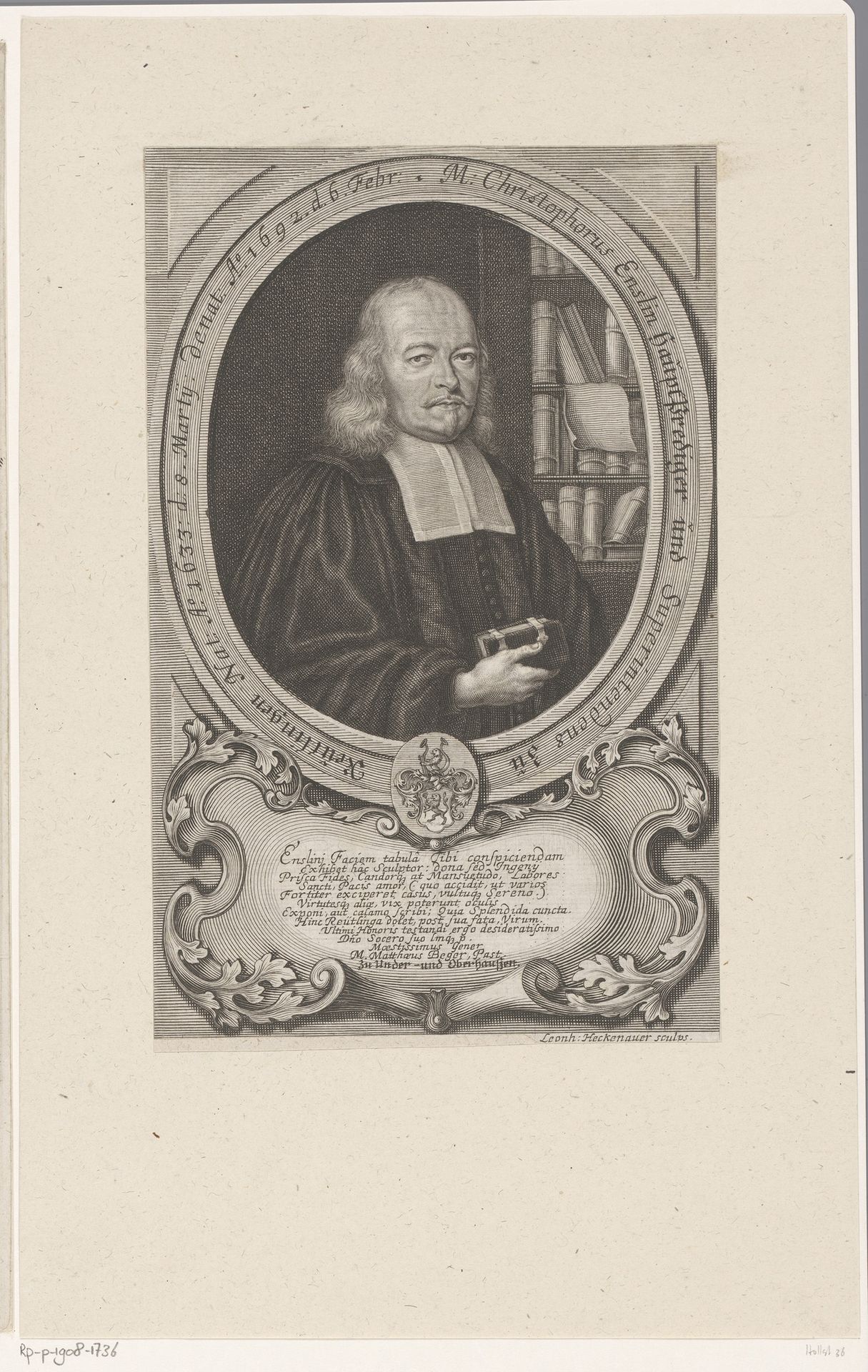
Portret van Christoph Enslin

Leonhard Heckenauer
1650 - 1704Location
RijksmuseumListen to curator's interpretation
Curatorial notes
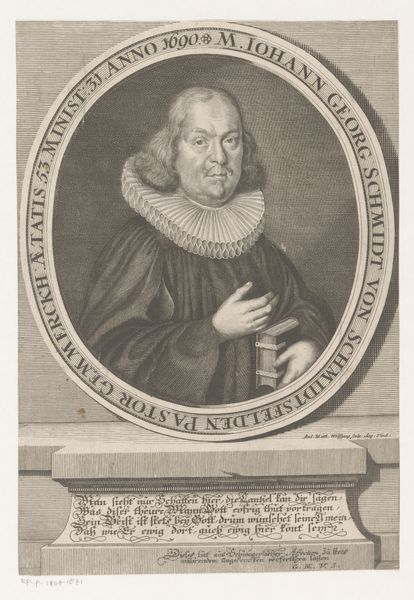
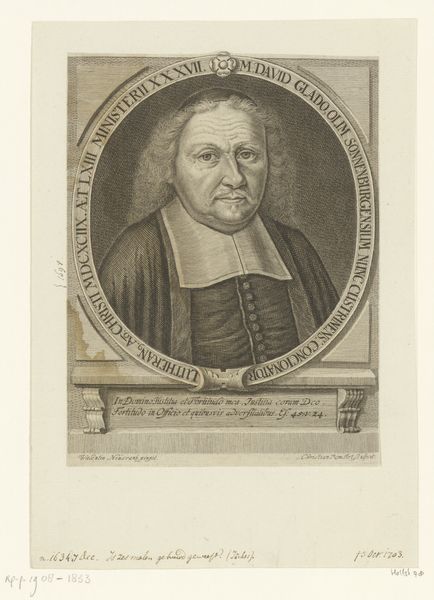
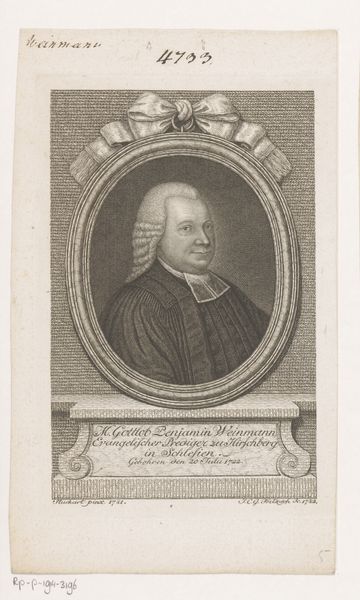
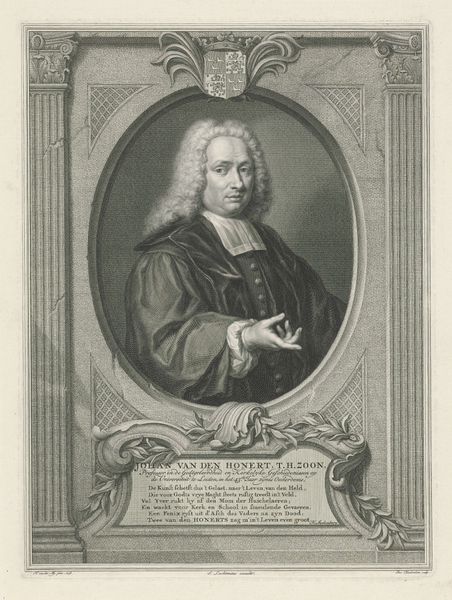
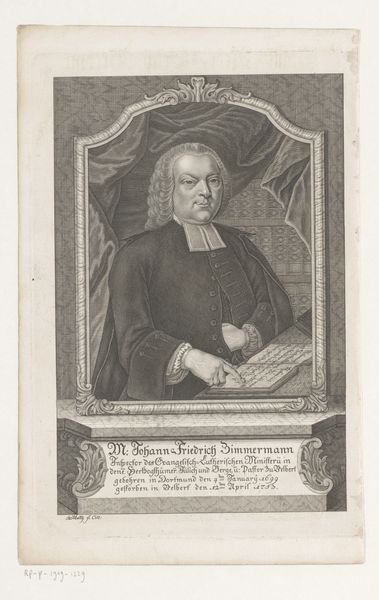
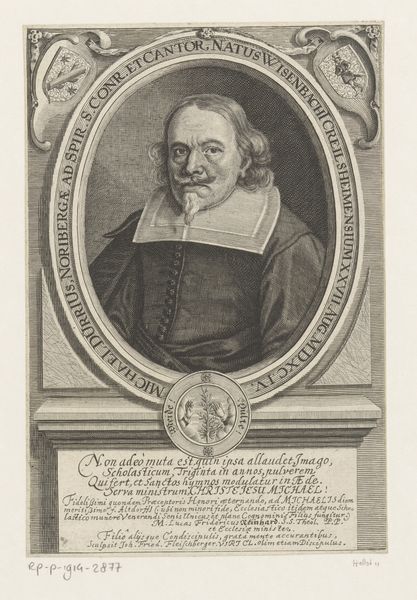
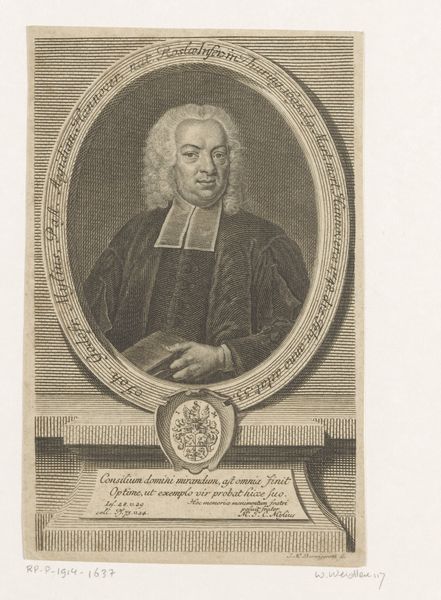
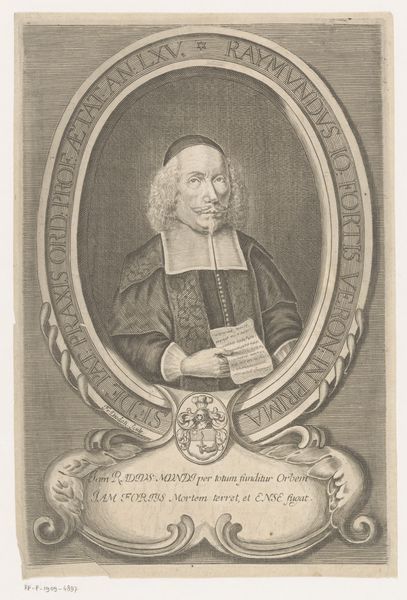
This print, depicting Christoph Enslin, was made by Leonhard Heckenauer, who was active around the turn of the 18th century. The print was achieved through engraving, a printmaking technique using a tool called a burin to carve lines directly into a metal plate, likely copper. The incised lines hold ink, which is then transferred to paper under high pressure, allowing for detailed and precise imagery. Consider the labor involved: the meticulous carving, the skilled manipulation of tools, and the physical demands of the printing process. These were highly valued skills, positioning printmakers like Heckenauer as essential conduits of information. The format allowed images and texts to be disseminated widely, playing a crucial role in shaping public opinion and cultural identity. The image and the means of its making speak volumes about the social and cultural landscape of the time, and the value of skilled labor. By appreciating the material and processes behind it, we gain a richer understanding of its place in history.