Copyright: Public Domain: Artvee
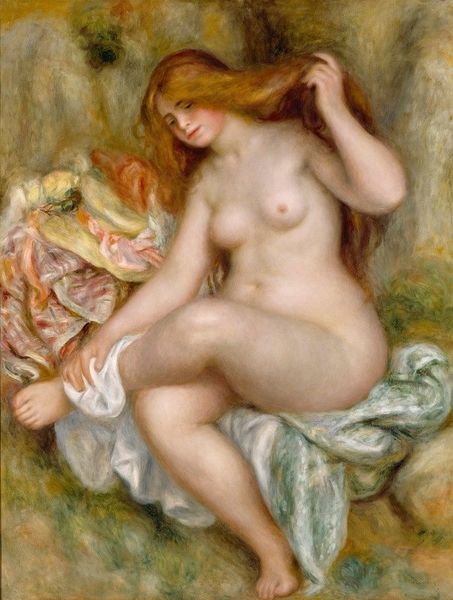
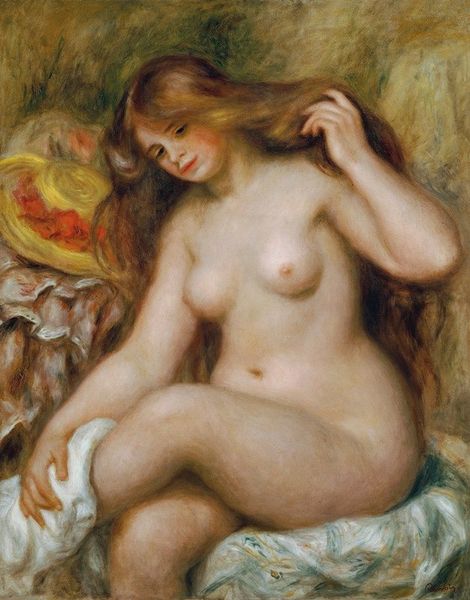
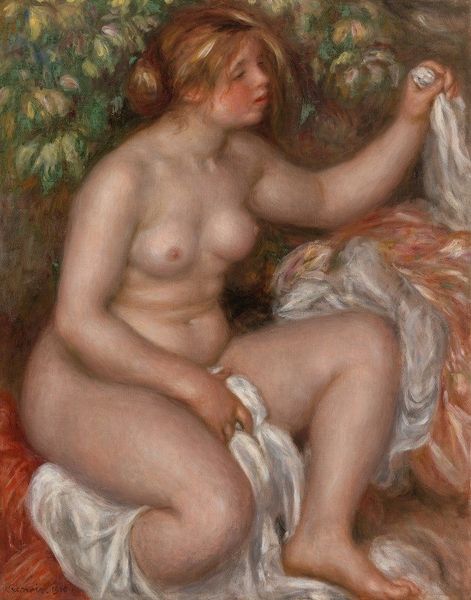
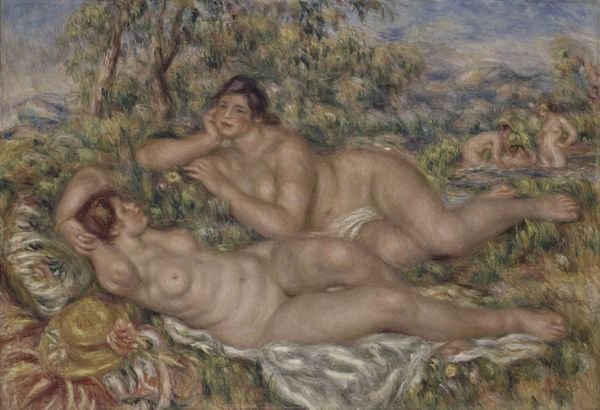
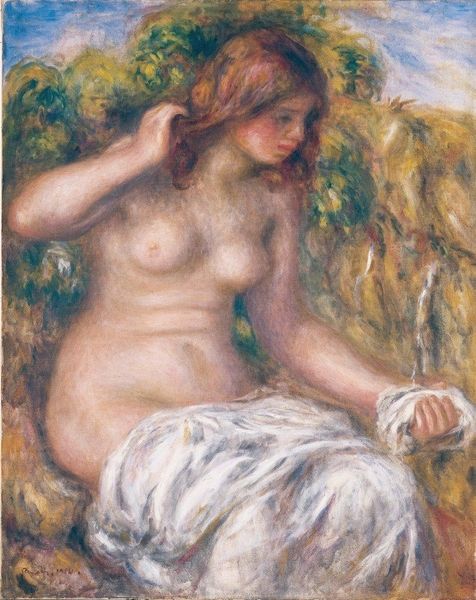
Editor: So here we have Renoir's "Bather and Maid," painted around 1900 or 1901. It’s an oil painting, and what strikes me first is how…domestic it feels, even with the nude bather. There’s this quiet intimacy. What do you see in it? Curator: I see a painting steeped in the complex social dynamics of its time, a visual document of power and privilege. This seemingly simple genre scene invites us to unpack the roles assigned to women, particularly in the context of domestic service. Editor: Can you elaborate on that? Curator: Absolutely. Renoir presents us with the "bather," presumably from a higher social class, and her maid. Consider the implied power dynamic: the bather is nude, vulnerable, yet the focal point, demanding attention. The maid, fully clothed, attends to her, reinforcing a relationship built on service and inequality. How does that dynamic sit with you? Editor: It feels...uncomfortable. The casualness of the nudity seems to amplify the maid's subservience. Almost like the bather is unaware, or unconcerned, of her position in all of this. Curator: Exactly. This "unawareness" is key. It highlights the systemic nature of inequality, how easily privilege can be wielded without conscious intent. And Renoir's Impressionistic style, with its soft brushstrokes and focus on light, can be read as subtly romanticizing this imbalance. Are we, as viewers, being complicit in this romanticization? Editor: It's something to consider. I definitely didn’t see it that way initially, but the dynamic is really highlighted now. Curator: Paintings like this, while beautiful, demand a critical lens. They reflect and reinforce societal norms that we need to continuously examine and challenge. Editor: I see the painting in a completely new light now. Thanks for sharing your perspective, it has really added new layers to understanding this piece.
Comments
No comments
Be the first to comment and join the conversation on the ultimate creative platform.
 Collect
 React
React Comment
More like this