Dimensions: height 281 mm, width 206 mm
Copyright: Rijks Museum: Open Domain
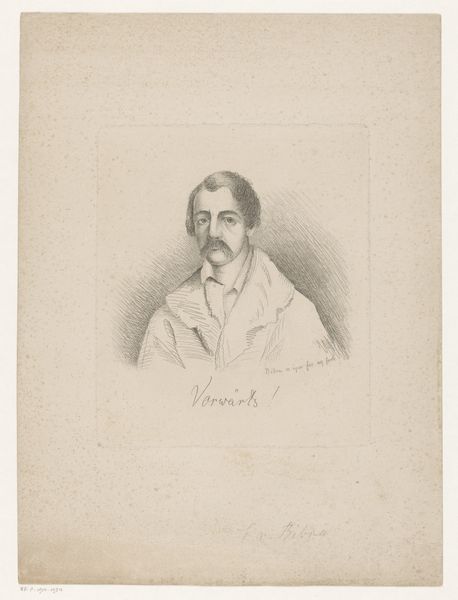
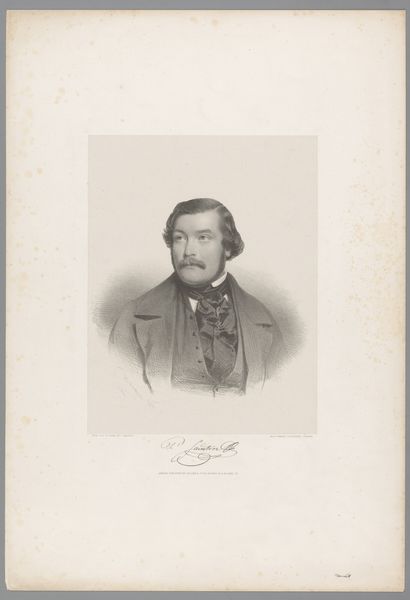
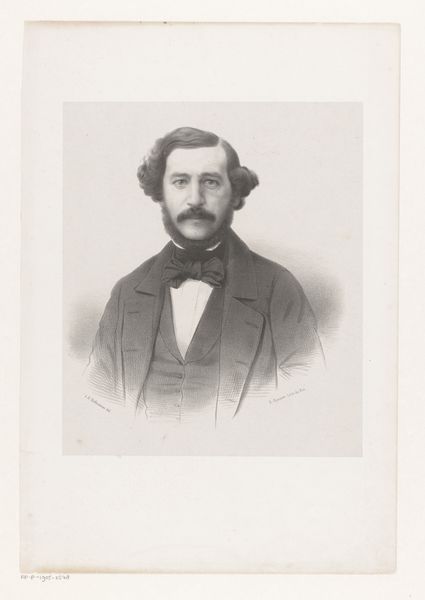
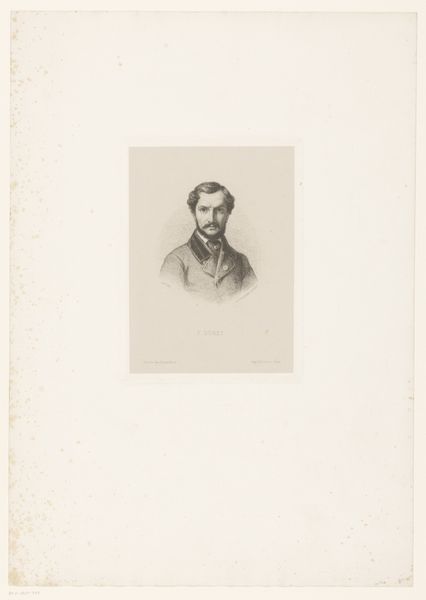
Editor: So, here we have "Portret van Franz Dingelstedt," created sometime between 1824 and 1899 by C. Dittmarsch. It's an engraving, a print on what looks like aged paper. It feels… nostalgic. The man's stare is quite intense, almost theatrical. What do you make of it? Curator: Theatrically nostalgic, a perfect summation! To me, it's like catching a glimpse of a bygone era, almost a sepia-toned memory flickering before our eyes. The meticulous detail in the engraving highlights every line on his face, every fold of his clothing. Does it strike you as… a tad romanticized, perhaps? Editor: Romanticized? Maybe. It's definitely got that "history-painting" vibe to it. There is a sense of seriousness or grandeur, though with very simple style, almost photo-realistic but as if painted by a very detailed oriented machine. Curator: Precisely! The realism coexisting with the romantic undertones... Think about it: engravings like these served as vital forms of visual record. This portrait immortalizes Dingelstedt, presenting him in a manner befitting his perceived status. Does the composition suggest anything to you? The pose, the lighting… Editor: Hmm, I'm not sure what I can get from the pose or the light! Is the pose an indicator of Romanticism style, to elevate its subject beyond a human? Curator: In a way, yes. While seemingly straightforward, it suggests a quiet dignity. Also notice how his gaze seems to challenge us? Now, about Dingelstedt himself… He was quite a prominent figure! This portrait isn't just a face on paper; it’s a gateway into understanding the cultural landscape of his time. It's amazing that art made such a beautiful and respectful gesture, isn't it? Editor: Absolutely. I didn't know any of that background, but that makes a lot more sense now! It gives a whole new weight to the piece. Curator: Indeed! And that, my friend, is why context is king. It breathes life into the lines and shadows, doesn't it?
Comments
No comments
Be the first to comment and join the conversation on the ultimate creative platform.
 Collect
 React
React Comment
More like this