About this artwork
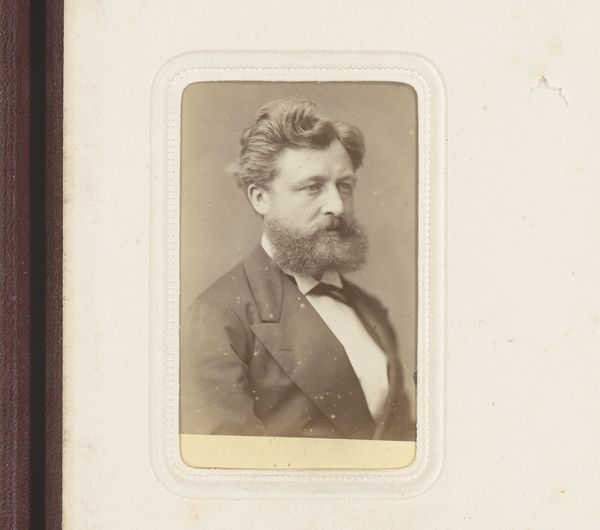
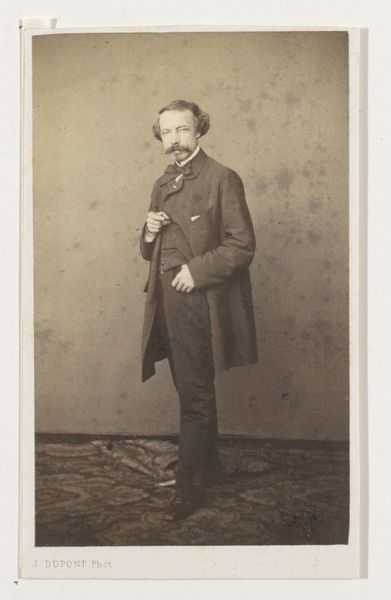
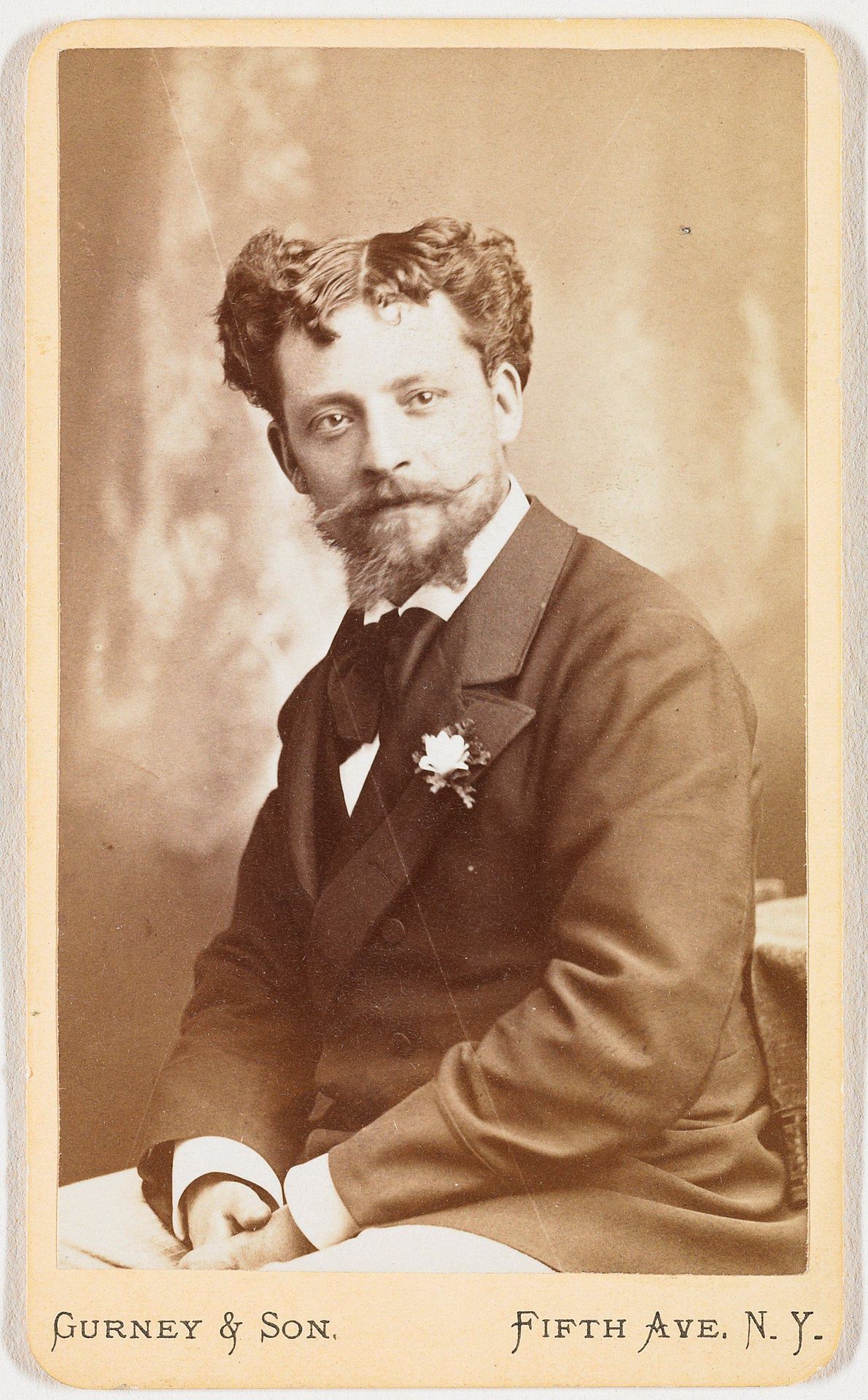
This photograph of Joseph-Amédée-Victor Capoul was captured by Jeremiah Gurney in the 19th century. Note the flower pinned to his lapel: a seemingly simple detail, but one laden with symbolic weight. The flower, often a rose or carnation, was a common emblem of love, beauty, and fleeting youth in Victorian society. Consider how such floral motifs recur across art history, from the delicate blooms adorning Renaissance portraits to the symbolic flora in Dutch still life paintings. Each era imbues the flower with nuanced meanings, reflecting cultural values and subconscious desires. The Victorian era, with its strict social codes and repressed emotions, found in the flower a discreet language of sentiment. The flower’s symbolic weight engaged viewers on a deep, subconscious level, offering an outlet for unspoken feelings and desires. This echoes through time, appearing in different forms, yet always hinting at the eternal themes of life, death, and beauty.
Joseph-Amédée-Victor Capoul (1839-1924)
1869 - 1874


Artwork details
- Medium
- daguerreotype, photography, albumen-print
- Dimensions
- 3 11/16 x 2 1/4 in. (9.37 x 5.72 cm) (image)4 1/8 x 2 7/16 in. (10.48 x 6.19 cm) (mount)
- Location
- Minneapolis Institute of Art
- Copyright
- Public Domain
Tags
Comments
Share your thoughts
About this artwork
This photograph of Joseph-Amédée-Victor Capoul was captured by Jeremiah Gurney in the 19th century. Note the flower pinned to his lapel: a seemingly simple detail, but one laden with symbolic weight. The flower, often a rose or carnation, was a common emblem of love, beauty, and fleeting youth in Victorian society. Consider how such floral motifs recur across art history, from the delicate blooms adorning Renaissance portraits to the symbolic flora in Dutch still life paintings. Each era imbues the flower with nuanced meanings, reflecting cultural values and subconscious desires. The Victorian era, with its strict social codes and repressed emotions, found in the flower a discreet language of sentiment. The flower’s symbolic weight engaged viewers on a deep, subconscious level, offering an outlet for unspoken feelings and desires. This echoes through time, appearing in different forms, yet always hinting at the eternal themes of life, death, and beauty.
Comments
Share your thoughts