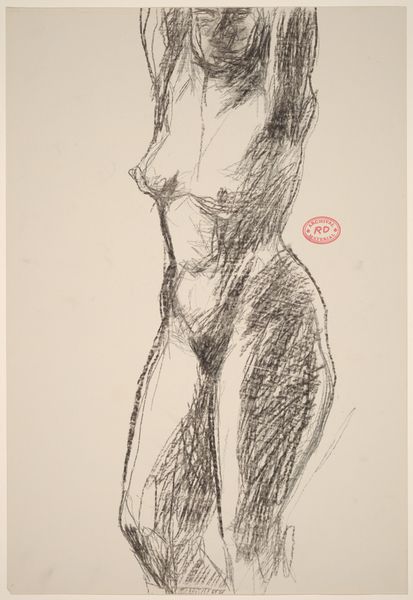
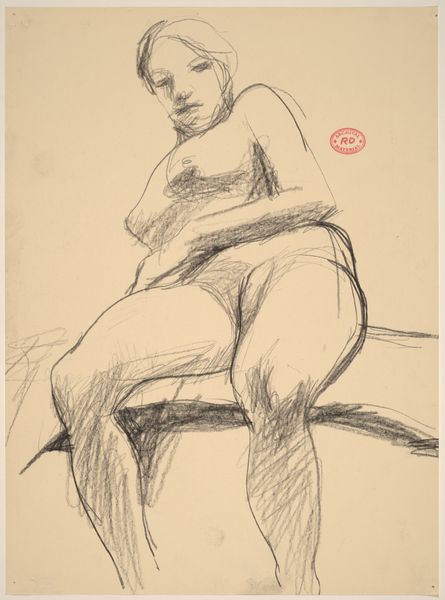
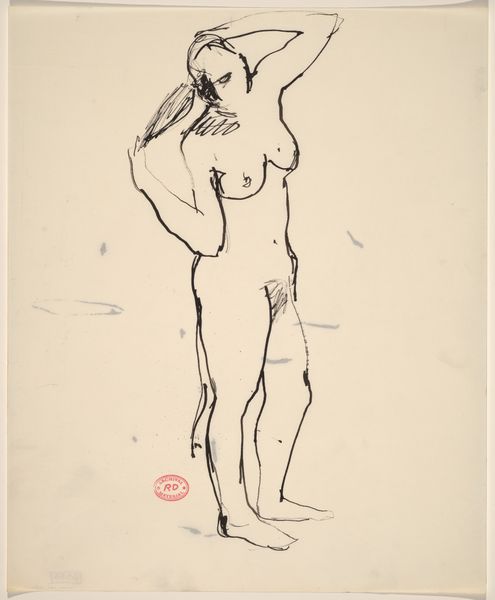
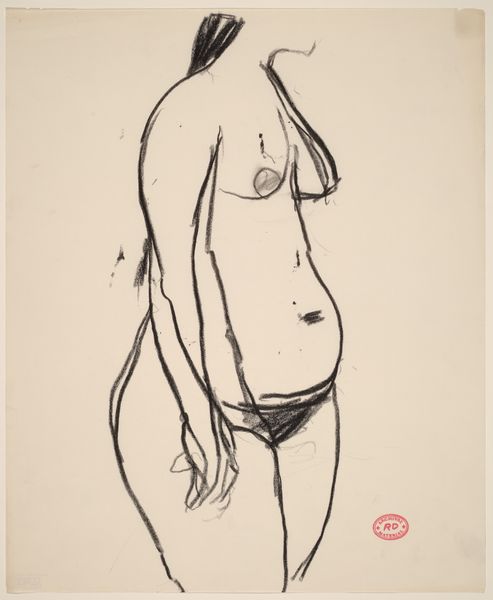
![Untitled [reclining nude lying back with her left hand behind her head] by Richard Diebenkorn](https://d2w8kbdekdi1gv.cloudfront.net/eyJidWNrZXQiOiAiYXJ0ZXJhLWltYWdlcy1idWNrZXQiLCAia2V5IjogImFydHdvcmtzL2Q5ZmQ5YmQ1LTY5MzItNGM3OC04MDBjLTcxMDk2OGQyMmZlMy9kOWZkOWJkNS02OTMyLTRjNzgtODAwYy03MTA5NjhkMjJmZTNfZnVsbC5qcGciLCAiZWRpdHMiOiB7InJlc2l6ZSI6IHsid2lkdGgiOiAxOTIwLCAiaGVpZ2h0IjogMTkyMCwgImZpdCI6ICJpbnNpZGUifX19)
1955 - 1967
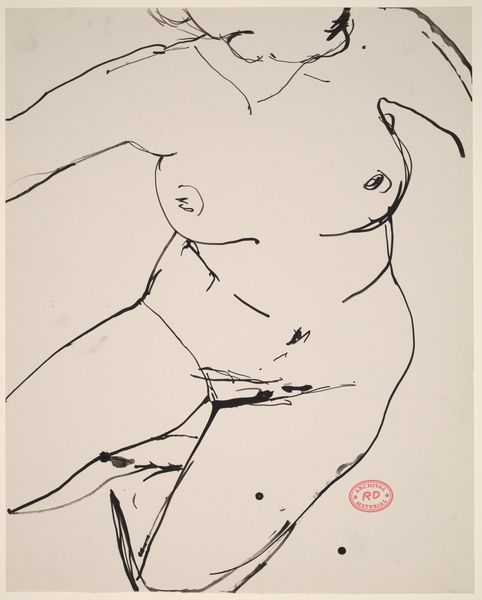
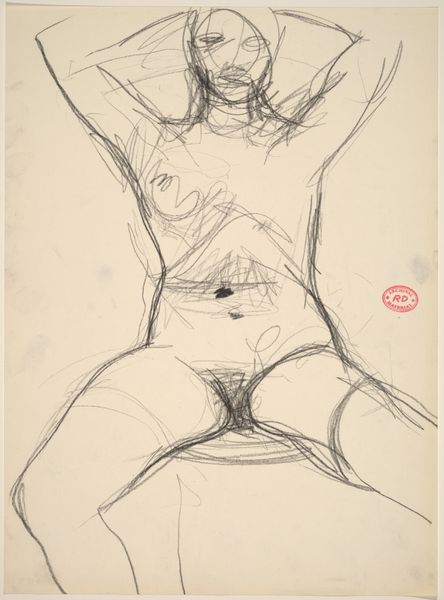
Untitled [reclining nude lying back with her left hand behind her head]


Listen to curator's interpretation
Curatorial notes
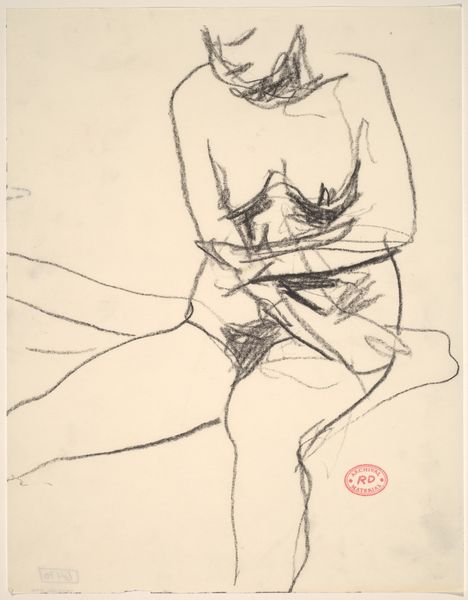
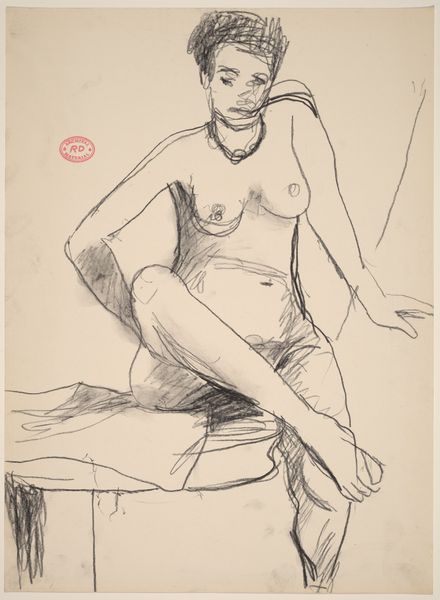
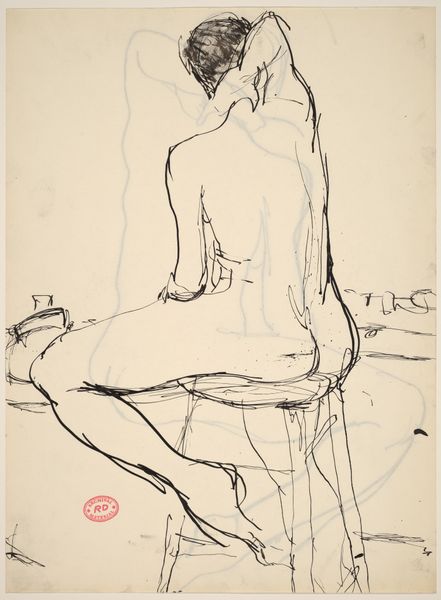
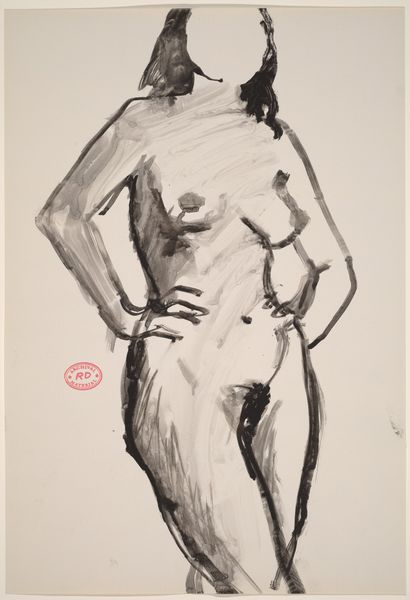
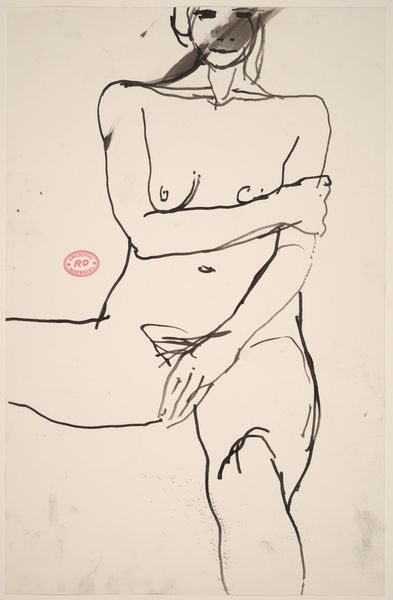
Editor: Here we have an ink drawing by Richard Diebenkorn, likely created between 1955 and 1967, titled "Untitled [reclining nude lying back with her left hand behind her head]". It’s so raw, so immediate. I’m interested in understanding the artist's vision, the methods he employs, and how it relates to the history of the nude in art. What do you make of this work? Curator: Ink, as a material, implies a directness. Here, it exposes the artistic process, the artist's hand evident in every stroke. How do we interpret this ‘raw’ quality in relation to consumerism in mid-century America? Does the sketch become a commodity itself, valued for its perceived authenticity of creation? Editor: That's a fascinating perspective. So you're saying that even the seemingly spontaneous lines carry the weight of their potential as objects of value and consumption? Curator: Precisely. Consider the labor involved – Diebenkorn’s time, the manufacture of the ink, the paper. These elements, usually invisible, are integral. We consume not just the image, but also a trace of the artist’s process. How does this change our understanding of "Untitled?" Does the lack of clear title emphasize or erase the materiality? Editor: Interesting. I hadn’t considered how the very lack of title adds to its ambiguous market position! Are you suggesting the commodification aspect also changes the viewing experience? Curator: Absolutely! Knowing the drawing's historical period shapes our reading. We appreciate the drawing technique itself, how he uses line, shading, and composition. Now think about the economics of art – the gallery system, collectors, and their influence on artistic production. It all becomes a question of how art is produced, distributed, and consumed. Editor: This perspective really deepens my understanding of the artwork. I never thought to consider it in the context of materiality, but you've truly shown how to consider the creation and distribution affecting value, production, and therefore our engagement. Curator: And how the artwork actively challenges traditional boundaries between high art and simple sketch by highlighting labor and materials. This affects how we view "Untitled."