1887
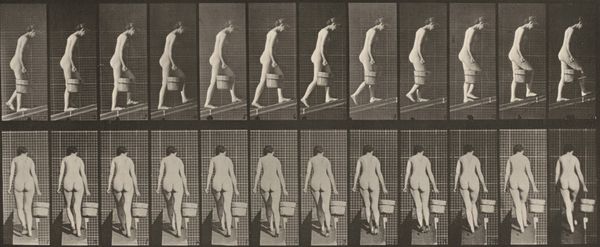
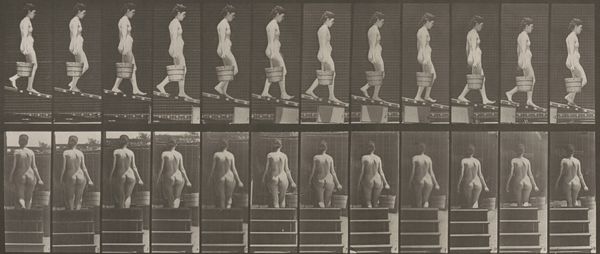
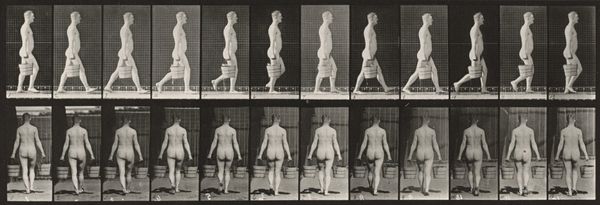
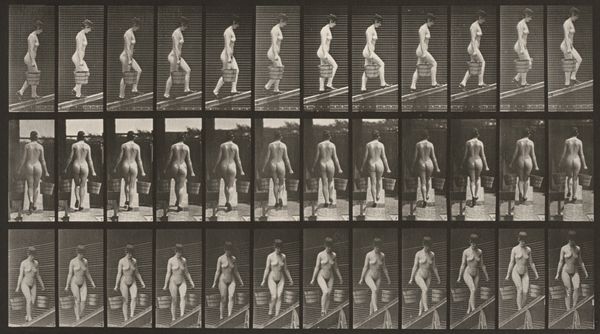
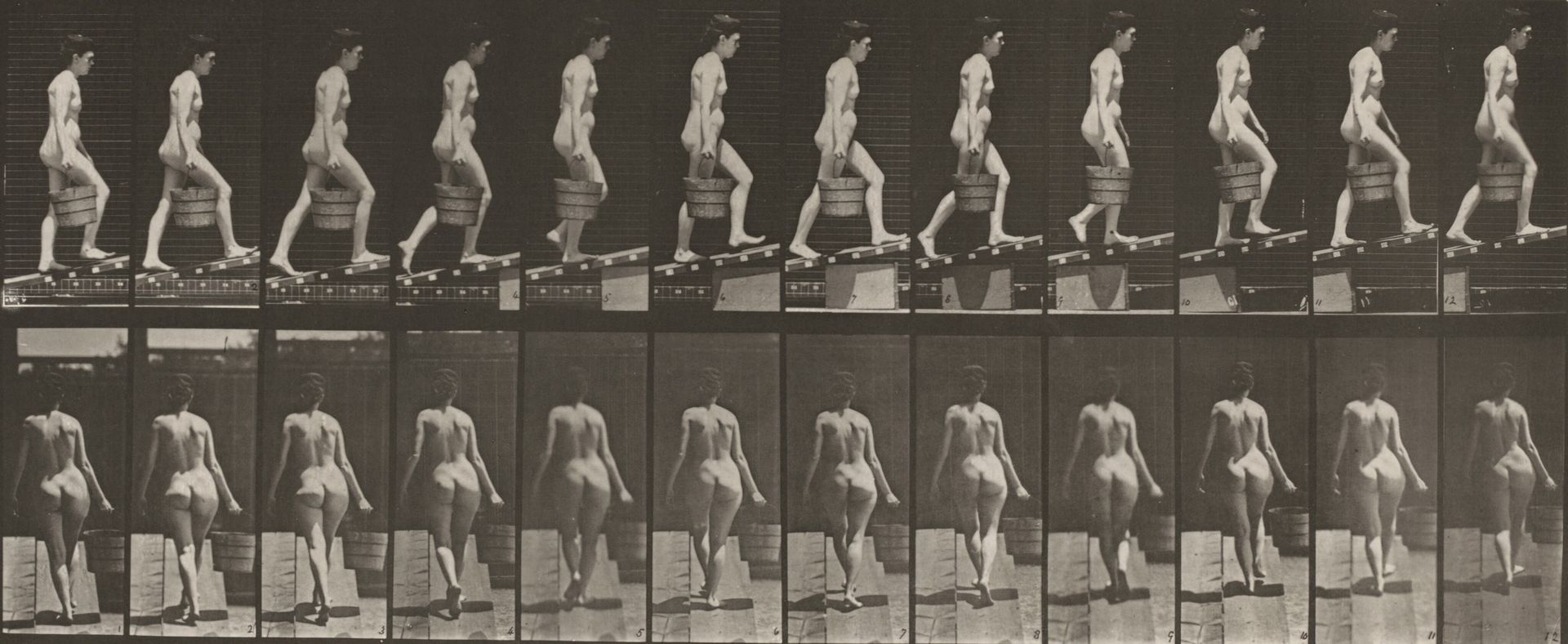
Plate Number 83. Ascending an incline with a bucket of water in right hand


Listen to curator's interpretation
Curatorial notes
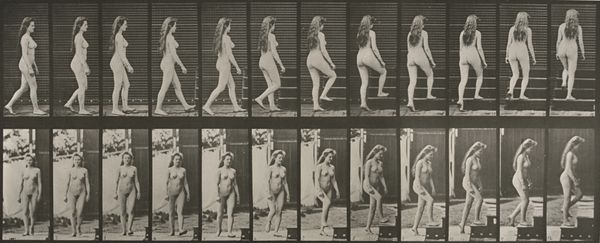
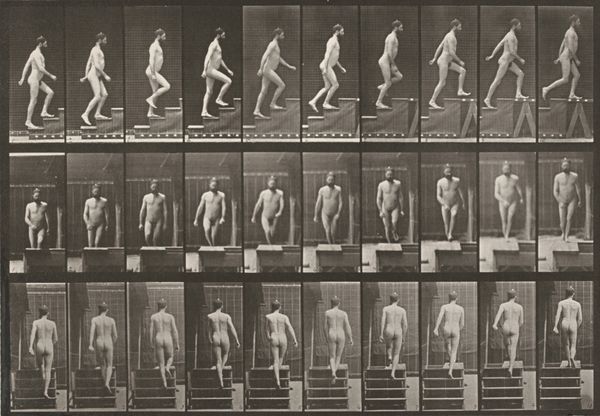
Editor: So, this is Eadweard Muybridge's "Plate Number 83. Ascending an incline with a bucket of water in right hand," a gelatin-silver print from 1887. It's striking how he captures motion. What jumps out to you when you look at this? Curator: The fragmented, sequential imagery speaks volumes. Think of ancient friezes – Egyptians depicting processions, Greeks immortalizing athletes. Muybridge’s subject ascends, a simple task, yet each frame dissects a human action, elevating it to ritual. Editor: Ritual? How so? Curator: The repetition is key. It’s not just science; it's a symbolic performance. The bucket, a vessel. The incline, a challenge, a spiritual path, even. Water, of course, always embodies purification. Don’t you sense echoes of archaic symbolism here, endurance, purpose, ascent? Editor: I was thinking more about the scientific method, his efforts to dissect motion, freezing it in time. Curator: Precisely. And doesn’t science borrow its own symbols? Charts, graphs, the controlled experiment - a new mythology arising! Think of Da Vinci’s anatomical drawings - where does science end and art begin? The nude figure further emphasizes a sense of stripped-down truth, revealed in segments. Editor: It makes me consider how much our understanding of movement and the body owes to images like these, images that felt almost impossible before photography. Curator: And remember how shocking this was then! The body, laid bare, divorced from narrative, studied and scrutinized. The human reduced to a subject of the artist, who acts almost like a god. Muybridge challenges our gaze, even today. It's really quite incredible.