painting, oil-paint
#
painting
#
impressionism
#
oil-paint
#
landscape
#
oil painting
#
cityscape
#
modernism
Dimensions: 48 x 56 cm
Copyright: Public domain
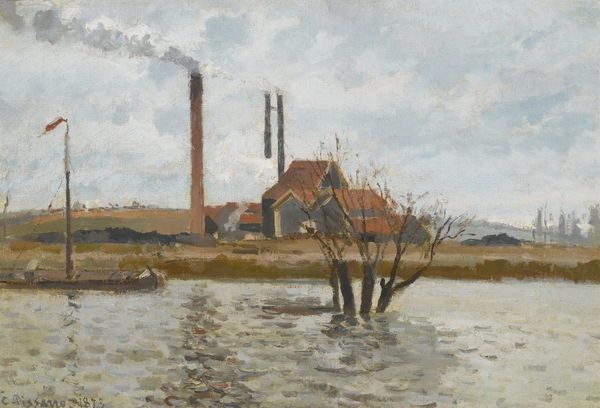
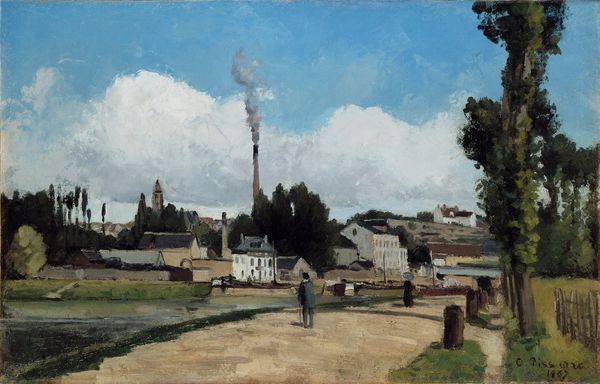
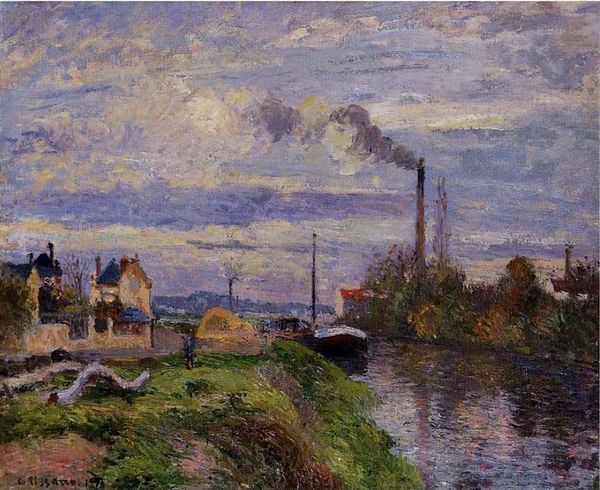
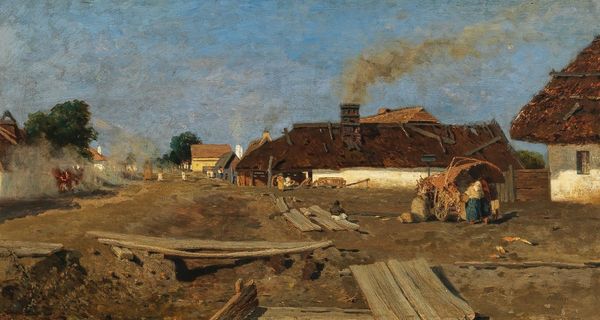
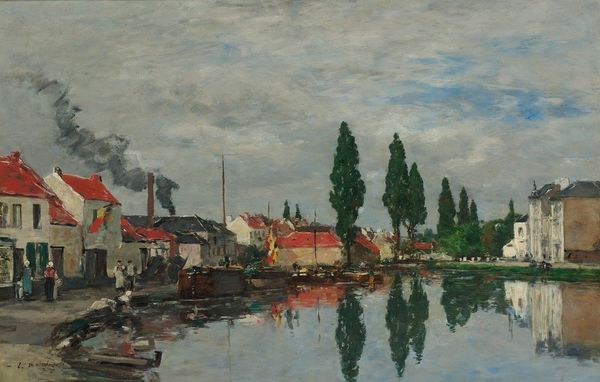
Editor: Here we have "The Factory," an oil painting created in 1873 by Camille Pissarro. The smoke stacks reaching into a cloudy sky definitely establish a strong sense of atmosphere... almost melancholic. What strikes you most about this piece? Curator: The rising plumes immediately seize my attention. Smoke is not just a byproduct here; it's a charged symbol. What emotions do these industrial exhalations evoke in you, considering this era? Editor: I suppose a sense of progress, but maybe also a hint of… unease? Knowing what we know now about pollution. Curator: Precisely! That unease stems from a shift in how we perceive our environment and industrial advancements. Smoke, historically a sign of prosperity and societal advancement, takes on a more ambiguous character here. Do you think the artist is celebrating or critiquing? Editor: I'm not entirely sure. It seems… neutral, almost observational. Like, “this is just the way things are now.” Curator: And there, I think, lies a powerful statement. Consider how industrial structures began to dominate the visual landscape, challenging traditional idyllic pastoral scenes. How does that transition shape our cultural memory of the era? Editor: It's like the factory is becoming a part of the landscape, but not necessarily blending in harmoniously. It makes you wonder about what kind of memory people will retain. Curator: Exactly. Pissarro captured a pivotal moment – where industry transforms not only the physical world, but our collective psyche, forging new cultural associations that still resonate today. Editor: I hadn't thought about it that way before. This has definitely given me a new perspective on what it represents. Curator: Indeed, these painted environments become records of shifting values, a powerful tool to unearth deeper cultural narratives about the industrial age and our continuing negotiations with its legacy.
Comments
No comments
Be the first to comment and join the conversation on the ultimate creative platform.
 Collect
 React
React Comment
More like this