About this artwork
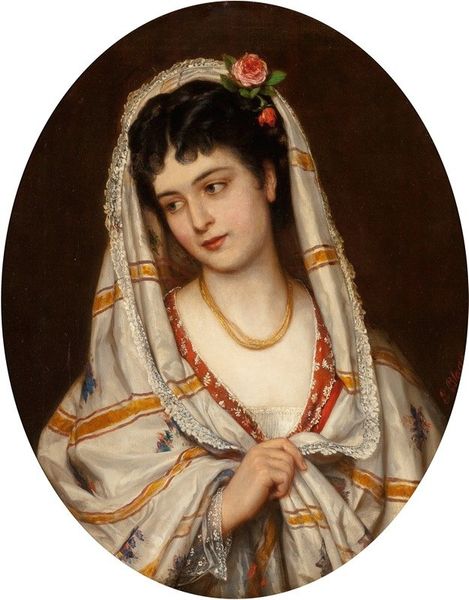
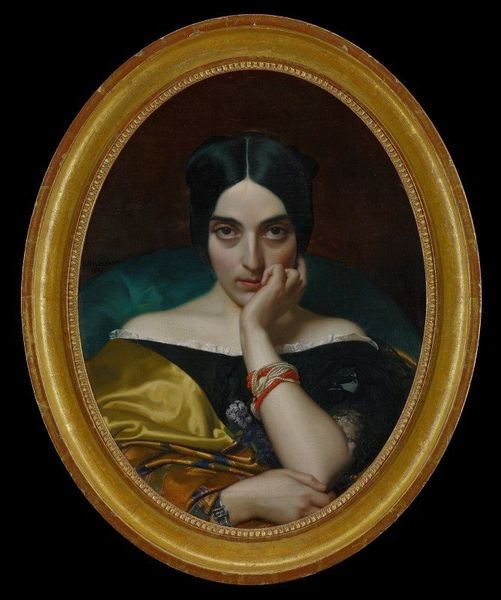
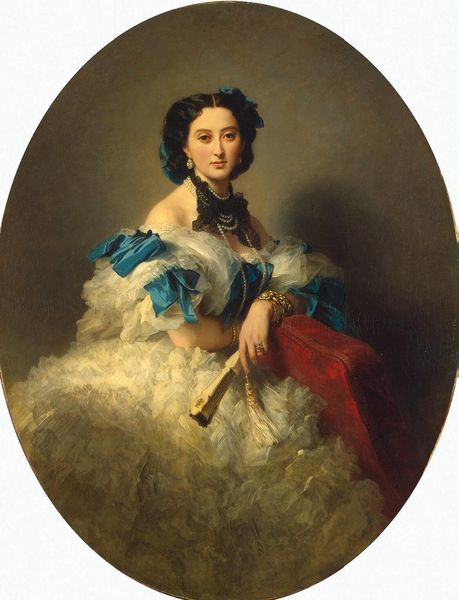
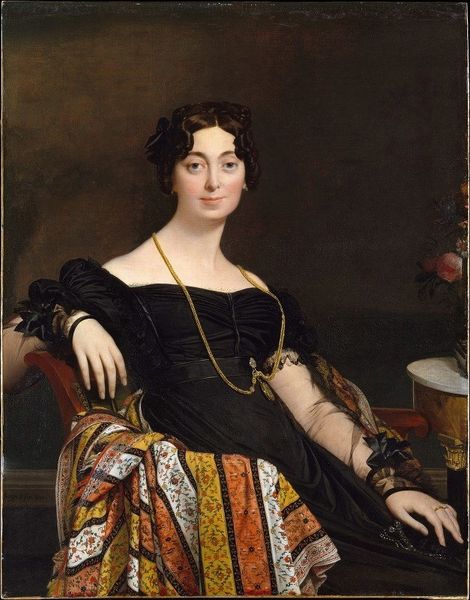
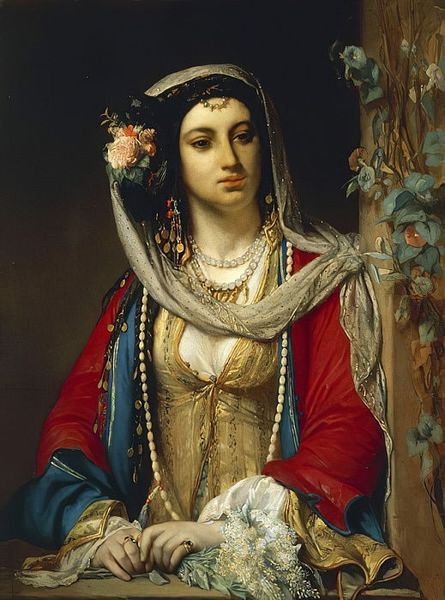
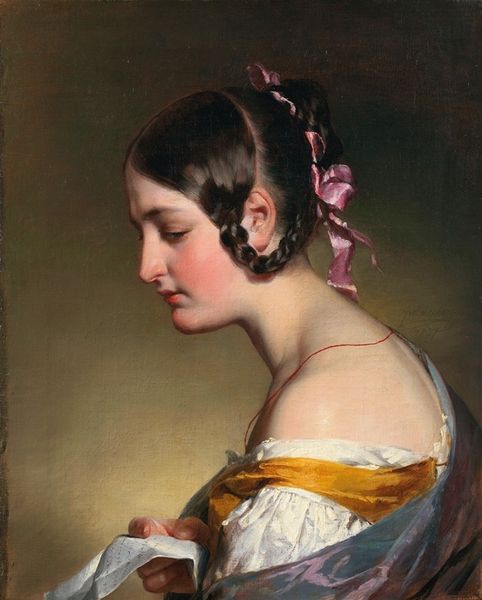
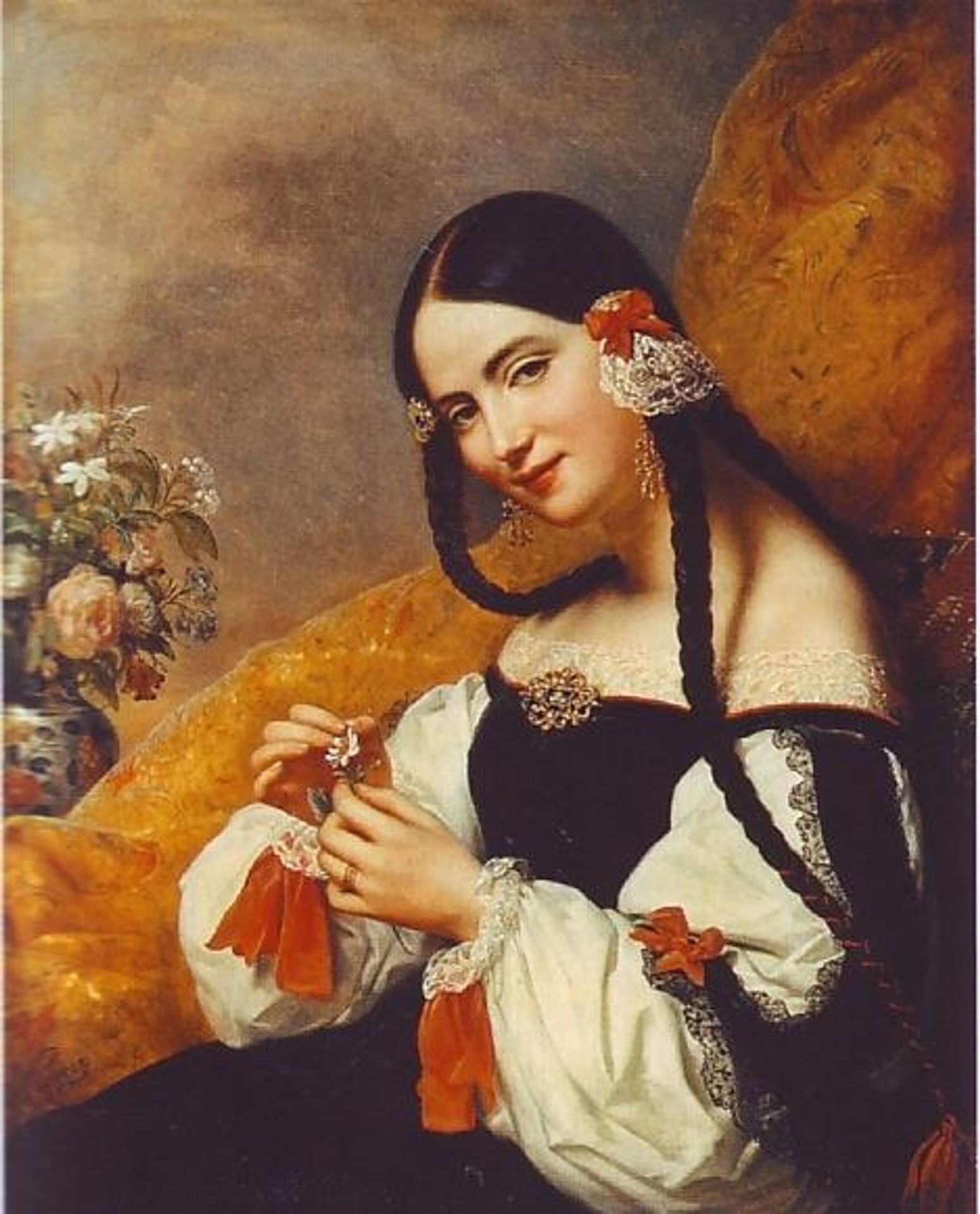
Editor: This is "Andalousienne," an oil painting attributed to Charles de Steuben, evoking a romanticized vision of Andalusia. There's a stillness to it, a posed elegance that feels both timeless and a bit melancholy. What strikes you when you look at it? Curator: I see a layering of symbols, carefully constructed. Consider the figure’s gaze, averted yet inviting, her elaborate braids framing her face like a Madonna. The flowers, clutched in her hand, suggest themes of love, remembrance, but also fragility and ephemerality. Are they freshly picked, or beginning to fade? What story do they whisper? Editor: I hadn't thought of the flowers in that way! I was focused on the adornments, like the ribbons. Do they serve some symbolic purpose too? Curator: Absolutely. The ribbons and lace reference a carefully constructed identity. They’re both ornamental and constraining, signifying societal expectations placed upon women and how feminine identity gets meticulously crafted for display. And note the jewelry - how do they function within this performance? Editor: That's interesting, a sort of tension between freedom and constraint... almost a theatrical staging of femininity. So, the artist might be playing with our expectations, not just fulfilling them? Curator: Precisely! He invites us to consider how identity is both performed and perceived. Think of the "Andalousienne" label. It calls on cultural memories of a specific location, and the loaded meanings attached to it. What does it mean to be "Andalousienne"? This label becomes part of her costuming, her character, not merely descriptive. Editor: This has definitely given me a deeper appreciation for what I thought was just a pretty portrait. Curator: Indeed, art often invites us to decode not just what is visible, but what is implied, remembered, and felt through generations of cultural associations.

Artwork details
- Medium
- painting, oil-paint
- Copyright
- Public domain
Tags
Comments
Share your thoughts
About this artwork
Editor: This is "Andalousienne," an oil painting attributed to Charles de Steuben, evoking a romanticized vision of Andalusia. There's a stillness to it, a posed elegance that feels both timeless and a bit melancholy. What strikes you when you look at it? Curator: I see a layering of symbols, carefully constructed. Consider the figure’s gaze, averted yet inviting, her elaborate braids framing her face like a Madonna. The flowers, clutched in her hand, suggest themes of love, remembrance, but also fragility and ephemerality. Are they freshly picked, or beginning to fade? What story do they whisper? Editor: I hadn't thought of the flowers in that way! I was focused on the adornments, like the ribbons. Do they serve some symbolic purpose too? Curator: Absolutely. The ribbons and lace reference a carefully constructed identity. They’re both ornamental and constraining, signifying societal expectations placed upon women and how feminine identity gets meticulously crafted for display. And note the jewelry - how do they function within this performance? Editor: That's interesting, a sort of tension between freedom and constraint... almost a theatrical staging of femininity. So, the artist might be playing with our expectations, not just fulfilling them? Curator: Precisely! He invites us to consider how identity is both performed and perceived. Think of the "Andalousienne" label. It calls on cultural memories of a specific location, and the loaded meanings attached to it. What does it mean to be "Andalousienne"? This label becomes part of her costuming, her character, not merely descriptive. Editor: This has definitely given me a deeper appreciation for what I thought was just a pretty portrait. Curator: Indeed, art often invites us to decode not just what is visible, but what is implied, remembered, and felt through generations of cultural associations.
Comments
Share your thoughts