1618 - 1677
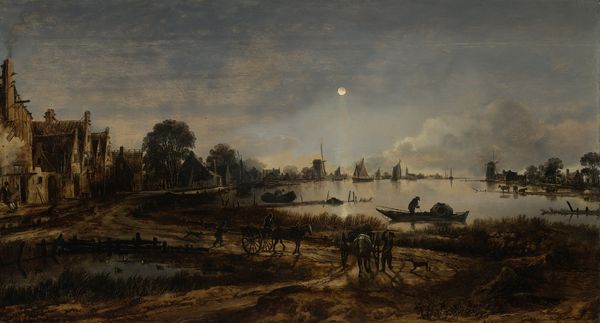
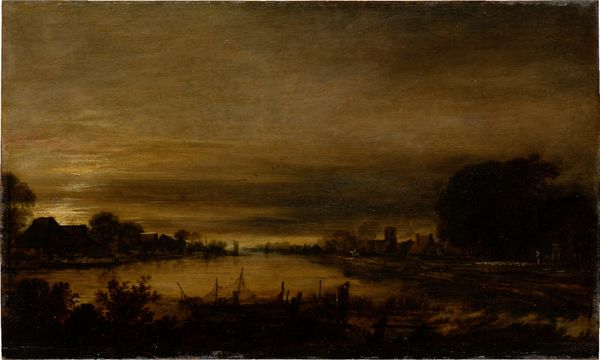
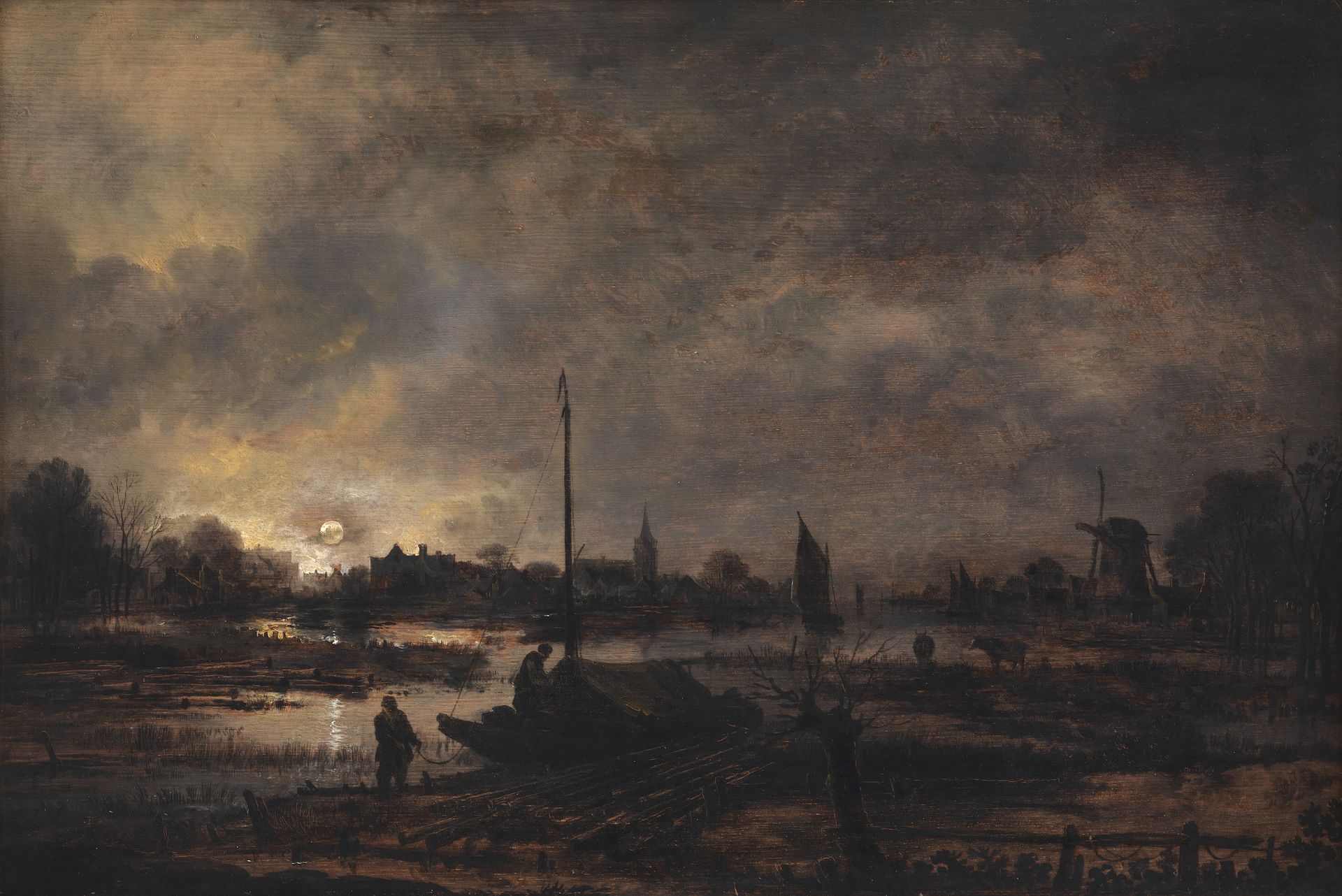
The Moon Rising over a Village


Listen to curator's interpretation
Curatorial notes
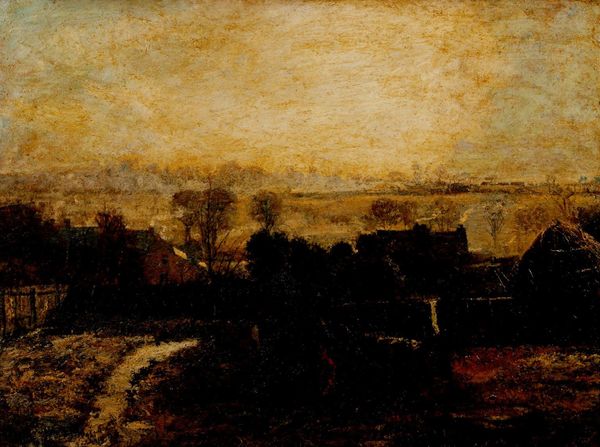
Editor: Here we have Aert van der Neer’s "The Moon Rising over a Village," created sometime between 1618 and 1677. It's an oil painting on wood. The dark palette and luminous moon give the whole scene a very serene and almost melancholic feel. What’s your perspective on this artwork? Curator: The tranquility you observe belies a more complex social reality. Dutch Golden Age landscapes like these often aestheticize a specific type of civic order, tied to mercantile power. The moon, traditionally linked to cycles and the feminine, here illuminates a landscape carefully structured around trade and male enterprise, which might silence alternative perspectives, don’t you think? Editor: That's a fascinating point. I was mainly focused on the beautiful use of light. So, the inclusion of things like the windmill and the ships – is that a deliberate nod to commerce? Curator: Absolutely. Van der Neer isn’t just painting a pretty picture. The windmill represents harnessed power, industry; the ships, global trade and colonization. Consider how the moon, a symbol often associated with intuition and emotion, casts its light upon these emblems of capitalist expansion. What kind of power dynamic is being subtly reinforced here? Editor: So, it's less an innocent landscape and more a statement about the values of that society at that time? The beauty might be masking underlying power structures? Curator: Precisely. And it’s worth asking: Whose perspective is prioritized? Who benefits from this romanticized version of Dutch society? How does this image contribute to a larger narrative of Dutch exceptionalism and its impacts, especially for women, minorities, and colonized people? Editor: That completely changes how I see this painting. I’m no longer just admiring the aesthetic; I'm questioning the message. Curator: And that's the goal. Art invites us to critically examine the world around us, both then and now.