before 1877
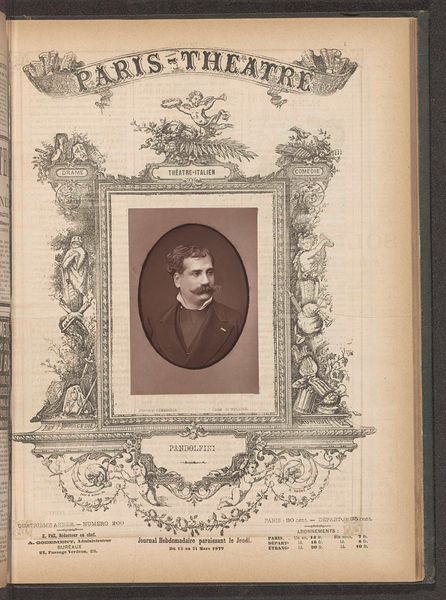
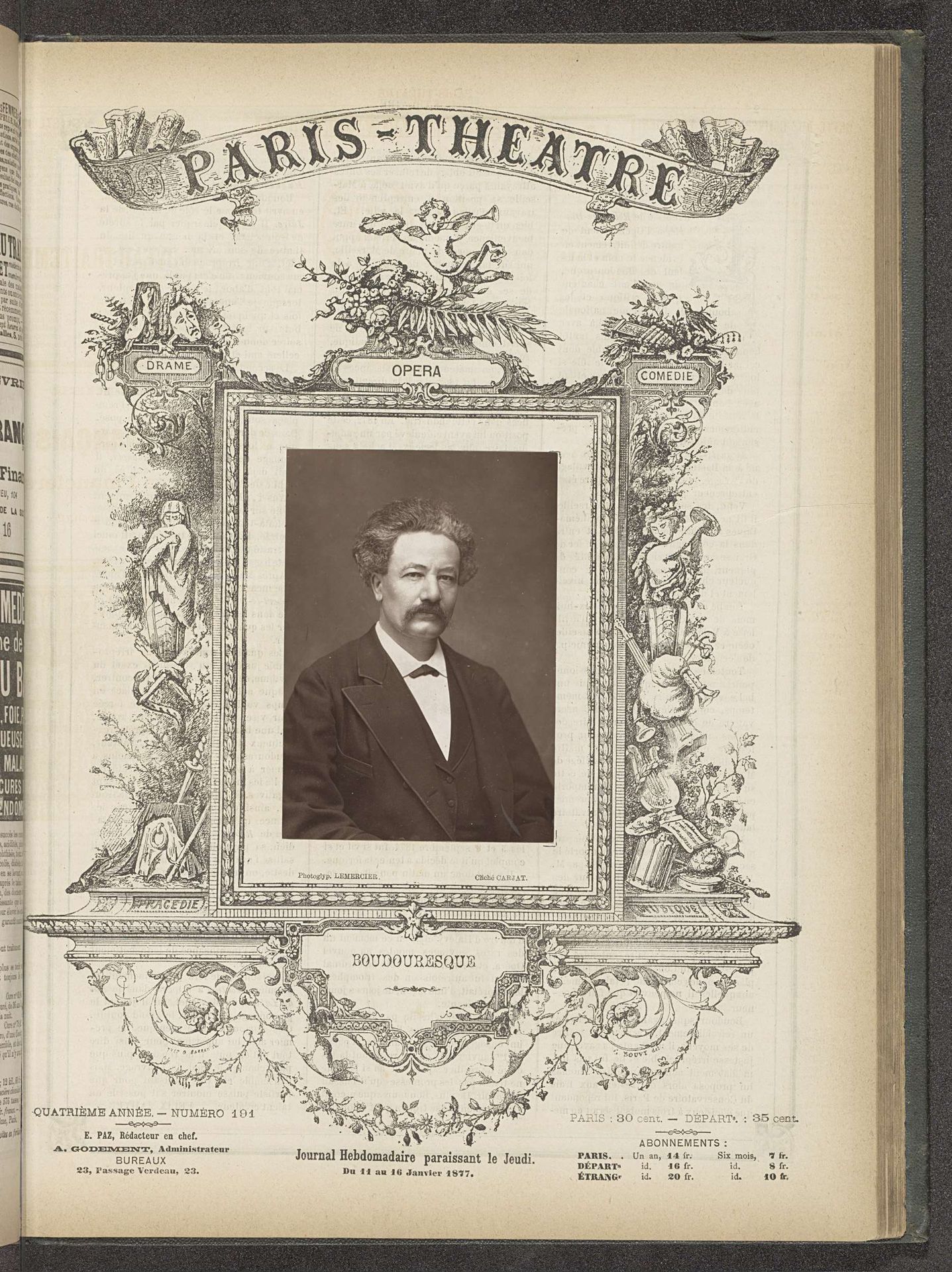
Portret van Auguste-Acanthe Boudouresque

Etienne Carjat
1828 - 1906Location
RijksmuseumListen to curator's interpretation
Curatorial notes
Editor: So this is "Portret van Auguste-Acanthe Boudouresque," made before 1877 by Etienne Carjat, currently housed in the Rijksmuseum. It’s a photograph that’s been reproduced as an engraving within the context of a larger print – perhaps a magazine page? What strikes me is how it's framed by these almost theatrical, classical elements. What do you see in this piece? Curator: I see a convergence of worlds. Carjat's photograph, already a captured image, is then further mediated by engraving and print. The framing imagery you mentioned is fascinating – it hints at performance and perhaps a world of ideals. Consider how classical elements such as cupids and theatrical masks are interwoven with the newer technology of photography. What might that signify? Editor: Maybe a tension between tradition and modernity? The man himself looks pretty grounded in reality, yet he's presented almost like a stage character. Curator: Precisely. This tension, or perhaps harmony, speaks to the broader cultural moment. Photography was still relatively new, and its relationship with older art forms was still being negotiated. Notice also how "Opera," "Drame," and "Comedie" flank the image: what meaning do those have to add? Editor: They suggest Boudouresque was involved in all of those fields, a man of the theatre. Also, considering this was published as a print, do you see a connection to Japonisme influencing the page design? Curator: Ah, an astute observation. The linear elegance of the surrounding decorations shares some affinity with Japonisme's embrace of flattened perspectives and decorative motifs. This all tells a story of cultural exchange and artistic experimentation. I think Carjat gives us an important intersection of the past and the future. Editor: This has opened my eyes to how photography can also represent broader cultural and symbolic shifts!